
Vehicle Maintenance Across the Lifespan: What Changes as Mileage Climbs
A high-mileage vehicle has different needs than a new one. Explore how maintenance priorities evolve as age and kilometres accumulate.
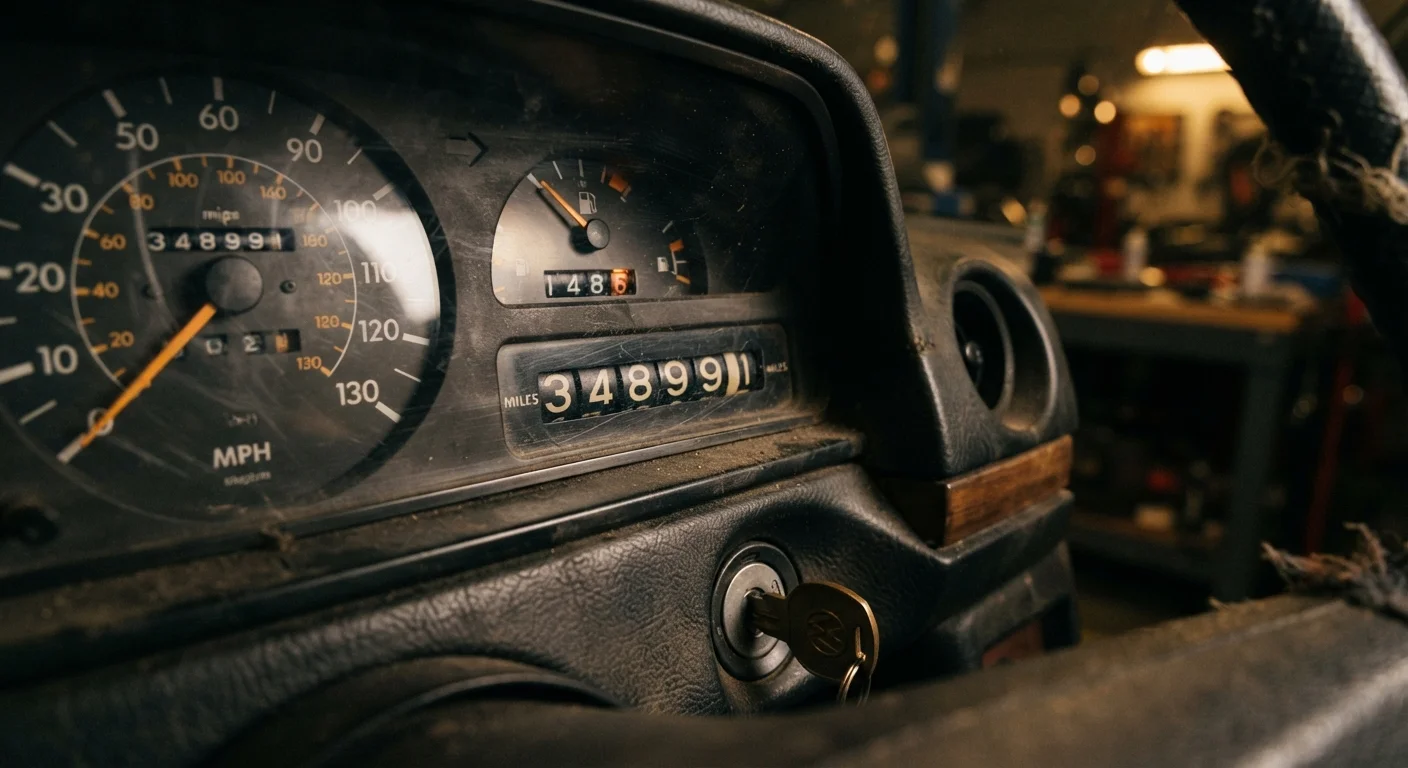
Photo: CoralScripts.com | Explore, Discover, Engage editorial
—— In This Article
Key Takeaways
- Maintenance needs evolve in predictable phases as mileage increases.
- Fluid degradation, seal wear, and rubber component fatigue accelerate after 75,000 miles.
- High-mileage vehicles benefit from switching to oils and fluids formulated for aged engines.
- Preventive inspection becomes more frequent and more consequential in later mileage stages.
- Complete service records help mechanics diagnose wear patterns accurately at any mileage.
Why Mileage Changes the Maintenance Equation
A vehicle with 8,000 miles on the clock and one with 120,000 may share the same model badge, but they are fundamentally different mechanical propositions. Wear accumulates non-linearly: some components degrade predictably with use, others deteriorate with age regardless of distance, and a third category depends on the cumulative stress of operating conditions - short trips, towing, climate, and driving style all factor in.
Understanding this is the foundation of intelligent ownership. Preventive maintenance isn't a fixed checklist applied uniformly across a vehicle's life - it's a strategy that should adapt as components age, tolerances widen, and the risk profile of deferred service shifts. The goal of this guide is to map those shifts concretely, by mileage band.
~60%
US vehicles over 100,000 miles on the road
IHS Markit vehicle-age data has consistently shown the average age of light vehicles in the US exceeding 12 years, with a large proportion carrying high mileage.
3-5 years
Typical automotive battery service life
Most battery manufacturers and automotive industry sources cite three to five years as the expected lifespan under normal operating conditions.
60K-90K
Common timing belt replacement interval (miles)
Manufacturer specifications vary, but most timing belt replacement intervals fall within this window - check your owner's manual for the exact figure.
The Early Miles: 0-30,000
In the first 30,000 miles, a vehicle is running well within its design tolerances. Components are new, fluids are doing their job efficiently, and the engine's internal clearances haven't yet drifted. This doesn't mean maintenance is optional - it means it's primarily about establishing proper wear patterns and keeping factory warranties intact.
Key priorities in this phase include following the manufacturer's oil change intervals precisely (typically every 5,000-10,000 miles depending on specification), inspecting tire pressure monthly, and checking brake pad thickness at each service visit. Cabin air filter replacement usually falls in this window. First-year owners should also use this period to build a maintenance habit: learn where the dipstick is, how to read tire wear, and what normal brake feel should be.
Build Your Baseline Early
Use the early-mileage phase to photograph your engine bay, note fluid colors, and document any factory quirks. This baseline makes it far easier to recognize when something has changed. A simple dated photo log stored alongside your service records requires almost no effort but pays dividends when diagnosing future issues.
The Middle Years: 30,000-75,000 Miles
This is when the first round of scheduled component replacements typically arrives. Spark plugs (on most gasoline engines), the engine air filter, transmission fluid, and brake fluid all have service intervals that commonly land between 30,000 and 60,000 miles. Coolant may also need flushing in this window depending on the formulation and manufacturer guidance.
Timing belts - where fitted - are a critical consideration here. Many manufacturers specify replacement between 60,000 and 90,000 miles; a snapped timing belt on an interference engine causes catastrophic internal damage. If your vehicle uses a timing belt rather than a chain, know that interval and treat it as non-negotiable. Condition-based maintenance systems on newer vehicles may surface some of these needs dynamically, but older vehicles require owners to track intervals manually.
Brake rotors may need resurfacing or replacement depending on driving patterns. Wheel bearing wear can begin to manifest. This phase rewards attentive owners who inspect their vehicle seasonally and catch developing issues before they cascade.
When scheduling the 60,000-mile service, ask the technician to inspect the timing belt tensioner and idler pulley at the same time - replacing them alongside the belt adds minimal cost but prevents a second major teardown later.
The labor cost of accessing the timing belt is the dominant expense; component parts are relatively cheap, making combined replacement highly cost-effective.
At each service visit after 50,000 miles, request a written condition report on rubber hoses, belts, and brake lines - not just a pass/fail, but actual observed condition notes.
Condition notes allow you to track deterioration over time and make a more informed decision about when replacement is genuinely necessary versus premature.
High-Mileage Territory: 75,000-150,000 Miles
At 75,000 miles, a properly maintained vehicle is still in good mechanical health - but the maintenance strategy needs to mature. Rubber components including hoses, belts, gaskets, and seals begin to degrade meaningfully in this range. A hose that looks intact externally can be brittle and cracked internally, making visual inspection insufficient. Mechanics should squeeze and flex hoses during servicing to assess actual condition.
Oil Consumption Requires Active Monitoring
At high mileage, waiting for the oil warning light is not a safe strategy. Some engines can consume a quart per 1,000 miles without triggering a warning until damage is already occurring. Check the dipstick every two to three fill-ups and establish what your engine's normal consumption rate is so you can detect any acceleration in that rate.
Engine oil consumption often increases subtly in this range as piston rings and valve stem seals begin to wear. Checking the oil level between services - rather than waiting for the next scheduled interval - becomes genuinely important. Switching to an oil formulated for higher-mileage engines, which typically contains seal conditioners and slightly different viscosity characteristics, is a reasonable consideration; consult your vehicle's specifications before changing grades.
The battery warrants close attention here. Most automotive batteries have a service life of three to five years. Short trips and temperature extremes accelerate degradation, and a battery that tests marginally acceptable in summer may fail without warning in cold weather. Load-testing the battery annually after the 75,000-mile mark is sound practice.
Oil change discipline matters more than ever here - degraded oil in an engine with slightly wider tolerances does disproportionate damage.
Beyond 150,000 Miles: Veteran Vehicle Care
Vehicles that reach 150,000 miles in good condition are a testament to consistent maintenance. Keeping them reliable beyond this point requires accepting that inspection intervals should compress and that condition - not just mileage - now drives many decisions.
Suspension components including struts, shocks, control arm bushings, and ball joints are high priorities at this stage. Worn suspension not only affects ride quality but increases tire wear and reduces braking effectiveness, compounding costs. A qualified mechanic should perform a full suspension inspection annually or whenever handling changes are noticed.
Cooling system integrity becomes increasingly important. Older coolant loses its corrosion-inhibiting properties, accelerating internal corrosion of the radiator and engine passages. A full coolant flush with fresh fluid protects against expensive overheating events. Water pumps and thermostats are inexpensive relative to the consequences of their failure, making preventive replacement logical when other cooling system work is being performed.
Deciding which tasks to DIY at this stage requires honest assessment of skill and tooling - some veteran-vehicle maintenance involves seized fasteners and corrosion that makes even simple jobs genuinely difficult.
Don't Ignore Changing Smells or Sounds
In veteran vehicles, new noises and smells - burning oil, coolant sweetness, metallic grinding - represent a narrower window for intervention than in younger vehicles. A sound that might be a developing issue at 40,000 miles can indicate imminent failure at 160,000. Have unusual symptoms assessed promptly rather than monitored over time.
Documentation and the Long Game
Across every mileage phase, complete service records are the connective tissue that makes good maintenance possible. A mechanic seeing a vehicle for the first time can make far more accurate assessments when they know what fluids were last changed, which components have been replaced, and what recurring concerns have been noted. Thorough documentation also protects resale value and makes warranty claims defensible.
The underlying principle across all mileage stages is that maintenance is not a static routine - it's a living strategy. As components age and tolerances evolve, the risks and rewards of each service item shift. Owners who understand what phase their vehicle is in, and what that means for inspection frequency and component priority, are far better positioned to keep their vehicles reliable and avoid the costly repairs that deferred maintenance eventually produces.
“The vehicles that last longest aren't necessarily built differently - they're maintained differently. Consistent, adaptive service is what separates a 200,000-mile vehicle from one that fails at 100,000.”
— Cars & Driving Editorial Team, Automotive maintenance analysts

Cars & Driving Editorial Team
Cars & Driving Editorial Team is the collective byline for our editorial team and contributor network. Articles published under this byline or an editorial pen name are researched, written, and reviewed according to our editorial standards for clarity, consistency, and independence before publication.
View author profile