
The Logic Behind Preventive Maintenance - and Why It Saves Money
Understand how preventive maintenance works, why it matters for vehicle longevity, and which tasks deliver the most value over time.
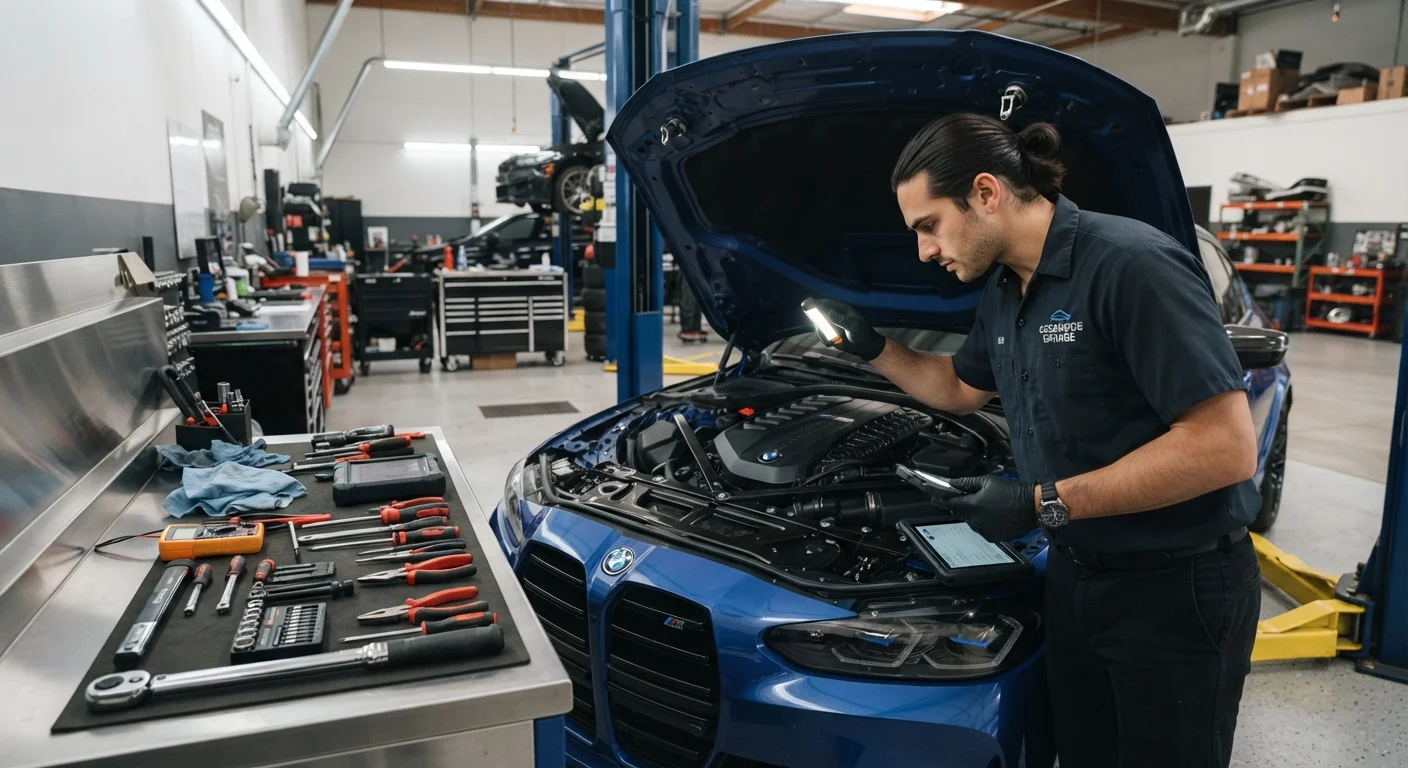
Photo: CoralScripts.com | Explore, Discover, Engage editorial
—— In This Article
Key Takeaways
- Preventive maintenance addresses wear before it becomes failure, reducing overall repair costs.
- Manufacturer service intervals are engineered from real-world testing - they are not arbitrary.
- Oil changes, fluid checks, and filter replacements deliver the highest return on maintenance investment.
- Deferred maintenance rarely saves money; small neglected issues typically compound into larger failures.
- A documented service history supports resale value and aids accurate mechanical diagnosis.
What Preventive Maintenance Actually Means
The phrase gets used loosely, but preventive maintenance has a precise meaning in automotive engineering: it is scheduled intervention that addresses wear and degradation before they cause a failure. Every component in a vehicle degrades over time - oil oxidizes and accumulates contaminants, brake fluid absorbs moisture and loses boiling resistance, belts develop micro-cracks invisible to the naked eye. Preventive maintenance replaces or services these items while they are still functional, not after they have failed.
This is fundamentally different from reactive maintenance, where a driver addresses problems only after symptoms appear. Reactive approaches often carry a higher total cost because damage rarely stays contained. A snapped serpentine belt, for instance, can disable power steering, the alternator, and the water pump simultaneously - a repair bill that dwarfs the cost of the belt itself. Understanding this compounding dynamic is the core logic behind any preventive schedule.
For a closer look at how reactive neglect accumulates expense, see our article on the hidden costs of deferred car maintenance.
~$0.09/mile
Average vehicle maintenance cost per mile in the US
AAA's annual Your Driving Costs study consistently estimates routine maintenance and tire costs at roughly nine cents per mile for average sedan ownership.
3-4×
Repair cost multiplier when maintenance is deferred
Industry service data indicates that neglected minor maintenance items frequently result in repair costs three to four times higher than the original service would have cost.
77%
Vehicles found out of compliance with service needs
The Car Care Council's periodic vehicle inspection campaigns have historically found that a large majority of vehicles inspected have at least one unaddressed maintenance item.
Why Manufacturer Intervals Are More Than Suggestions
Manufacturer service intervals are developed through extensive engineering validation - dyno testing, field trials, and material science analysis specific to each engine and drivetrain combination. The oil change interval for a turbocharged engine differs from that of a naturally aspirated one for real thermodynamic reasons, not marketing preference. Treating these schedules as optional ignores the engineering context behind them.
That said, intervals assume normal operating conditions. Vehicles used in severe-duty environments - frequent short trips under five miles, sustained towing, extreme temperatures, or heavy stop-and-go traffic - experience accelerated wear and typically warrant shorter service intervals. Many owner's manuals define both a standard and a severe-duty schedule explicitly. Owners should identify which category applies to their actual use pattern rather than defaulting to the more lenient standard schedule.
Check Your Owner's Manual for Both Schedules
Most manufacturer manuals list both a standard maintenance schedule and a severe-duty schedule. Review the definition of severe-duty conditions - they apply more often than many drivers realize, particularly for urban commuters. Using the correct schedule for your actual use pattern is more important than the mileage number alone.
It is also worth noting that some widely repeated interval guidance has not kept pace with advances in oil chemistry and engine tolerances. Our coverage of car maintenance myths addresses specific examples where common rules of thumb diverge from current mechanical reality.
The Tasks That Deliver the Most Value
Not all preventive maintenance delivers equal return. Some tasks protect high-value, difficult-to-replace components; others address consumables with minimal downstream risk. Understanding the hierarchy helps owners prioritize when budgets are tight.
- Engine oil and filter: Engine oil lubricates, cools, and suspends combustion byproducts. As it degrades, its ability to perform all three functions diminishes. This single task has more influence on engine longevity than any other routine service.
- Coolant (antifreeze): Over time, coolant loses its corrosion inhibitors and becomes acidic, attacking aluminum components in the cooling system. Flushing on schedule prevents internal corrosion and maintains heat transfer efficiency.
- Brake fluid: Brake fluid is hygroscopic - it absorbs moisture from the atmosphere, which lowers its boiling point and introduces corrosion into caliper and master cylinder bores. Regular replacement maintains system integrity.
- Air and cabin filters: A clogged engine air filter forces the intake system to work harder and can alter the air-fuel mixture. These are among the most accessible DIY tasks and among the most commonly overlooked.
- Timing belt or chain service: Where applicable, timing belt replacement is non-negotiable. A failed timing belt on an interference engine causes internal engine collision between valves and pistons - a repair cost that can approach or exceed the vehicle's value.
As a vehicle ages, the relative importance of certain tasks shifts. Our article on maintenance priorities across a vehicle's lifespan explains how service needs evolve as mileage accumulates.
Documentation: The Often-Overlooked Maintenance Habit
Performing maintenance consistently is necessary but not sufficient on its own. Without records, there is no reliable way to track what has been done, when it is due again, or what a future mechanic or buyer needs to know about the vehicle's history. A service log - whether a physical folder, a spreadsheet, or a dedicated app - transforms individual maintenance events into a coherent picture of the vehicle's condition over time.
Documented history also has direct financial implications at resale. Vehicles with verifiable service records are easier to sell and typically command stronger prices because they reduce the buyer's uncertainty about hidden problems. For warranty claims, a documented schedule can be the difference between an approved repair and a denied one.
Our detailed guide on keeping maintenance records covers practical systems for tracking service history, from paper logs to digital tools.
“A vehicle's service history is like a medical record - gaps and missing information don't mean nothing happened; they mean you don't know what happened. That uncertainty has real costs.”
— Cars & Driving Editorial Team, Automotive maintenance and vehicle ownership writers
Frequently Asked Questions

Cars & Driving Editorial Team
Cars & Driving Editorial Team is the collective byline for our editorial team and contributor network. Articles published under this byline or an editorial pen name are researched, written, and reviewed according to our editorial standards for clarity, consistency, and independence before publication.
View author profile