
Keeping Maintenance Records: Why Documentation Matters More Than Most Owners Realise
A complete service history affects resale value, warranty claims, and your mechanic's ability to diagnose problems accurately. Here's how to manage it.
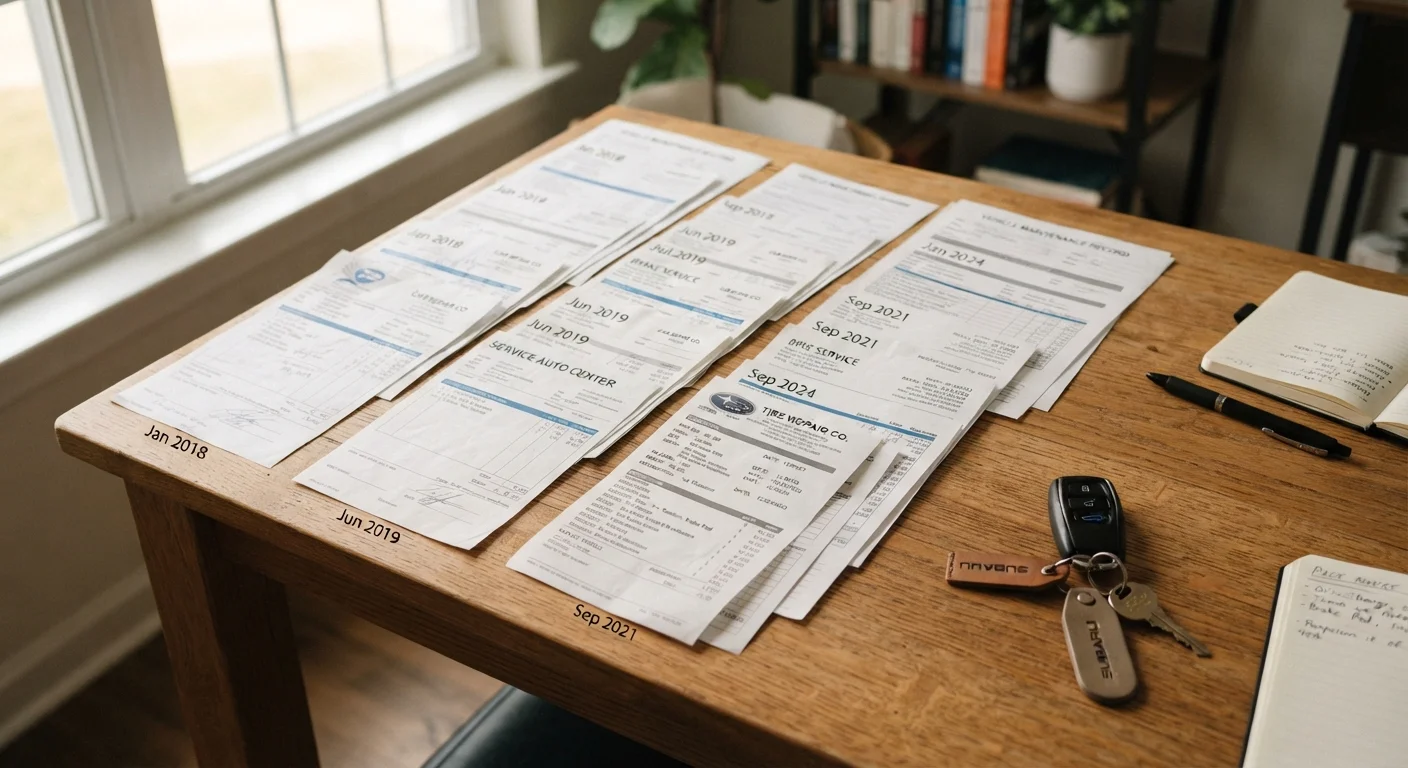
Photo: CoralScripts.com | Explore, Discover, Engage editorial
—— In This Article
Key Takeaways
- A documented service history directly influences resale value and buyer confidence in private and dealer transactions.
- Complete records help mechanics diagnose recurring or intermittent problems faster and more accurately.
- Warranty and extended warranty claims can be denied if required service intervals are not documented.
- Both paper and digital record systems work well - consistency and completeness matter more than format.
- DIY service work should be recorded with the same detail as professional shop invoices.
Why Most Owners Underestimate Their Service Records
Many vehicle owners treat maintenance records as an afterthought - a stack of receipts in the glovebox or a folder that never gets updated after a DIY oil change. That casual approach carries real costs. A well-documented service history is one of the most practical tools available for protecting a vehicle's long-term value, supporting warranty coverage, and giving any mechanic an accurate picture of what a car has been through.
The gap between owners who document diligently and those who don't becomes obvious at two distinct moments: when a complex diagnosis is needed and when the vehicle eventually changes hands. In both situations, gaps in the record translate directly into either money spent or money lost. Understanding what's at stake is the first step toward treating documentation as a routine habit rather than an optional extra.
For a broader view of how systematic upkeep pays dividends, see our guide to preventive maintenance.
Best Practices for Keeping Accurate Maintenance Records
The practices below apply whether a vehicle is brand-new or already accumulating high mileage. Adapt the format to your workflow - what matters is that the information is captured, consistent, and retrievable.
Record every service event at the time it occurs, not weeks later from memory.
Memory degrades quickly, especially for routine tasks performed on a regular schedule. Logging immediately - date, mileage, work performed, parts used, and shop or technician - produces an accurate, defensible record rather than a reconstructed estimate.
Retain original invoices and supplement them with a running log.
Shop invoices capture labor codes, part numbers, and technician notes that a simple log entry may omit. Keeping originals alongside a summary log gives you both the legal record and an at-a-glance timeline - valuable when a mechanic needs to understand a vehicle's full history quickly.
Document DIY work with the same rigor as professional service.
A self-performed brake pad replacement or air filter swap is just as relevant to a vehicle's history as shop work. Undocumented DIY service creates gaps that can mislead future mechanics or invalidate warranty claims on components that interact with the work you performed.
Use a digital backup to protect against lost or damaged paper records.
Paper records can be lost in vehicle sales, damaged by moisture, or simply deteriorate over years. A digital copy - even photographs of each invoice stored in a cloud folder - ensures the history survives regardless of what happens to the originals.
Note the specific parts specification, not just the task category.
Recording "oil change" is less useful than recording "5W-30 conventional replaced with 0W-20 full synthetic per revised manufacturer specification." Specification details matter when diagnosing compatibility issues or verifying that the correct fluid or component was used.
Review and reconcile your records at each service interval.
A brief review before each scheduled service helps identify any gaps, confirm upcoming interval milestones, and catch discrepancies between your log and the shop's records. It also reinforces the habit of treating documentation as an active, ongoing process.
If you're deciding which tasks to log from DIY work versus shop visits, our article on DIY maintenance vs. workshop servicing covers the trade-offs in detail.
Quick Wins: Start Documenting Better Today
You don't need a perfect system from day one. A few immediate actions will put your record-keeping ahead of most owners on the road.
Records, Resale, and Warranty: The Real-World Stakes
Up to 10%
Potential resale value increase with full service history
Industry appraisers and used-vehicle guides commonly note that a verifiable, complete service history can support noticeably stronger resale or trade-in valuations compared to vehicles with undocumented maintenance.
1 in 3
Warranty claims complicated by missing service records
Automotive warranty administrators frequently cite incomplete maintenance documentation as one of the most common factors complicating or delaying powertrain and drivetrain warranty claims.
When selling privately or trading in, a complete service history signals to buyers and appraisers that a vehicle has been cared for - and that claimed mileage is plausible. Incomplete records introduce doubt, and doubt erodes offers. For vehicles still under manufacturer warranty, documentation of required service intervals is often a prerequisite for warranty claim approval; some automakers specify that owners must prove services were performed at the correct intervals using the correct specifications.
What Counts as Acceptable Documentation?
Manufacturer warranty terms vary, but most require that services be performed at the specified intervals using fluids and parts meeting OEM (original equipment manufacturer) specifications - and that owners can demonstrate this with dated records. A credit card statement alone is rarely sufficient; itemized invoices or detailed log entries are the standard. When in doubt, review your vehicle's warranty booklet or contact the manufacturer directly for documentation requirements.
As vehicles age, documentation becomes even more important - not less. Mechanics working on high-mileage vehicles rely heavily on service history to identify wear patterns and avoid repeating diagnostics that have already been performed. See how maintenance priorities shift over time in our overview of vehicle maintenance across the lifespan.
“A vehicle's service history is essentially a medical record for the car. When that history is complete and legible, a skilled technician can diagnose problems in a fraction of the time - and avoid repeating tests that have already ruled out the obvious causes.”
— ASE-Certified Master Technician, Automotive service industry professional with over two decades of diagnostic experience
Building the Habit From Day One
The easiest time to establish a documentation habit is at the very beginning of ownership - before any service has been missed and before records become scattered. New owners who set up a consistent system in the first few months rarely struggle to maintain it. Those who wait until a problem arises often find themselves reconstructing history from memory and faded receipts.
If you're in the early stages of ownership, our car maintenance guide for first-year owners covers the service intervals and habits most worth establishing early. And if you've already deferred some maintenance, understand what that delay may be costing you by reading about the hidden costs of deferred maintenance.
Consistent documentation isn't just administrative tidiness - it's a form of vehicle stewardship that protects your investment, supports accurate repairs, and gives any future owner or buyer reason to trust what they're inheriting.

Cars & Driving Editorial Team
Cars & Driving Editorial Team is the collective byline for our editorial team and contributor network. Articles published under this byline or an editorial pen name are researched, written, and reviewed according to our editorial standards for clarity, consistency, and independence before publication.
View author profile