
America's National Parks: What Each Region Actually Offers
From the desert arches of Utah to the rainforests of Olympic, here's what distinguishes each major national park region across the US.
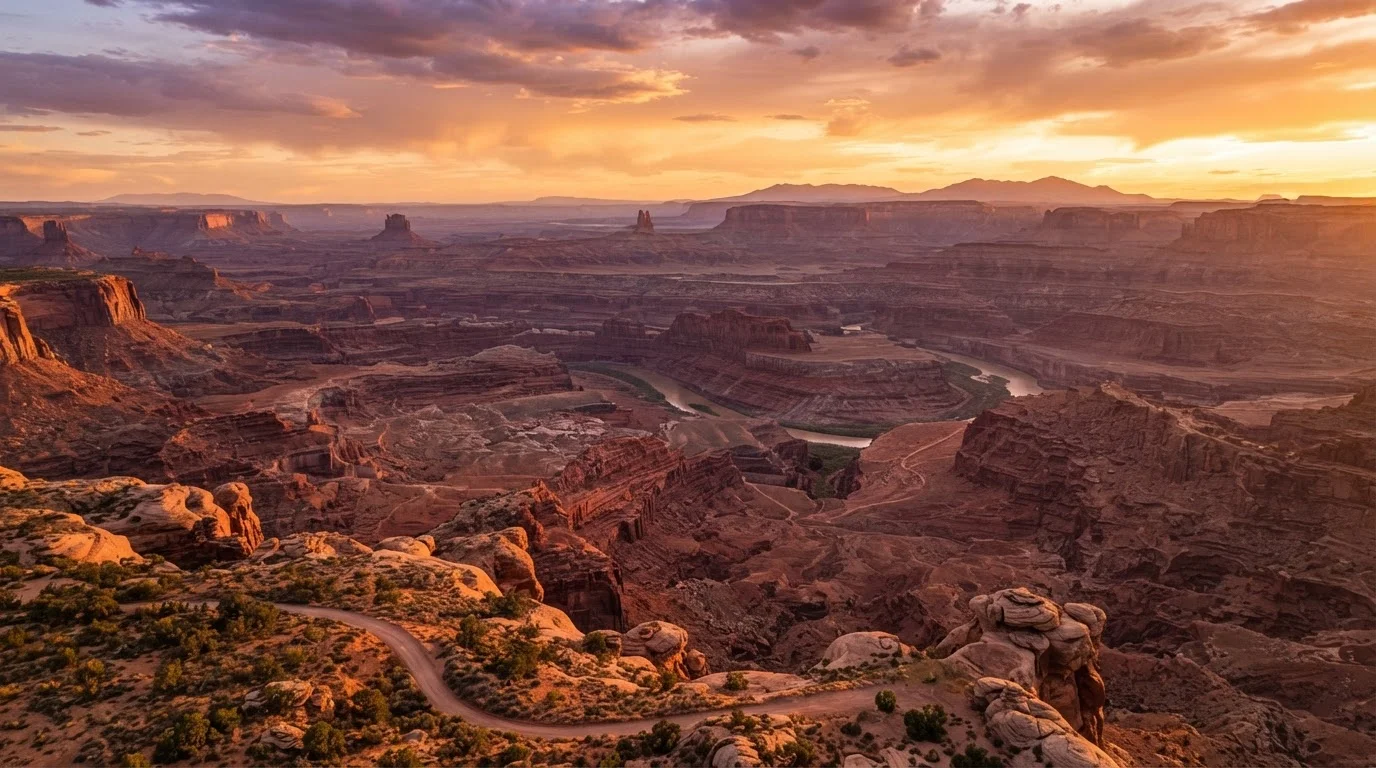
Photo: CoralScripts.com | Explore, Discover, Engage editorial
—— In This Article
How the NPS Organizes America's Public Lands
The National Park Service (NPS) administers more than 400 units across the United States — but the 63 designated national parks represent the crown jewel tier of that system. Understanding how these parks cluster by region helps travelers think practically about what kind of experience they're actually after. Desert solitude, old-growth rainforest, glacially carved granite, subtropical wetland — these aren't just scenic variations. They represent genuinely different ecosystems, climates, infrastructure levels, and planning demands.
Before diving into regional profiles, one clarification worth making: national parks are a specific federal designation, legally distinct from national monuments, national recreation areas, and other NPS units. For a detailed breakdown of how those designations differ, see National Monuments vs. National Parks: Understanding the Difference.
| Total designated national parks | 63 (National Park Service) |
| Total NPS units (all designations) | 400+ (National Park Service) |
| Most-visited national park | Great Smoky Mountains (12M+ annual visitors) (NPS visitor use statistics) |
| Deepest lake in the US | Crater Lake, Oregon (1,943 ft) (US Geological Survey) |
| Highest paved road in continuous US | Trail Ridge Road, Rocky Mountain NP (12,183 ft) (National Park Service) |
| Annual rainfall, Hoh Rain Forest | Over 140 inches (Olympic National Park, NPS) |
The Colorado Plateau and Desert Southwest
Utah's canyon country — anchored by Zion, Bryce Canyon, Arches, Canyonlands, and Capitol Reef — forms the densest concentration of geologically spectacular national parks anywhere in the country. The Colorado Plateau's defining feature is sedimentary rock sculpted by millions of years of uplift and erosion, producing slot canyons, natural arches, and multi-hued hoodoos. The Grand Canyon in Arizona belongs to the same geological story, though on an almost incomprehensible scale.
What distinguishes this region operationally: extreme seasonal temperature swings (summer canyon floors can exceed 110°F; winter rims see snow), mandatory permit systems for popular corridors like Zion's Narrows and Angels Landing, and limited water sources throughout the backcountry. The shoulder seasons — April–May and September–October — offer the most balanced conditions. Pair any Southwest itinerary with seasonal timing guidance to avoid the harshest windows.
The Pacific Coast and Cascades
From Washington's Olympic Peninsula to California's redwood groves, the Pacific corridor showcases the country's greatest range of precipitation-driven landscapes. Olympic National Park alone contains three distinct ecosystems within its boundaries: temperate rainforest (the Hoh Rain Forest receives over 140 inches of rain annually), alpine meadow, and ocean coastline. Crater Lake in Oregon holds the deepest lake in the United States, formed by a volcanic caldera. Sequoia and Kings Canyon in the Sierra Nevada protect the world's largest trees by volume.
The Cascades and Sierra Nevada parks — Rainier, North Cascades, Yosemite — require serious planning around snowpack and road access. Many high-elevation park roads close entirely from November through May or June. Yosemite Valley requires timed-entry reservations during peak months. For travelers considering a road-based approach along the coast, the Pacific Coast Highway route provides a natural connector between several of these parks.
Caldera
A large volcanic depression formed when a magma chamber empties and the overlying rock collapses inward. Crater Lake in Oregon occupies a caldera left by the eruption of Mount Mazama roughly 7,700 years ago.
Hoodoo
A tall, thin spire of rock typically found in arid regions, formed by differential erosion of layered sedimentary rock. Bryce Canyon National Park contains the world's largest concentration of hoodoos.
Temperate rainforest
A forest in a temperate climate zone receiving very high annual precipitation, characterized by dense old-growth trees, heavy moss cover, and year-round moisture. Olympic's Hoh Rain Forest is a prime US example.
Timed-entry reservation
A permit system requiring visitors to book a specific arrival window in advance, used by several high-traffic parks — including Yosemite during peak season — to manage congestion and protect resources.
The Rocky Mountains and Northern Great Plains
Yellowstone and Grand Teton in Wyoming anchor this region, offering geothermal activity found nowhere else in the contiguous US alongside some of the continent's best wildlife viewing — bison herds, grizzly bears, wolves, and pronghorn all roam in accessible numbers. Glacier National Park in Montana, while still dramatic, has seen significant glacier retreat; its famous Going-to-the-Sun Road typically opens fully only between late June and mid-September.
Rocky Mountain National Park in Colorado draws hikers to above-treeline tundra trails accessible by car via Trail Ridge Road, the highest continuous paved highway in the US. This region rewards travelers who prioritize wildlife, high-altitude terrain, and geological diversity. First-time national park visitors should review permit requirements and crowd patterns well in advance — what first-timers typically overlook can make or break a trip here.
The East: Appalachians, Southeast, and Everglades
Great Smoky Mountains National Park receives more visitors than any other national park in the system — over 12 million in recent years — owing partly to its free entry, central eastern location, and stunning fall foliage. The Appalachian parks (Shenandoah in Virginia, New River Gorge in West Virginia) offer humid, deciduous forest experiences quite unlike the arid West, with dense trail networks and accessible gateways near major metro areas. For travelers drawn to urban trail systems as well, urban hiking options in nearby cities can complement a Smokies or Shenandoah visit.
Everglades National Park in Florida occupies an entirely different ecological register: a slow-moving subtropical river of grass, home to American crocodiles, manatees, and hundreds of bird species. It is best visited from December through April; summer brings oppressive humidity, flooding, and mosquito density that make most outdoor activities impractical. Dry Tortugas, accessible only by ferry or seaplane from Key West, rounds out the Florida cluster with coral reef snorkeling and a remote 19th-century fort.
Conditions, entry requirements, permit availability, and road access at national parks change seasonally and year to year. Always verify current information directly with the National Park Service (nps.gov) before finalizing travel plans.

Travel & Places Editorial Team
Travel & Places Editorial Team is the collective byline for our editorial team and contributor network. Articles published under this byline or an editorial pen name are researched, written, and reviewed according to our editorial standards for clarity, consistency, and independence before publication.
View author profile