
First Trip to a US National Park: What No One Tells You Before You Go
Entry fees, permit systems, crowd patterns, and Leave No Trace basics—a grounded introduction to visiting America's public lands.
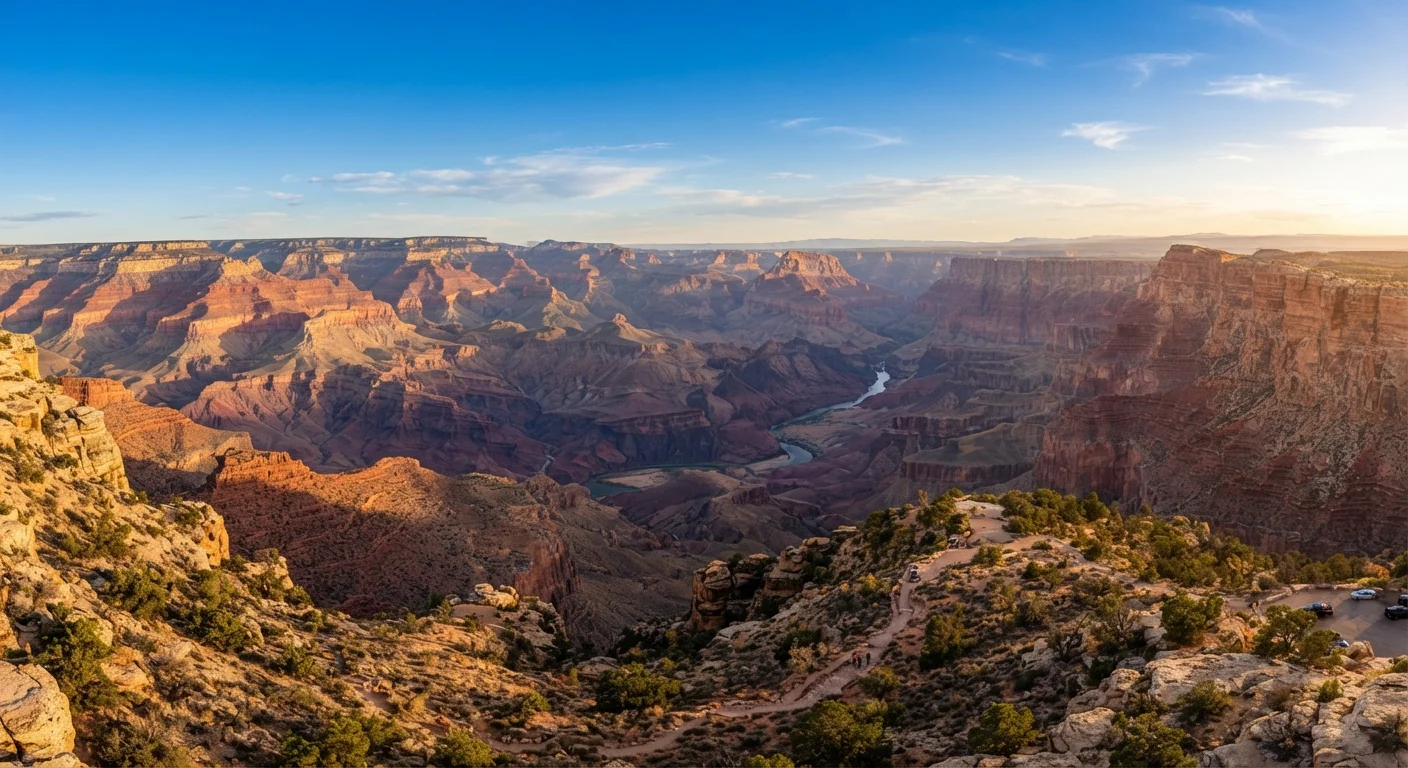
Photo: CoralScripts.com | Explore, Discover, Engage editorial
—— In This Article
Key Takeaways
- An America the Beautiful Annual Pass covers entrance fees at over 2,000 federal recreation sites for one year.
- Many popular parks now require timed-entry reservations — check Recreation.gov well before your trip.
- Shoulder season visits (spring and fall) typically offer smaller crowds and more accessible trails.
- Leave No Trace principles are park policy, not optional etiquette — violations can result in fines.
- Cell coverage is unreliable in most park interiors; download offline maps and carry printed permits.
- Campsite and lodging availability inside parks often books out months in advance, especially in summer.
Entry Fees, Passes, and Reservations
Most US national parks charge an entrance fee, typically ranging from around $15 to $35 per vehicle. The single most practical tool for frequent visitors is the America the Beautiful Annual Pass, which covers entrance fees at national parks, national monuments, national forests, and other federal recreation areas for one calendar year. Discounted versions exist for US residents aged 62 and older, active military, and people with permanent disabilities.
What surprises many first-timers is that paying an entrance fee no longer guarantees same-day access at the most popular parks. Timed-entry reservation systems — managed through Recreation.gov — have become standard at parks like Arches, Glacier, and Yosemite during peak season. These reservations are separate from campsite bookings and often open weeks in advance. Missing the reservation window can mean being turned away at the gate even with a valid pass.
Book Reservations the Moment Windows Open
Recreation.gov releases timed-entry reservations and campsite bookings on fixed schedules, sometimes as early as six months before the visit date. Set a calendar reminder for the exact release time — popular slots for summer weekends at flagship parks can sell out within minutes of opening. Having an account set up in advance saves critical seconds.
For planning your visit in the context of the broader park landscape, see what each national park region actually offers — a useful starting point for choosing your destination.
Permit Systems: More Parks Require Them Than You Think
Beyond entry reservations, a separate layer of permits governs backcountry camping, certain day hikes, and overnight wilderness travel. Parks like Grand Canyon, Zion, and Mount Rainier manage wilderness permits through lotteries or first-come, first-served systems that are fiercely competitive for peak dates.
Some of the most photographed locations in the US — including the Wave in the Vermilion Cliffs National Monument and the Havasupai Falls trail — require dedicated permits obtained months in advance through a lottery. Winning a permit lottery on your first application is genuinely uncommon.
Timed-Entry Reservation
A system requiring visitors to reserve a specific arrival window in advance before entering the park, separate from any camping or lodging booking.
America the Beautiful Pass
A federally issued annual pass that covers entrance fees at national parks and other federal recreation sites across the United States for one year.
Backcountry Permit
An official authorization required to camp or travel in designated wilderness areas away from developed park facilities, often obtained through a lottery system.
Leave No Trace (LNT)
A set of seven outdoor ethics principles designed to minimize human impact on natural environments, embedded in federal land management regulations.
Cryptobiotic Soil
A fragile living crust found on desert soils, composed of bacteria, lichens, and fungi, that can take decades to recover after a single footstep off-trail.
Gateway Town
A community located just outside a national park boundary that provides lodging, dining, fuel, and supplies for park visitors.
Before planning any backcountry component to your trip, review our detailed pre-trip checklist for US wilderness travel, which covers fire restrictions, water sources, and ranger contacts alongside permit logistics.
Crowd Patterns and When to Actually Go
Summer (late June through August) is the busiest period across nearly all US national parks. Parking lots fill before 8 a.m. at parks like Zion and Yosemite, shuttle systems become standing-room only, and trailheads are congested by mid-morning. This isn't just an inconvenience — it affects wildlife visibility, trail safety, and the experience itself.
Shoulder seasons — roughly April through late May and September through October — offer a meaningfully different visit. Temperatures are often more moderate, crowds thinner, and popular trails accessible without pre-dawn starts. Spring brings wildflower blooms and snowmelt waterfalls; fall delivers foliage color and rutting wildlife activity. Timing your trip around US seasonal landscapes is a discipline in itself, and one that pays dividends.
Winter visits are underrated for parks in desert regions — Death Valley, Big Bend, and Joshua Tree are at their most hospitable between November and February. High-elevation parks like Rocky Mountain may be partially or fully closed due to snow.
Leave No Trace: The Principles That Actually Matter
Leave No Trace (LNT) is the framework that governs responsible behavior on public lands. It is not merely advisory etiquette — LNT principles are embedded in federal regulations, and rangers enforce them. The seven principles cover: planning ahead and preparing, traveling on durable surfaces, disposing of waste properly, leaving what you find, minimizing campfire impact, respecting wildlife, and being considerate of other visitors.
In practical terms, this means: pack out everything you pack in, including food scraps and orange peels; stay on designated trails even when they're muddy; keep at least 100 yards from bears and wolves, 25 yards from other wildlife; and never feed any animal, regardless of how habituated it appears. Violations — including off-trail shortcutting that damages cryptobiotic soil in desert parks — can result in citations and fines.
Fire Restrictions Change Frequently
Campfire rules shift frequently based on drought and fire risk conditions. Always check current fire restrictions with the specific park before building any fire, even in established rings. Violating fire restrictions is a federal offense on national park land.
Campfire rules shift frequently based on drought and fire risk conditions. Always check current fire restrictions with the specific park before building any fire, even in established rings. Violating fire restrictions is a federal offense on national park land.
On-the-Ground Logistics First-Timers Overlook
Cell service is unreliable across most park interiors. Download offline maps before you lose signal — apps that support offline topo data are standard kit for park visitors. Carry a printed copy of any required permits, since rangers may not have connectivity to verify digital versions.
Lodging inside popular parks — Yosemite Valley Lodge, El Tovar at the Grand Canyon, Glacier's historic chalets — books out months or more in advance, often releasing on fixed dates a year ahead. Gateway towns outside park boundaries provide a practical fallback, often with more flexibility and lower cost.
Water and food infrastructure varies enormously. Some parks have visitor centers with potable water at regular intervals; remote parks may require you to carry and treat your own water for full days. Gas stations inside parks are rare — check distances before assuming you can refuel en route.
If you're accustomed to urban green spaces and want to understand the contrast, urban hiking within US cities illustrates just how different the infrastructure model is once you step into federal wilderness. And for broader travel planning essentials, from packing lists to itinerary structure, the fundamentals apply just as much to a park trip as to any other journey.
Frequently Asked Questions

Travel & Places Editorial Team
Travel & Places Editorial Team is the collective byline for our editorial team and contributor network. Articles published under this byline or an editorial pen name are researched, written, and reviewed according to our editorial standards for clarity, consistency, and independence before publication.
View author profile