
National Monuments vs. National Parks: Understanding the Difference
Both preserve significant land, but the designations differ in origin, governance, and what visitors can do there. Here's how to tell them apart.
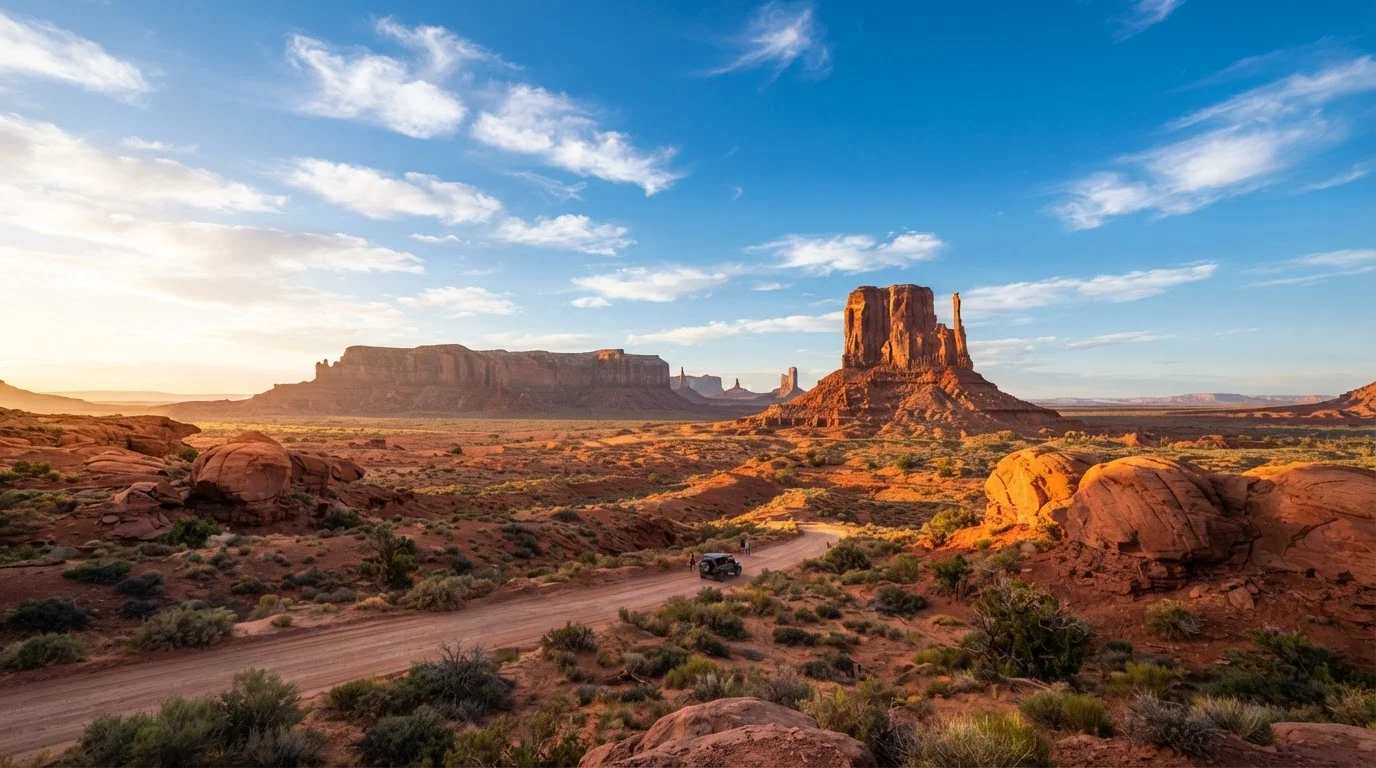
Photo: CoralScripts.com | Explore, Discover, Engage editorial
—— In This Article
Key Takeaways
- National parks are established by Congress; national monuments can be created by presidential proclamation alone.
- Monuments often protect a single specific object or feature; parks typically safeguard broader ecosystems and experiences.
- Both are managed primarily by the National Park Service, but monuments can also fall under the BLM or Forest Service.
- Visitor rules and permitted activities can differ significantly between the two designations.
- Monument boundaries and protections have historically been more vulnerable to revision than those of national parks.
How Each Designation Is Created
The most fundamental difference between a national park and a national monument lies in how each comes into existence. National parks require an Act of Congress — a full legislative process involving committee review, public debate, and presidential signature. This makes park creation relatively slow and politically deliberate.
National monuments, by contrast, can be established by presidential proclamation under the Antiquities Act of 1906 — a law originally designed to allow rapid protection of archaeological sites on federal land. Presidents from Theodore Roosevelt onward have used this authority to protect everything from ancient cliff dwellings to vast ocean areas, often without congressional approval. This speed and flexibility is both the Act's strength and its political flashpoint.
Check the Managing Agency Before You Visit
Before visiting a national monument, confirm which agency manages it — NPS, BLM, or Forest Service — as this affects available facilities, maps, and rules. A monument managed by the BLM may have no entrance station, no cell service, and no maintained restrooms. Checking the relevant agency's website in advance can prevent a frustrating arrival experience.
What Each Is Designed to Protect
The Antiquities Act specifically authorizes monument designation for objects of historic, prehistoric, or scientific interest — a term courts have interpreted broadly over the decades. In practice, monuments often anchor their protection around a defining feature: a volcanic crater, a Civil War battlefield, a collection of ancient petroglyphs, or a rare marine ecosystem.
National parks, by contrast, are typically designed to preserve entire landscapes and ecosystems — the interconnected geology, wildlife, watersheds, and wilderness character of a region. This broader mandate generally results in larger, more comprehensively managed territories. That said, lines blur in practice: some monuments (like Bears Ears in Utah) encompass millions of acres, while some parks protect relatively compact areas.
| National Parks | National Monuments | |
|---|---|---|
| How created | Act of Congress required | Presidential proclamation (Antiquities Act) |
| Primary managing agency | National Park Service | NPS, BLM, or Forest Service |
| Scope of protection | Entire ecosystems and landscapes | Specific objects, sites, or features |
| Typical visitor infrastructure | Developed (fees, centers, trails) | Highly variable — basic to none |
| Extractive uses permitted | Prohibited by law | Sometimes permitted in BLM monuments |
| Boundary permanence | Requires congressional action to alter | Can be modified by executive order |
Management, Access, and What Visitors Can Do
Both designations fall primarily under the National Park Service (NPS), but national monuments may also be managed by the Bureau of Land Management (BLM) or the U.S. Forest Service, depending on which agency oversees the underlying federal land. This affects everything from staffing levels to visitor services.
National parks almost universally have entrance fees, staffed visitor centers, maintained trail systems, and regulated camping. Monuments run the gamut — some, like the Statue of Liberty National Monument, are heavily developed and visited by millions annually, while others are roadless, fee-free, and largely unmarked. Permitted activities also vary: grazing, mining, and energy extraction are legally prohibited in national parks but have historically been allowed in some monument areas, particularly when monuments were managed by the BLM.
For travelers planning their first visit to either type of protected land, a grounded introduction to visiting US public lands covers entry fees, permit systems, and Leave No Trace essentials that apply broadly across designations.
430+
Total NPS-managed sites nationwide
The National Park Service oversees more than 430 units, including parks, monuments, seashores, battlefields, and historic sites.
1906
Year the Antiquities Act was signed
President Theodore Roosevelt signed the Antiquities Act in 1906, enabling rapid executive protection of significant federal lands and objects.
Stability of Protections Over Time
One practical distinction that matters to conservationists and long-range travelers alike: national park boundaries are extraordinarily difficult to shrink or eliminate, as doing so requires congressional action. National monument protections have proven more legally and politically malleable. Several monument boundaries have been reduced or modified by executive action in recent decades, prompting ongoing legal and legislative debate.
This difference in legal durability shapes how both designations are perceived — national parks carry a certain permanence and cultural prestige that monuments, despite sometimes protecting equally significant landscapes, don't always enjoy. For curious domestic explorers weighing where to go, understanding these distinctions adds meaningful context to any itinerary. What each national park region actually offers provides a closer look at how geography and ecosystem type shape the visitor experience across the country's most celebrated protected landscapes.

Travel & Places Editorial Team
Travel & Places Editorial Team is the collective byline for our editorial team and contributor network. Articles published under this byline or an editorial pen name are researched, written, and reviewed according to our editorial standards for clarity, consistency, and independence before publication.
View author profile