
Your First International Trip as an American: What Nobody Tells You Beforehand
From customs forms to currency exchange, here's the practical groundwork first-time American travelers abroad often wish they'd laid sooner.
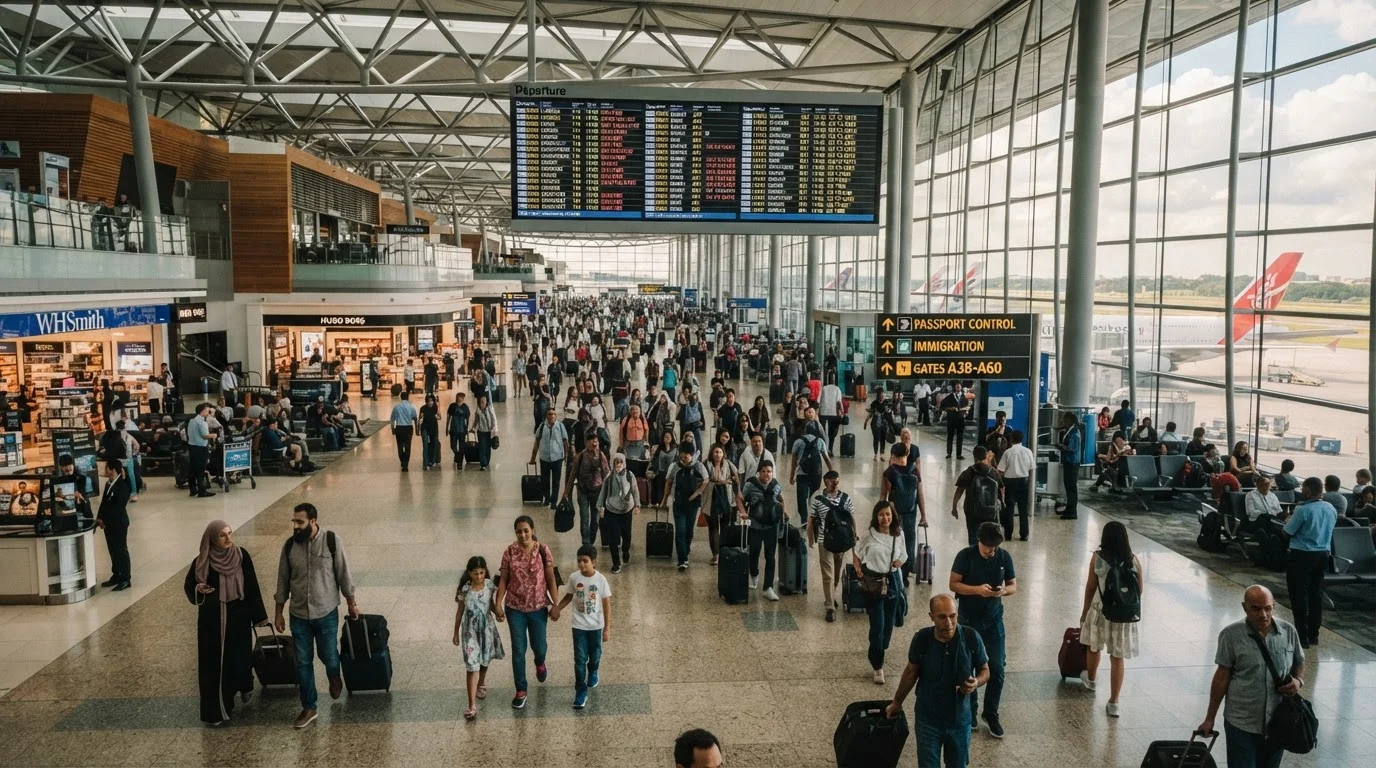
Photo: CoralScripts.com | Explore, Discover, Engage editorial
—— In This Article
Key Takeaways
- A valid passport needs at least six months of remaining validity beyond your travel dates for most international destinations.
- Airport currency exchange kiosks typically carry the worst exchange rates — plan your cash strategy before you land.
- Many countries require arrival cards or customs declarations even before you reach immigration — read all in-flight forms carefully.
- Tipping customs vary dramatically by country; what reads as generous in the US can be seen as insulting elsewhere.
- Notifying your bank before departure prevents your cards from being flagged and frozen for suspected fraud.
- An international SIM or eSIM is usually cheaper than paying your domestic carrier's roaming fees for extended trips.
Your Passport Is Just the Beginning
Most first-time international travelers treat obtaining a passport as the finish line of trip preparation. It is actually the starting line. Several details go overlooked until they become problems at the airport or border.
First, check your passport's expiration date carefully. Many countries require at least six months of validity remaining beyond your intended return date — not just beyond your departure. A passport that expires two months after your trip can result in denied boarding. Similarly, some destinations require a minimum number of blank visa pages; if your passport is heavily stamped, verify this requirement in advance.
Second, look into whether your destination requires a visa or an electronic travel authorization (ETA). Countries like Australia, Canada, and the European Union's Schengen Area have their own pre-entry authorization systems that are separate from a traditional visa but still mandatory. These are typically applied for online and approved quickly, but they are not automatic. The US State Department's country information pages and the destination's official embassy website are the authoritative sources to check — not third-party booking platforms.
For a broader checklist of what to arrange in the weeks before departure, see our pre-departure checklist.
Six-month passport rule
A requirement by many countries that your passport remains valid for at least six months past your return date — not just your departure date — or you may be denied boarding or entry.
Electronic Travel Authorization (ETA)
A pre-entry approval required by some countries that is applied for online before travel. It is separate from a visa but equally mandatory for entry.
Dynamic Currency Conversion (DCC)
An option offered at foreign payment terminals to pay in your home currency instead of local currency. The rate is set by the merchant's bank and is typically less favorable than paying in local currency.
Customs declaration
A required form disclosing what goods, food, and amounts of currency you are bringing into a country. Accurate completion is legally required; omissions can result in fines.
STEP (Smart Traveler Enrollment Program)
A free US State Department service that registers your international travel with the nearest Embassy or Consulate, enabling emergency contact and assistance abroad.
Mid-market exchange rate
The midpoint between the buy and sell prices of two currencies on global markets. It is the benchmark rate; currency exchangers typically offer a rate worse than this and keep the difference as a fee.
Money Abroad: What Catches First-Timers Off Guard
Currency management is where many first-time international travelers lose money unnecessarily. The most common mistake is exchanging dollars at an airport kiosk immediately after landing. These kiosks are convenient, but they typically offer rates well below the mid-market rate and layer on fees. A local ATM connected to a major network generally provides a more competitive rate, though your home bank may charge its own withdrawal fees.
Before you leave, notify your bank and credit card issuers of your travel dates and destinations. Without a travel notification, foreign transactions can trigger fraud alerts that freeze your cards — a frustrating situation to resolve from another country. Ask specifically whether your accounts carry foreign transaction fees (typically 1–3% per purchase) and consider opening a no-fee account if you travel internationally with any regularity.
When paying by card at foreign terminals, you may be offered DCC — the option to pay in US dollars rather than the local currency. Decline this. DCC rates are set by the merchant's bank, not your card network, and are almost always worse. Always choose to pay in local currency.
For a full breakdown of exchange options, our guide on when airport kiosks, ATMs, and local banks each make sense walks through the trade-offs in detail.
Set Up Your Cards Before You Leave
Contact your bank and credit card issuers at least a week before departure to add a travel notification. While you're at it, ask about international ATM fees and whether a no-foreign-transaction-fee card is available through your institution. Having two different payment methods — ideally from different card networks — provides a reliable backup if one is declined.
Customs, Immigration, and Arrival Paperwork
The arrival process in a foreign country involves more steps than most first-timers anticipate. On many international flights, cabin crew distribute arrival cards — small paper forms requesting your passport details, home address, accommodation in the destination country, and the purpose of your visit. Complete these forms on the plane; you will need them before reaching passport control.
Customs declarations are a separate step. Most countries require you to declare what you are bringing in, including amounts of currency above a certain threshold (often the equivalent of $10,000 USD), food items, and commercial quantities of goods. Failing to declare items can result in fines or confiscation even when no harm was intended — when in doubt, declare it.
At passport control, have your travel documents organized and accessible: passport, completed arrival card, return flight confirmation, and proof of accommodation. Officers may ask where you are staying, how long you intend to visit, and the purpose of your trip. Answer clearly and briefly. Entry is not guaranteed — officers have discretion — so avoid overly vague answers.
Customs Omissions Have Real Consequences
Failing to declare items at customs — whether food, currency above the threshold, or goods — can result in fines, confiscation, or being flagged for additional screening on future trips. Ignorance of local customs rules is not typically accepted as an excuse. If you are uncertain whether something needs to be declared, declare it and let the officer decide.
Cultural Norms Americans Often Underestimate
American travelers carry cultural habits that are entirely normal at home and unexpectedly jarring elsewhere. Volume in public spaces is one. In many European, East Asian, and Japanese contexts, speaking loudly in restaurants, transit, or hotels is considered disruptive rather than expressive. Observing the ambient behavior around you is the fastest calibration tool.
Tipping is perhaps the most miscommunicated norm in international travel. In the United States, tipping 15–20% in restaurants and rounding up for most services is standard. In Japan, tipping is generally considered rude — service workers may refuse or be offended by the gesture. In many European countries, rounding up a bill or leaving small change is common, but adding a 20% gratuity is unusual. In some destinations, a service charge is already included in the bill. Our country-by-country tipping guide explains the variations in detail.
Dress codes also matter more than many American travelers expect — particularly at religious sites, government buildings, and certain restaurants. Researching specific dress expectations for places you plan to visit can prevent being turned away at the door.
For broader etiquette principles that apply across many destinations, see our guide on cultural etiquette principles that transfer across countries.
Staying Connected and Safe Without Overspending
Defaulting to your US carrier's international roaming plan can cost far more than alternatives. Before departure, check whether your phone supports eSIM technology — if so, purchasing a local data eSIM for your destination is often a fraction of domestic roaming rates and can be set up before you board. Physical international SIM cards are available at many destination airports and city convenience stores and represent another cost-effective option.
Regardless of your connectivity solution, download offline maps for your destination before you leave. Apps that support offline map access allow navigation without any data connection — invaluable in areas with poor signal or while roaming is inactive.
On the safety side, register your international trip with the US State Department's Smart Traveler Enrollment Program (STEP). Registration is free and allows the nearest US Embassy or Consulate to reach you in an emergency — a natural disaster, civil unrest, or family emergency back home. It also helps the State Department locate you if contact becomes necessary.
Keep digital copies of your passport, travel insurance details, and accommodation confirmations stored in a secure, cloud-accessible location. Share your itinerary with a trusted contact at home. These are simple steps that significantly reduce friction if something goes wrong.
For a broader overview of what the first international trip involves from documents to health preparation, our guide on everything first-time international travelers need to know is a strong companion read.
US State Department Travel Website
The official source for country-specific entry requirements, travel advisories, and the Smart Traveler Enrollment Program (STEP). An essential first stop when planning any international trip.
Smart Traveler Enrollment Program (STEP)
A free registration service that connects your international itinerary with the nearest US Embassy or Consulate — useful for emergency outreach and receiving safety alerts while abroad.
Managing Money Across Borders
Our in-depth editorial guide explaining how foreign exchange, travel-friendly cards, and local cash needs interact — helping you plan your spending with fewer surprises abroad.
Frequently Asked Questions

Travel & Places Editorial Team
Travel & Places Editorial Team is the collective byline for our editorial team and contributor network. Articles published under this byline or an editorial pen name are researched, written, and reviewed according to our editorial standards for clarity, consistency, and independence before publication.
View author profile