
Currency Exchange Abroad: When Airport Kiosks, ATMs, and Local Banks Each Make Sense
Not all currency exchange methods cost the same or work everywhere. Learn the trade-offs between each approach before landing in a new country.
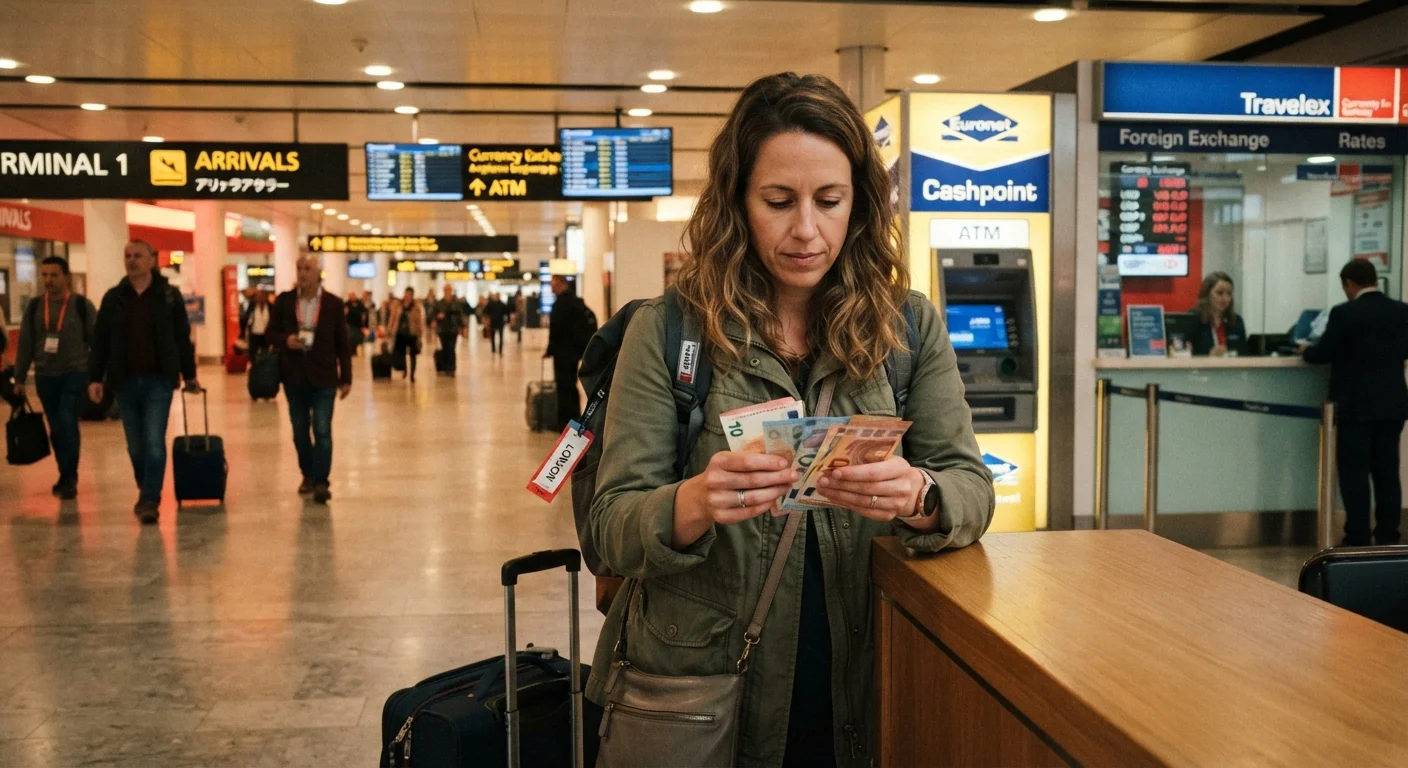
Photo: CoralScripts.com | Explore, Discover, Engage editorial
—— In This Article
Key Takeaways
- Airport kiosks offer convenience but typically carry the highest fees and least favorable exchange rates.
- ATMs connected to global networks usually deliver competitive rates, though foreign transaction and ATM operator fees still apply.
- Local banks and credit unions abroad can offer strong rates, but hours, language barriers, and documentation requirements vary widely.
- Carrying a small amount of local currency before departure reduces dependence on any single method at arrival.
- Always decline dynamic currency conversion when offered — it nearly always costs you more.
Why the Exchange Method Matters More Than You Think
The difference between a poor and a competitive exchange rate may feel abstract until you do the math. On a $1,000 exchange, a spread of just 5 percentage points costs $50 — enough to cover a solid dinner or a night's accommodation in many destinations. Multiply that across a two-week trip and the cumulative drag becomes significant.
Currency exchange is not a single product. It is a spectrum of services, each with different cost structures, availability windows, and practical limitations. Understanding those trade-offs before you land is exactly the kind of preparation that separates experienced travelers from frustrated ones. For a broader look at where currency fits inside your overall travel spending, see how a travel budget actually breaks down.
| Airport Kiosk | Local ATM | Local Bank Branch | |
|---|---|---|---|
| Typical rate vs. mid-market | 8–15% below mid-market | 1–4% below mid-market | 0.5–3% below mid-market |
| Availability | 24/7 in major terminals | Wide; varies by country | Limited hours, weekdays |
| Transaction fees | Flat fee + high spread | ATM + US bank fees | Low to none |
| Convenience | Very high | High | Moderate to low |
| Best transaction size | Small emergency amounts | Moderate, recurring | Larger single exchanges |
| Documentation needed | Usually none | Debit/credit card + PIN | Passport typically required |
Airport Currency Kiosks: Convenient, but at a Cost
Airport exchange kiosks — operated by chains such as Travelex and similar providers in major international terminals — are designed around one thing: capturing travelers at their most cash-dependent moment. That leverage shows up in the pricing. Kiosks routinely apply a spread of 8–15% above the mid-market rate, plus flat service fees that disproportionately punish small transactions.
When does a kiosk make sense? Narrowly: when you need a modest amount of local cash immediately upon arrival and have no alternative. Think enough for a taxi, airport bus, or a meal before you can reach an ATM. The operative word is modest — exchange only what you need to bridge the gap, not your full travel budget.
Avoid Dynamic Currency Conversion
Dynamic currency conversion (DCC) is offered at ATMs, point-of-sale terminals, and exchange kiosks worldwide. It lets you pay or withdraw in USD instead of local currency — which sounds convenient but virtually always means a worse rate. The conversion markup, set by the vendor rather than your card network, typically ranges from 3–7% above what your bank would charge. Always choose to be charged in local currency.
One non-negotiable rule applies at kiosks and everywhere else: if a terminal or cashier offers to complete your transaction in US dollars rather than local currency — a practice called dynamic currency conversion (DCC) — always decline. DCC locks in an inferior rate set by the vendor, not the network.
ATMs: The Workhorse Option for Most Travelers
Withdrawing local currency from an ATM connected to a major network (Visa/Plus, Mastercard/Cirrus) is the method most experienced international travelers rely on as their primary cash source. The exchange rate applied is typically the wholesale interbank rate, which is meaningfully better than anything a kiosk will offer.
The fee picture is more layered, though. You may face: a foreign transaction fee from your US bank (commonly 1–3%), a fixed ATM operator fee charged by the foreign machine, and potentially a fee from your US bank for using an out-of-network ATM. Travelers who use accounts specifically designed for international use — some online banks and credit unions reimburse foreign ATM fees — can reduce or eliminate most of these charges.
Before You Leave: Set Up Your Card for International Use
Notify your US bank of your travel dates and destinations before departure — many institutions still flag foreign transactions as fraud without prior notice. If your current account charges foreign transaction fees, consider opening a travel-oriented account in advance. A few days of preparation can eliminate fees that would otherwise compound across every ATM withdrawal.
Practically speaking, locate ATMs affiliated with reputable local or international banks rather than standalone machines in tourist zones, which sometimes apply inflated operator fees. Withdraw in larger, less frequent amounts to minimize per-transaction fixed costs — but balance that against the security risk of carrying too much cash at once. For a fuller picture of how cards and cash interact abroad, managing money across borders covers the mechanics in detail.
Local Banks: Best Rates, Highest Friction
Walking into a local bank branch at your destination and exchanging USD for local currency can yield rates close to the interbank benchmark — often better than any ATM scenario once fees are netted out. This is especially true in countries where bank-run exchange windows are the established norm, such as much of Eastern Europe, South and Southeast Asia, and parts of Latin America.
The trade-offs are real. Bank hours are limited and frequently exclude weekends and holidays. You will likely need your passport. Language barriers and unfamiliar queuing systems add friction. Some banks restrict currency exchange to account holders. For a short city break, this effort rarely pencils out. For a longer stay where you plan to exchange $500 or more, the math can favor the extra legwork.
Independent licensed exchange bureaus (often called casa de cambio, bureau de change, or similar) occupy the middle ground — typically better rates than airport kiosks, without the full complexity of a bank visit. Seek out those operating in non-tourist commercial districts, where competition keeps margins tighter. First-time travelers heading abroad will find additional context on currency planning in our guide everything first-time international travelers need to know.
Exchange rates, fees, and availability vary by country, institution, and time. Always verify current conditions through official bank or government sources before traveling, and carry backup payment options in case a preferred method is unavailable.

Travel & Places Editorial Team
Travel & Places Editorial Team is the collective byline for our editorial team and contributor network. Articles published under this byline or an editorial pen name are researched, written, and reviewed according to our editorial standards for clarity, consistency, and independence before publication.
View author profile