
Cultural Etiquette Principles That Transfer Across Many Countries
Tipping norms, dress codes, greetings, and dining customs vary widely. These foundational etiquette principles help you navigate unfamiliar settings respectfully.
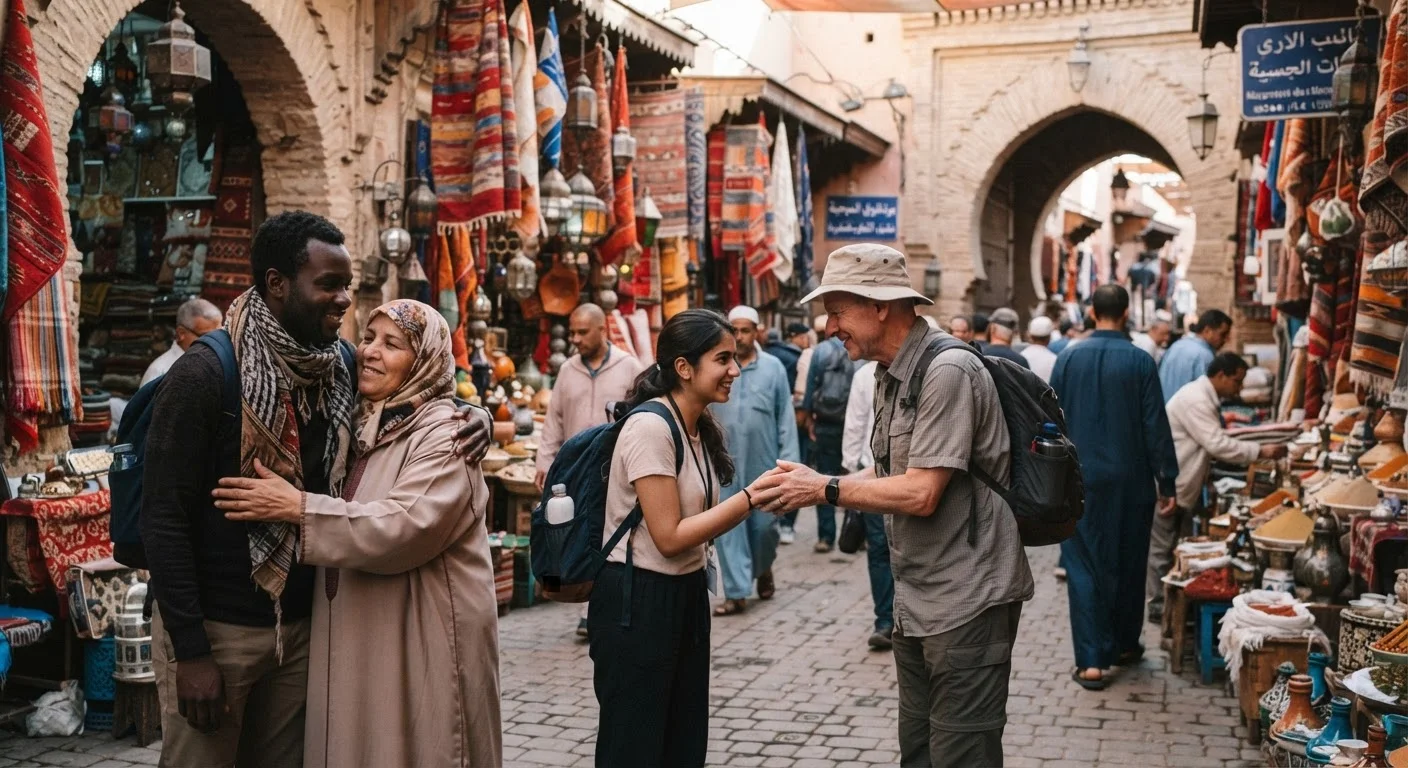
Photo: CoralScripts.com | Explore, Discover, Engage editorial
—— In This Article
Key Takeaways
- Observing locals before acting is the single most reliable etiquette strategy in any country.
- Tipping norms range from expected to actively offensive — always research destination-specific customs.
- Modest dress, quiet volume, and deference in religious or formal spaces are near-universal safe defaults.
- Learning a few words of the local language signals respect and almost always generates goodwill.
- Physical greetings vary significantly; when unsure, wait for the local person to initiate contact.
Why Transferable Etiquette Matters
American travelers abroad frequently encounter a disorienting gap between what feels natural at home and what reads as respectful — or rude — in another country. The good news is that cultural etiquette isn't entirely context-specific. A core set of principles applies broadly enough that mastering them meaningfully reduces the risk of unintentional offense across most international destinations.
This isn't about performing a perfect imitation of local custom. It's about demonstrating awareness, humility, and genuine interest in the places you visit. For deeper preparation before your first international journey, see what first-time American travelers abroad often wish they'd known.
Observe before acting in any unfamiliar social setting
Every culture has unspoken rhythms that aren't captured in guidebooks. Pausing to watch how locals interact — at a market, a restaurant, or a transit stop — gives you real-time data that generic advice can't provide. It also signals humility, which is recognized and appreciated across virtually all cultures.
Research tipping norms for each specific country before traveling
What's generous in one country is offensive in another. Blanket rules — tip 15–20% everywhere — can cause genuine social friction. Country-level research takes minutes and prevents an awkward moment from defining a service interaction.
Default to modest, covered dress in religious and formal settings
Dress codes at places of worship and formal institutions exist for reasons that run deep — spiritual, historical, and social. Arriving underprepared signals indifference to those values. A packed scarf or long shirt resolves most situations.
Learn at least three to five words or phrases in the local language
Language is the most direct signal of respect for a culture. Even a mispronounced 'thank you' in the local tongue communicates effort in a way that defaulting to English does not. It often changes the entire tenor of a brief interaction.
Follow the local lead on physical greetings rather than initiating
Physical contact norms — handshakes, bows, cheek kisses, no contact at all — vary by culture, gender, and context. Initiating the wrong form of greeting creates awkwardness that can shadow an entire first meeting. Waiting a beat eliminates most of the risk.
Lower your speaking volume in quiet-culture countries and shared public spaces
Conversational volume is one of the most consistent ways American travelers inadvertently draw negative attention. In many cultures, speaking loudly in public is associated with aggression or poor manners, not friendliness. A simple adjustment protects both your interactions and those around you.
Navigating Tipping, Dress, and Dining
Three categories trip up American travelers more than almost any others: tipping, dress codes, and table manners. Each carries heavy cultural weight, and the defaults most Americans rely on don't always translate.
When in Doubt, Under-tip Rather Than Over-explain
In countries where tipping is uncommon, leaving money on the table can create confusion or mild offense — staff may chase you down thinking you forgot your change. If you're genuinely unsure whether a tip is appropriate, a small gesture of thanks through eye contact and a spoken 'thank you' in the local language often carries more social weight than extra currency.
Tipping is perhaps the most variable. In Japan and South Korea, leaving a tip can be perceived as insulting. In many parts of Europe, rounding up a bill is customary but leaving 20% is excessive. In some regions of the Middle East and Latin America, a service charge is already included. For a detailed regional breakdown, tipping culture varies far more than most travelers expect.
Dress norms are especially important at religious sites. Covered shoulders and knees are expected at temples, mosques, and cathedrals across much of the world — regardless of the outdoor temperature. Carrying a lightweight scarf or sarong gives you flexibility without overpacking.
Dining customs also diverge sharply. Slurping noodles is polite in Japan. Finishing your entire plate in some Chinese households signals the host didn't provide enough food. In Ethiopia, sharing from a communal injera is deeply communal — using only your right hand matters. Observe what those around you do before diving in.
74%
Travelers who regret a cultural misstep abroad
According to a survey by Expedia Group, nearly three in four travelers reported at least one moment of cultural awkwardness during international travel that they wished they'd been better prepared for.
196
Countries with distinct tipping customs
With nearly 200 sovereign nations, each carrying its own service culture, no single tipping rule applies universally — reinforcing why destination-specific research is essential.
Greetings, Volume, and Physical Space
How you say hello carries enormous social weight. A firm handshake, a bow, a cheek kiss, or pressed palms — the correct greeting varies by country, context, and relationship. The safest default when meeting someone new internationally is to pause briefly, make gentle eye contact, and let the local person initiate the physical form of greeting. Mirroring their gesture immediately signals attentiveness.
Volume is another underappreciated variable. Americans tend to speak at volumes that read as loud or aggressive in quieter cultural contexts — particularly in Japan, Scandinavia, and parts of Southeast Asia. In restaurants, public transit, and museums especially, modulating your voice is a simple, immediate way to signal cultural awareness.
Personal space norms also shift dramatically. In many Middle Eastern and Latin American cultures, standing close during conversation expresses warmth. In Northern European and East Asian contexts, more distance is the norm. Neither is objectively correct — they're simply different conventions worth learning before you land.
“Travel is fatal to prejudice, bigotry, and narrow-mindedness, and many of our people need it sorely on these accounts.”
— Mark Twain, American author and travel writer, from 'The Innocents Abroad' (1869)
Quick Wins You Can Apply Immediately
The practices above require ongoing attention, but several etiquette habits can be adopted before you even board the plane. Knowing a few words in the local language — please, thank you, excuse me — consistently generates disproportionate goodwill. Locals recognize the effort even when the pronunciation is imperfect.
Managing money locally also intersects with etiquette: having small bills available for informal transactions, avoiding ostentatious display of wealth, and understanding when cash is culturally preferred over cards are all part of traveling respectfully. For practical guidance on that dimension, managing money across borders involves more nuance than most travelers anticipate.
For a consolidated starting point across all your trip logistics, explore the travel planning hub for budgeting, packing, and organizational frameworks.

Travel & Places Editorial Team
Travel & Places Editorial Team is the collective byline for our editorial team and contributor network. Articles published under this byline or an editorial pen name are researched, written, and reviewed according to our editorial standards for clarity, consistency, and independence before publication.
View author profile