
The Pre-Departure Checklist Every International Traveler Should Run Through
Documents, health prep, financial notifications, and device settings — a structured checklist to work through in the weeks and days before you fly.
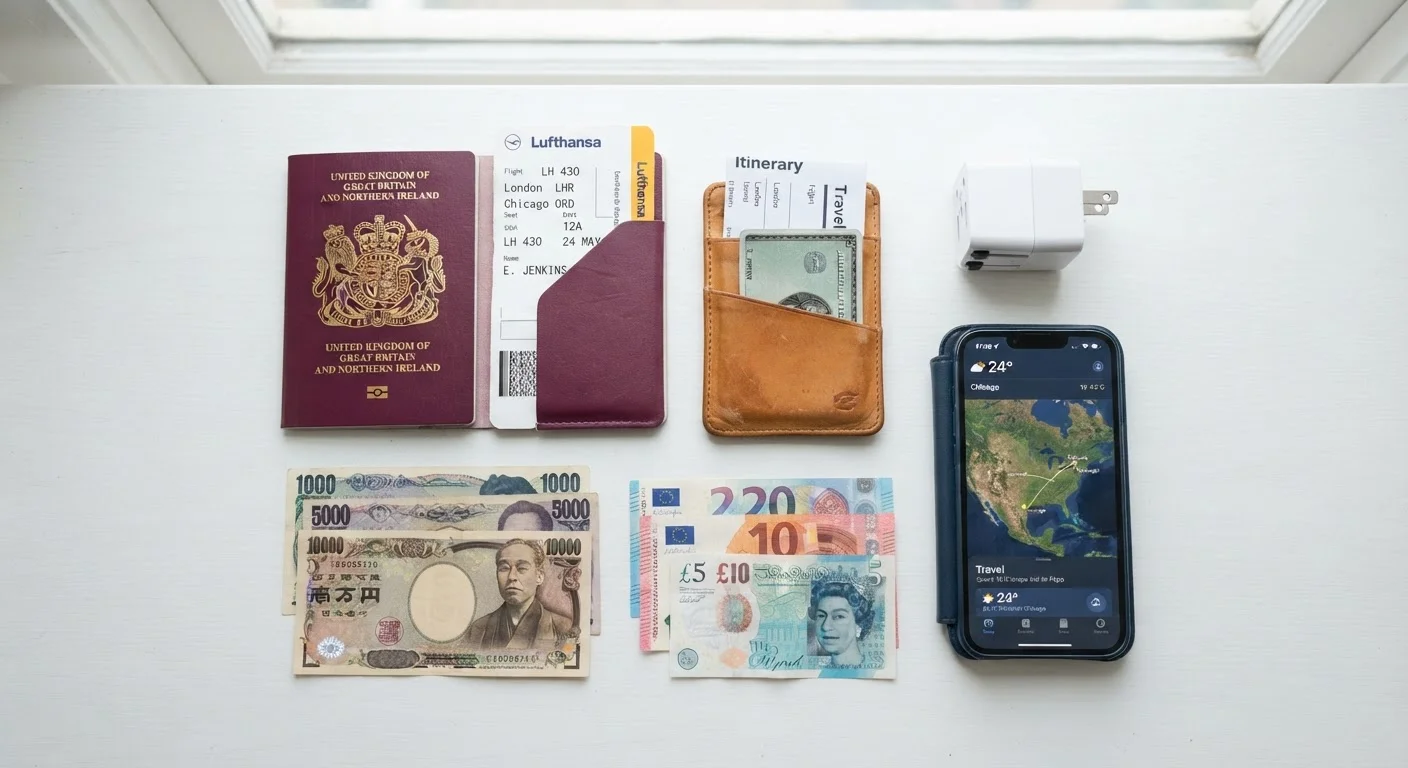
Photo: CoralScripts.com | Explore, Discover, Engage editorial
—— In This Article
Key Takeaways
- Passport validity requirements often extend well beyond your travel dates — verify at least six months ahead.
- Notifying your bank before departure prevents cards from being blocked on arrival.
- Health prep for international travel can require weeks of lead time for certain vaccinations.
- Downloading offline maps and saving key documents to cloud storage costs nothing and saves significant stress.
- Entry requirements — including visas, health declarations, and customs rules — must be verified with official government sources.
Why a Structured Pre-Departure Checklist Matters
The difference between a smooth international departure and a frantic last-minute scramble almost always comes down to preparation. Unlike domestic travel, crossing international borders introduces a layered set of requirements — document validity rules, entry conditions, currency logistics, health documentation, and device configurations — that don't forgive oversight. A missed visa requirement or an expired passport can end a trip before it starts.
This checklist is built for American travelers preparing for international departure. It's organized by category and timeline so you can work through it in stages rather than treating it as a single-sitting exercise. For a broader overview of what international travel involves at every stage, see our first-time international traveler guide. For a timeline-based approach covering the full 30-day run-up, our 30-days-out preparation checklist is a useful companion resource.
Documents and Entry Requirements
Health and Medical Preparation
Financial and Banking Logistics
Device and Connectivity Setup
Logistics and Home Preparation
Final 24-Hour Review
Tools and Resources You'll Need
Before working through the checklist, gather the following tools and documents. Having everything accessible in one session saves time and reduces the risk of skipping steps under time pressure.
U.S. Passport
Your primary identity and entry document — confirm validity and carry it on your person during border crossings.
travel.state.gov
The official U.S. State Department travel website for country-specific advisories, entry requirements, and visa information.
CDC Travelers' Health Website (wwwnc.cdc.gov/travel)
Official source for destination-specific vaccination recommendations and health notices for international travelers.
Travel Insurance Policy Documents
Keep your policy number and the insurer's 24-hour emergency line accessible at all times during your trip.
Cloud Storage Service
Store digital copies of your passport, visa, insurance, and booking confirmations for access from any device.
Universal Power Adapter
Ensures your devices can be charged at your destination regardless of local outlet type.
Offline Mapping Application
Allows navigation in your destination city without requiring a mobile data connection.
Keep digital copies of your most critical documents — passport bio page, travel insurance policy, and accommodation confirmations — stored in a cloud service you can access from any device. This redundancy is one of the simplest safeguards available to any traveler. For broader trip planning context, the complete trip planning guide covers how documentation fits into the full planning arc.
Entry Requirements Can Change Rapidly
Visa policies, health declarations, and customs rules are subject to change with limited advance notice. Always verify current entry requirements through official government sources — the destination country's embassy or consulate and the U.S. State Department — within a few days of departure, not just at the time of booking. Do not rely solely on third-party travel sites for this information.
Prescription Medication Rules Vary by Country
Medications that are legal and common in the United States may be controlled or prohibited in certain destinations. Failure to declare medications at customs can result in serious legal consequences. Research your specific medications against the destination country's import rules and carry documentation from your prescribing physician.
Health Preparation: Start Earlier Than You Think
Health preparation is the category most commonly underestimated by travelers. Some vaccinations require a series of doses administered weeks apart, meaning a last-minute travel clinic visit may not be sufficient. Contact your healthcare provider or a travel medicine clinic as early as six to eight weeks before departure when possible.
Requirements and recommendations vary significantly by destination and can change. Always verify current health entry requirements — including any required vaccination certificates or health declarations — directly with the destination country's official embassy or health ministry website, as well as the U.S. Centers for Disease Control and Prevention (CDC) travel health pages. Our guide to planning travel around health needs provides general guidance on factoring medications, vaccinations, and accessibility into your planning; consult a qualified healthcare professional for personal medical decisions.
This Checklist Is Not a Substitute for Official Guidance
Entry requirements, health advisories, and visa rules are set by sovereign governments and can change without notice. The information in this checklist is general and educational. Before any international trip, verify all requirements directly with official sources — the U.S. State Department, the destination country's embassy, and your healthcare provider. No checklist can account for every destination's specific or evolving conditions.

Travel & Places Editorial Team
Travel & Places Editorial Team is the collective byline for our editorial team and contributor network. Articles published under this byline or an editorial pen name are researched, written, and reviewed according to our editorial standards for clarity, consistency, and independence before publication.
View author profile