
Everything First-Time International Travellers Need to Know Before Departure
A comprehensive starting point covering passports, visas, currency, health prep, and airport navigation for those heading abroad for the first time.
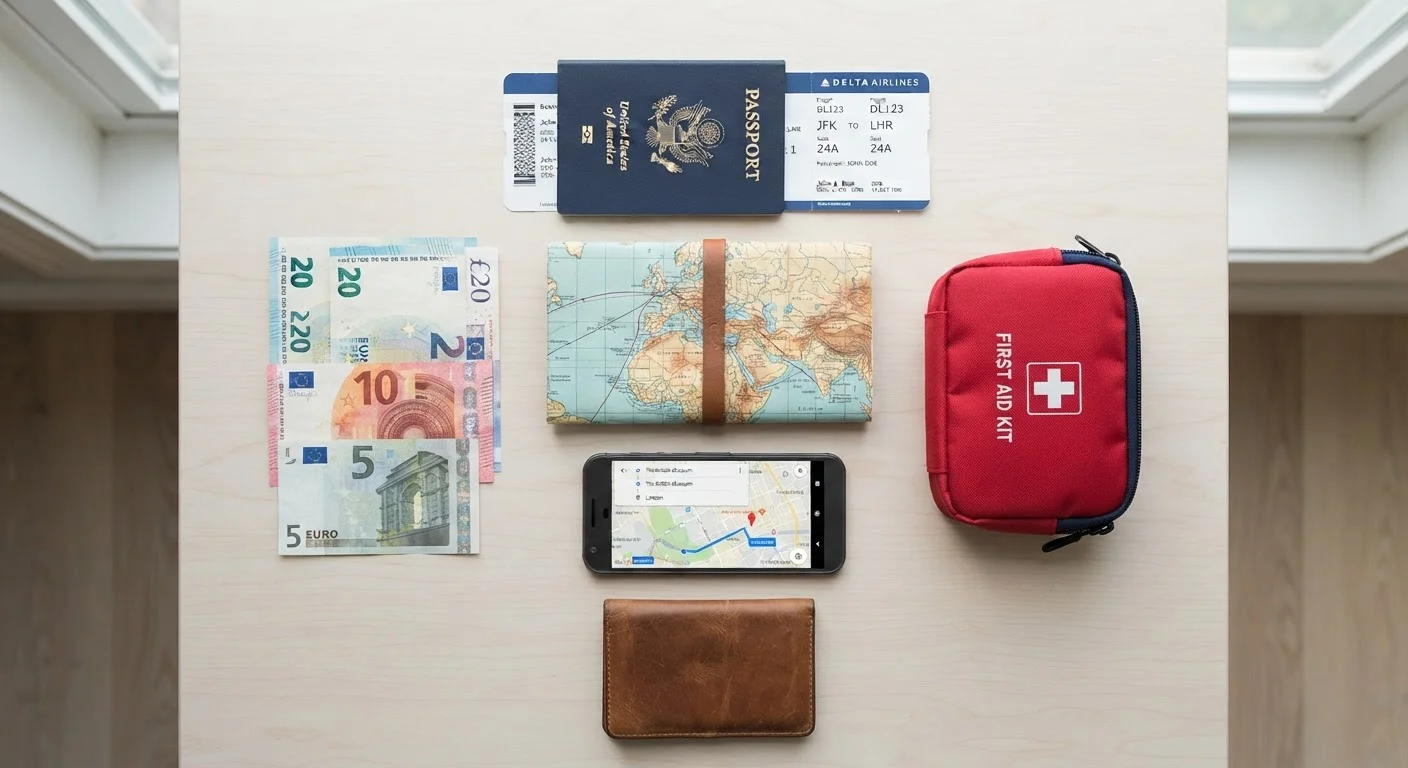
Photo: CoralScripts.com | Explore, Discover, Engage editorial
—— In This Article
Key Takeaways
- Apply for or renew your passport at least six months before your departure date.
- Visa requirements vary by destination and must be verified through official government sources.
- Health preparation, including vaccinations and travel insurance, should begin weeks before departure.
- ATMs abroad typically offer better exchange rates than airport kiosks, but plan for both.
- International airports have distinct customs and immigration processes — knowing them reduces stress.
- Registering with the U.S. State Department's STEP program adds a layer of safety abroad.
Documents: Your Passport and Visa Foundation
Your passport is the single most important document you will carry abroad. U.S. passports are valid for ten years for adults and five years for minors, but many countries require at least six months of validity remaining beyond your planned return date. Apply or renew early — the U.S. State Department's processing times can stretch considerably during peak seasons.
Beyond the passport, understand whether your destination requires a visa. Some countries participate in visa-on-arrival or electronic authorization programs (such as the European Union's ETIAS, expected to launch for U.S. travelers). Others require a visa secured before departure. Always verify current entry requirements through the destination country's official embassy website or the U.S. State Department's travel portal — requirements change, and unofficial sources can be outdated.
Make two photocopies of your passport's data page: leave one with a trusted contact at home and keep one separate from your actual passport while traveling. Store digital copies in a secure, password-protected cloud service as well.
Passport validity
The period during which your passport is legally usable for travel. Many countries require six months of remaining validity beyond your return date, even if your passport hasn't technically expired.
Visa
An official authorization, typically stamped or attached to your passport, that permits entry into a foreign country for a specified purpose and duration.
Customs declaration
A mandatory form submitted when entering a country that discloses goods, currency, or food items you are bringing in. Accurate completion is a legal requirement.
Foreign transaction fee
A charge your U.S. bank or card issuer applies when you make a purchase or withdrawal in a foreign currency. These fees typically range from 1% to 3% per transaction.
Travel insurance
A policy that can cover unexpected costs abroad, including emergency medical care, trip cancellation, lost baggage, and medical evacuation. Coverage terms vary by policy.
STEP (Smart Traveler Enrollment Program)
A free U.S. State Department service that registers Americans traveling abroad with the nearest U.S. embassy or consulate, facilitating emergency communication.
For a structured pre-departure document review, see the pre-departure checklist covering everything from paperwork to financial notifications.
Health and Vaccinations Before You Fly
Health preparation is often underestimated by first-time international travelers. Ideally, visit a travel medicine clinic or your primary care provider at least four to six weeks before departure — some vaccinations require multiple doses or time to become effective. The CDC's destination-specific guidance at cdc.gov/travel is a reliable starting point for understanding which vaccines are recommended or required.
Travel health insurance deserves equal attention. Standard U.S. health insurance plans, including most Medicare plans, provide limited or no coverage outside the country. A dedicated travel insurance policy can cover emergency medical treatment, medical evacuation, and trip interruption — costs that can be significant without coverage. Compare policy terms carefully before purchasing.
Book a Travel Clinic Appointment Early
Travel medicine clinics book up quickly, especially before popular travel seasons. Schedule your appointment six to eight weeks before departure to ensure you have time for any multi-dose vaccine series. Bring your full itinerary so the clinician can assess all potential health risks across your route.
This section provides general health information only, not medical advice. Consult a qualified healthcare professional for guidance tailored to your personal health history and destination.
Managing Money Abroad
Understanding how to access and exchange money before landing will save both stress and fees. Currency exchange kiosks in airports are convenient but typically offer poor exchange rates and high fees. ATMs at your destination generally provide more competitive rates, though your U.S. bank may charge foreign transaction and withdrawal fees — review your account terms and consider notifying your bank before travel.
Carry at least two payment methods: a debit card for ATM access and a credit card with no foreign transaction fees as a backup. Avoid dynamic currency conversion — when a foreign merchant offers to charge you in U.S. dollars rather than local currency, the exchange rate is almost always less favorable.
For a thorough comparison of your options, the currency exchange guide explains the trade-offs between airport kiosks, ATMs, and local banks in detail.
Navigating International Airports
International departures and arrivals involve several checkpoints that domestic travelers rarely encounter. On departure, you will pass through standard security, but international terminals often have additional document checks at the gate. On arrival abroad, you will typically face immigration (where your passport and entry documents are reviewed), baggage claim, and customs.
Customs declarations are mandatory in most countries. Even if you have nothing to declare, you will usually complete a form. Misrepresenting what you are bringing into a country can carry serious legal consequences — declare food, plant material, currency above reporting thresholds, and any goods of significant value accurately.
Transit Visas Can Catch Travelers Off Guard
Connecting through a foreign airport on the way to your final destination may require a transit visa for some nationalities, even if you never exit the secure transit zone. Verify transit requirements for every country in your itinerary, not just your final destination. Check requirements with official embassy sources well in advance of booking.
Connecting through a foreign airport on the way to your final destination may require a transit visa for some nationalities, even if you never exit the secure transit zone. Verify transit requirements for every country in your itinerary, not just your final destination.
Staying Connected and Safe Overseas
Enroll in the State Department's free STEP program before departure. It registers your trip with the nearest U.S. embassy or consulate, enabling them to reach you in an emergency and helping family contact you if communication breaks down.
For phone connectivity, evaluate your options before flying: international roaming through your current carrier, a temporary local SIM card purchased at your destination, or a global eSIM. Relying solely on Wi-Fi is risky in emergencies. Download offline maps and key documents before boarding.
Safety perception abroad is worth calibrating accurately. Common safety assumptions about international travel — both over- and under-caution — can mislead first-timers. Research your destination through the State Department's official travel advisories and engage with reliable destination research methods rather than anecdote alone.
U.S. State Department Travel Portal
The official source for country-specific entry requirements, travel advisories, and the STEP enrollment program for U.S. citizens traveling abroad.
CDC Travelers' Health
Destination-specific health information from the U.S. Centers for Disease Control and Prevention, including vaccination recommendations and disease outbreak alerts.
Complete Trip Planning Guide
An end-to-end resource covering documentation, budgeting, booking, and packing for any international journey. Useful context for first-timers building their full plan.
Frequently Asked Questions

Travel & Places Editorial Team
Travel & Places Editorial Team is the collective byline for our editorial team and contributor network. Articles published under this byline or an editorial pen name are researched, written, and reviewed according to our editorial standards for clarity, consistency, and independence before publication.
View author profile