
Why Pets Need Enrichment, Not Just Exercise
Exercise keeps a pet fit, but enrichment keeps them mentally well. Learn what enrichment actually means and why the distinction matters.
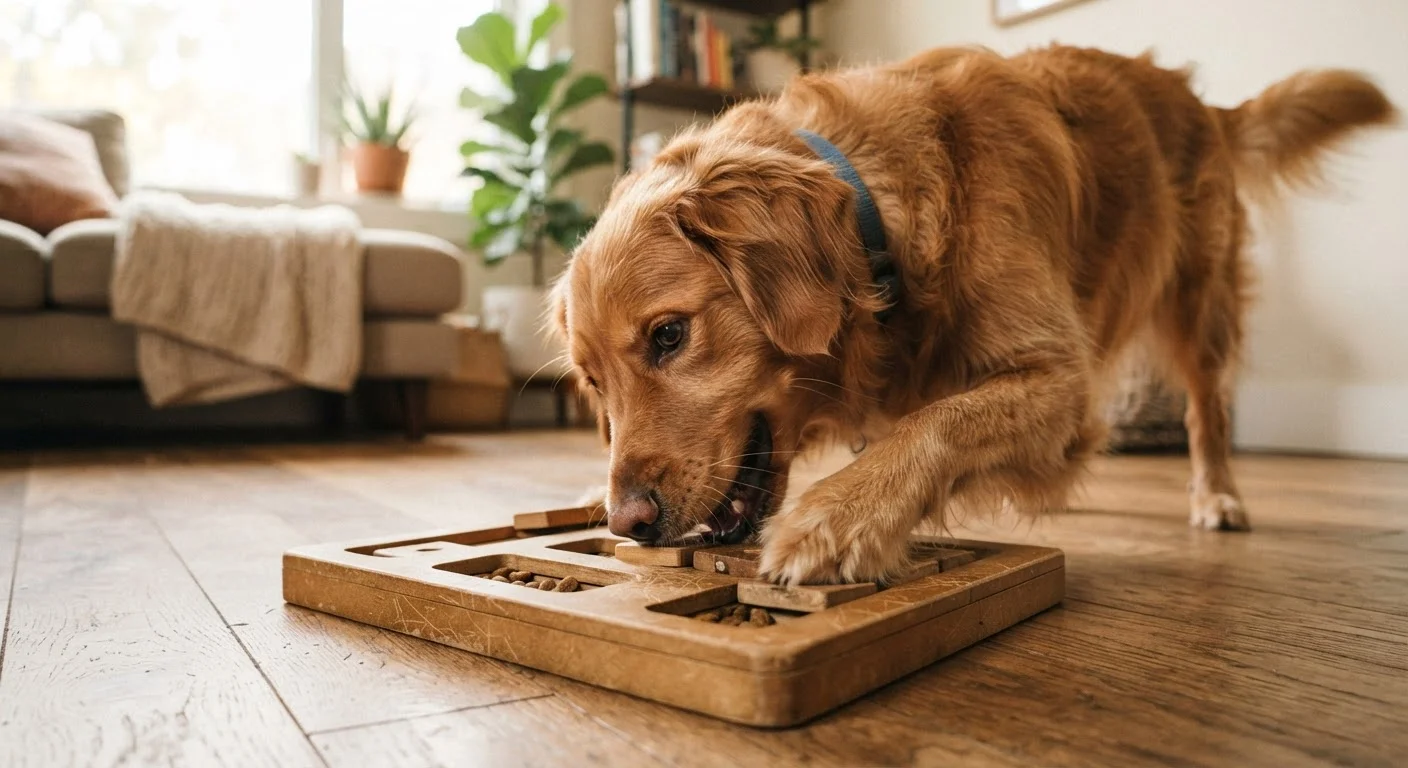
Photo: CoralScripts.com | Explore, Discover, Engage editorial
—— In This Article
Key Takeaways
- Exercise meets physical needs; enrichment addresses mental and behavioral ones - both are necessary.
- Boredom and understimulation are leading causes of destructive or anxious behavior in pets.
- Enrichment can be low-cost and adapted to nearly any living situation or species.
- Natural instincts like foraging, hunting, and problem-solving must be expressed somehow - enrichment channels them appropriately.
- Consistent enrichment supports long-term psychological health, not just temporary entertainment.
Exercise and Enrichment Are Not the Same Thing
A dog who runs two miles a day can still chew through furniture. A cat with access to the outdoors can still pace restlessly or over-groom. Physical activity burns calories and supports cardiovascular health, but it does not automatically address the cognitive and instinctual demands that drive animal behavior.
Enrichment is the broader category that encompasses anything giving a pet a meaningful mental challenge or outlet for natural behavior. Foraging, problem-solving, social interaction, exploring novel scents, manipulating objects - these experiences engage different neural pathways than walking on a leash or chasing a ball.
Understanding this distinction matters because many pet owners assume a tired pet is a satisfied pet. Research in applied animal behavior consistently shows that physical fatigue and psychological fulfillment are separate outcomes. Both are necessary; neither replaces the other.
“An animal that is physically exercised but mentally idle is not a well-cared-for animal - it is a fit one with unmet needs. Enrichment is not a luxury; it is a welfare requirement.”
— Applied Animal Behavior Science Community, Consensus position reflected across veterinary behavior and zoo animal welfare literature
What Natural Instincts Have to Do With It
Domestic pets retain the behavioral drives of their wild ancestors. Dogs descended from cooperative hunters; cats evolved as solitary ambush predators; parrots developed complex social and foraging lives in large flocks. These species-specific drives don't disappear in a home setting - they look for an outlet.
When those outlets are absent, pets improvise in ways owners find destructive or alarming. A dog that shreds cushions may be satisfying a grip-and-tear drive that hunting once served. A cat that knocks items off counters may be seeking the tactile and visual stimulation that stalking prey once provided. Understanding why pets act out often begins with recognizing which instinct is going unmet.
Enrichment provides species-appropriate channels for those drives - puzzle feeders simulate foraging, lure toys mimic prey movement, scent trails engage the olfactory system. The goal is not to tire a pet out but to let them be what they are.
~50%
of dog behavior problems linked to boredom
Veterinary behaviorists estimate that a significant proportion of common behavior complaints in dogs - destructive chewing, excessive barking, hyperactivity - stem from insufficient mental stimulation rather than temperament issues.
5 types
of recognized enrichment categories
Applied animal behavior science identifies five core enrichment categories - sensory, cognitive, social, feeding-based, and environmental - each targeting distinct psychological needs.
10-15 min
daily training as effective cognitive enrichment
Short daily training sessions of 10-15 minutes are widely recognized by animal behaviorists as meaningful cognitive enrichment, helping reduce frustration and strengthen the human-animal bond.
The Five Categories of Enrichment
Animal behaviorists typically organize enrichment into five broad types, each targeting different needs:
- Sensory enrichment - novel smells, sounds, textures, or visual stimuli. Scent work and herb gardens for cats are examples.
- Cognitive enrichment - problem-solving challenges such as puzzle feeders, hide-and-seek games, or training sessions that require the pet to think.
- Social enrichment - appropriate interaction with humans, other animals, or new people. For highly social species, isolation itself becomes a stressor.
- Feeding enrichment - delivering meals in a way that requires effort: scatter feeding, lick mats, foraging boxes, or slow feeders.
- Physical-environmental enrichment - changes or additions to the habitat itself, such as climbing structures, hiding spots, tunnels, or outdoor access in managed settings.
Most pets benefit from a mix across categories rather than heavy reliance on any single type. Variety also prevents habituation - the same puzzle feeder loses its cognitive challenge once a pet has mastered it.
For a deeper look at how play connects to these categories, the science behind animal play and its developmental role offers useful context.
Rotate, Don't Just Add
Pets habituate quickly to the same enrichment items - a puzzle feeder that challenged them in week one may bore them by week three. Rather than buying more items, rotate existing ones in and out of circulation. Reintroducing a familiar toy after a week away can restore much of its novelty value.
Practical Starting Points for Any Pet Owner
Enrichment doesn't require expensive equipment. Some of the most effective techniques cost little or nothing:
- Feed meals from a puzzle feeder or scatter kibble in grass rather than a bowl.
- Rotate toys regularly so novelty is maintained - pets habituate quickly to static environments.
- Allow dogs extended sniff time on walks rather than brisk pace-focused outings.
- Create vertical territory for cats with shelving, cat trees, or window perches.
- Teach short training sessions daily - even five minutes of new-skill practice qualifies as cognitive enrichment.
For pet owners living in smaller spaces or working within tight budgets, low-cost mental stimulation ideas offers accessible options that scale across living situations. Additionally, whether a pet spends most of its time indoors or has outdoor access affects which enrichment types are most practical - indoor vs. outdoor lifestyle considerations can help frame those choices.
If behavioral problems persist despite consistent enrichment, that signals a conversation worth having with a veterinarian. Behavioral shifts can sometimes reflect underlying health issues, which is why keeping up with routine checkups - as outlined in the guide to wellness vs. sick vet visits - remains part of responsible pet care.
Frequently Asked Questions

Pets & Animal Life Editorial Team
Pets & Animal Life Editorial Team is the collective byline for our editorial team and contributor network. Articles published under this byline or an editorial pen name are researched, written, and reviewed according to our editorial standards for clarity, consistency, and independence before publication.
View author profile