
Low-Cost Ways to Keep a Pet Mentally Stimulated
Boredom leads to destructive behaviour and stress. These accessible enrichment ideas work across budgets and living situations.
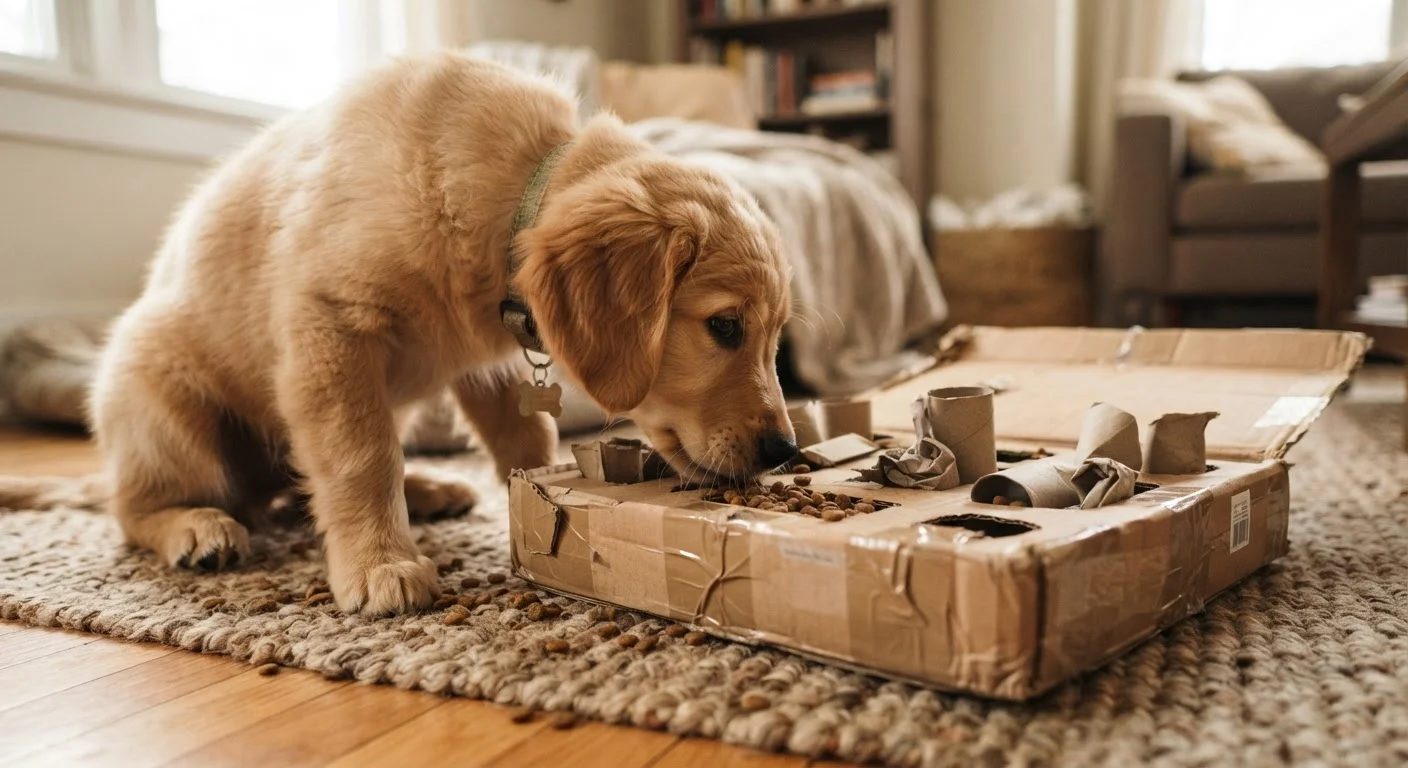
Photo: CoralScripts.com | Explore, Discover, Engage editorial
—— In This Article
Key Takeaways
- Mental stimulation is as essential as physical exercise for preventing stress and destructive behaviour in pets.
- Many effective enrichment methods cost nothing and use materials already found at home.
- Rotating activities regularly keeps novelty high, which sustains a pet's engagement over time.
- Species-specific instincts - sniffing, foraging, hunting - should guide which enrichment you choose.
- Even short, consistent daily sessions of five to ten minutes can meaningfully improve a pet's wellbeing.
Why Mental Enrichment Matters More Than Most Owners Realise
A physically tired pet is not necessarily a mentally satisfied one. Research in veterinary behavioural science consistently shows that cognitive understimulation drives many of the most common problem behaviours in companion animals - compulsive chewing, excessive vocalisation, repetitive pacing, and anxiety-driven destructiveness. These aren't character flaws; they are the predictable outputs of a nervous system that evolved for a complex, unpredictable environment being held in a comparatively static one.
The good news is that addressing this gap rarely requires significant spending. Enrichment is fundamentally about engaging species-appropriate instincts - foraging, problem-solving, sensory exploration - and those instincts can be activated with materials most households already own. Understanding what drives your specific animal is the first step. Explore the science of animal behaviour to better understand why your pet acts the way it does.
Match enrichment to species-specific instincts
The most effective enrichment channels what an animal was built to do. Dogs benefit most from scent-based and social tasks; cats from activities that mimic stalking and pouncing; birds from foraging and object manipulation. Forcing a cat into a dog-style puzzle or a rabbit into an activity designed for rodents will yield poor engagement. Observe what your pet does when left to its own devices - that behaviour signals the instinctual drives enrichment should target.
Low-Cost Enrichment Ideas That Actually Work
Scatter feeding instead of bowl feeding
Placing a meal in a bowl takes seconds to finish and offers no cognitive challenge. Scatter feeding - spreading dry food or kibble across a patch of grass, a snuffle mat made from fleece strips, or even a muffin tin covered with tennis balls - transforms eating into a foraging task. For dogs especially, engaging the olfactory system this way can be calming as well as stimulating; research on canine cognition suggests scent work is more mentally tiring than equivalent physical exercise. Cats and small mammals like rabbits and guinea pigs respond well to scatter feeding too, as it mirrors natural food-seeking behaviour.
Scatter feeding turns every meal into a problem-solving session that engages deep foraging instincts.
DIY puzzle feeders from household materials
Cardboard tubes, egg cartons, paper bags, and small boxes can all be folded, stuffed, and layered into simple puzzle feeders at zero cost. The goal is to require the animal to manipulate the object to release food. Start simple - food partially visible through a torn flap - and progressively increase difficulty as the pet becomes proficient. Avoid materials with staples, tape adhesives, or synthetic inks that a pet might ingest. For rodents and birds, crumpled paper parcels of seeds offer the same foraging payoff at negligible expense.
Cardboard boxes and egg cartons become legitimate cognitive tools when food is hidden inside them.
Training sessions as mental exercise
Short, positive-reinforcement training sessions - five to ten minutes, once or twice a day - are among the most cognitively demanding activities a pet can engage in. Learning new behaviours requires sustained attention, trial-and-error reasoning, and impulse control. Dogs and cats can both be taught a wide repertoire of behaviours using only small pieces of their regular food. Trick training, nose-work games, and basic obedience all count. The cognitive load, not the complexity of the behaviour, is what matters for enrichment purposes.
A five-minute training session can be more mentally exhausting for a dog than a thirty-minute walk.
Sensory variety: new smells, textures, and sounds
Rotating sensory inputs costs almost nothing. Introducing a pinecone, a handful of dried herbs (check species safety first - lavender, for instance, is not safe for cats to ingest), or a piece of bark into a pet's environment creates novel olfactory stimulation that triggers exploratory behaviour. For birds, changing the arrangement of perches and introducing new safe textures to manipulate provides equivalent novelty. Even playing nature soundscapes at a low volume during the day has been noted in some animal shelter studies to reduce stress indicators in dogs and cats, though individual responses vary.
Rotating smells and textures in a pet's environment is one of the cheapest forms of enrichment available.
Supervised outdoor exploration and 'sniff walks'
A standard walk where the owner sets the pace and route is primarily physical exercise. A sniff walk - where the animal leads and is allowed to stop and investigate as long as it wants - is a fundamentally different activity. Allowing a dog to dictate stops and investigation time during at least one walk per day significantly increases mental engagement. For cats with outdoor access, even ten minutes of supervised garden exploration engages predatory scanning and territorial mapping behaviours. For those weighing how much outdoor time is appropriate, our guide on indoor and outdoor lifestyle trade-offs examines the evidence.
Letting a dog lead its own sniff walk gives it agency and turns exercise into genuine exploration.
Rotate and repurpose existing toys
Habituation - the neurological process by which repeated exposure to a stimulus reduces response - means a toy that excited a pet last week may be ignored today. Rather than buying new items, store toys in two or three rotating sets and reintroduce them every few days. Rubbing a stored toy against something with a novel scent before reintroducing it can reset the pet's interest. This rotation strategy costs nothing and substantially extends the effective enrichment life of any toy collection.
Storing toys in rotation and reintroducing them every few days makes old items feel new again.
Building a Sustainable Enrichment Routine
The single biggest mistake owners make with enrichment is offering the same activity repeatedly until the pet loses interest entirely. Novelty is neurologically meaningful - exposure to new stimuli triggers dopamine pathways associated with anticipation and reward. A simple rotation of three or four activities across the week sustains engagement far more effectively than daily repetition of one game.
You don't need to introduce everything at once. Start with one or two ideas that match your pet's species and temperament, observe the response, and build from there. Pets with limited outdoor access especially benefit from a structured indoor enrichment plan - for a broader look at lifestyle trade-offs, see our article on indoor vs outdoor lifestyles for cats and dogs. Similarly, if you are still in the early stages of pet ownership, bringing a new pet home covers how to build routines that reduce stress from day one.
When boredom signals a deeper issue
If a pet continues to show signs of anxiety, compulsive behaviour, or destructiveness despite consistent enrichment, the cause may extend beyond understimulation. Pain, hormonal imbalances, and anxiety disorders can all produce similar symptoms. A veterinarian or certified veterinary behaviourist is the appropriate first point of contact when behavioural changes are sudden, severe, or unresponsive to environmental changes. See also our article on everyday habits that quietly harm pets for other overlooked contributors to pet stress.

Pets & Animal Life Editorial Team
Pets & Animal Life Editorial Team is the collective byline for our editorial team and contributor network. Articles published under this byline or an editorial pen name are researched, written, and reviewed according to our editorial standards for clarity, consistency, and independence before publication.
View author profile