
Indoor vs Outdoor Lifestyles for Cats and Dogs
Keeping pets indoors or allowing outdoor access both carry real trade-offs. Here's a balanced look at the risks, benefits, and what the research suggests.
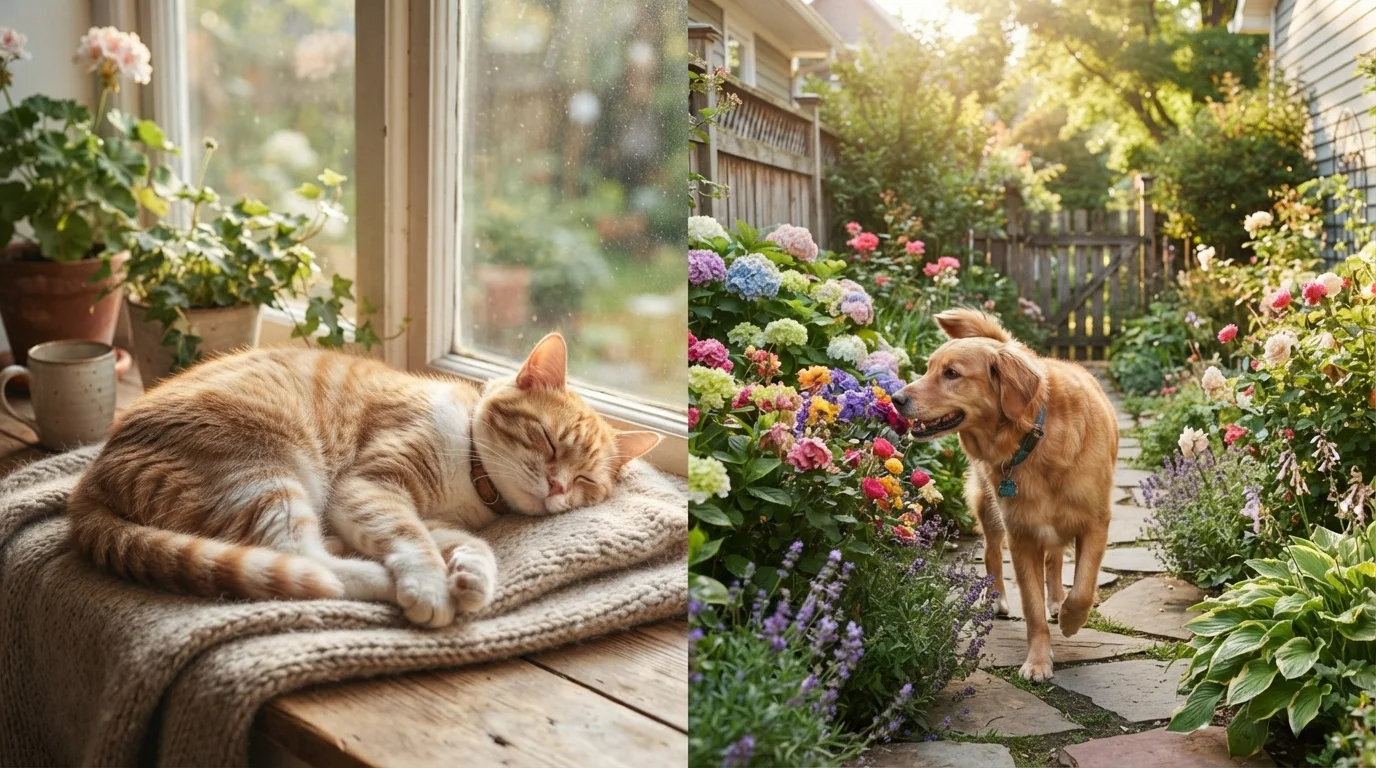
Photo: CoralScripts.com | Explore, Discover, Engage editorial
—— In This Article
Key Takeaways
- Indoor pets generally live longer on average due to reduced exposure to vehicles, predators, and disease.
- Outdoor access provides enrichment and physical exercise that can be difficult to replicate indoors.
- A hybrid approach - supervised outdoor time or enclosed spaces - can balance safety and stimulation.
- Dogs and cats have different behavioral needs, so the right choice varies by species and individual temperament.
- Parasite prevention and veterinary care are essential regardless of which lifestyle you choose.
Significantly reduced risk of traumatic injury
Indoor pets avoid vehicle traffic, predatory encounters, and territorial fights - leading causes of injury and death in free-roaming cats and dogs.
Lower exposure to infectious disease
Diseases like FeLV, FIV, parvovirus, and distemper spread through contact with infected animals or contaminated environments - risks that drop sharply indoors.
Easier to monitor health and behavior changes
Owners of indoor pets can more readily notice changes in appetite, mobility, or elimination habits that may signal an underlying health issue.
Reduced parasite burden
Indoor pets have far less exposure to fleas, ticks, and intestinal parasites, though prevention is still recommended as parasites can enter the home via humans or other animals.
Greater control over diet and weight
Indoor pets are less likely to scavenge, hunt, or be fed by neighbors, making it easier to manage calorie intake and prevent obesity.
Higher risk of boredom and stress-related behaviors
Without deliberate enrichment, indoor-only pets - particularly cats - may develop overgrooming, aggression, or repetitive behaviors linked to understimulation.
Increased exposure to predators and traffic
Free-roaming cats and dogs face vehicle strikes, coyote attacks, and aggressive encounters with other animals - risks that scale with the density and wildlife of the local environment.
Higher parasite and disease transmission rates
Outdoor pets interact with infected animals, soil, and standing water, substantially increasing exposure to fleas, ticks, heartworm, and respiratory viruses.
Ecological impact of free-roaming cats
Studies estimate that free-roaming domestic cats kill billions of birds and small mammals annually in the US, raising significant conservation concerns.
Risk of ingesting environmental toxins
Pesticides, herbicides, road treatments, and discarded food in outdoor environments pose real ingestion risks, particularly for dogs that explore through scent and taste.
Why the Indoor vs. Outdoor Question Matters
Where a pet spends its time shapes virtually every aspect of its health and behavior - from lifespan and disease exposure to stress levels and social development. Yet the decision is often made by default rather than design, driven by housing type or habit rather than a clear understanding of the trade-offs involved.
The answer is rarely black-and-white. Cats and dogs have evolved differently, carry different risk profiles outdoors, and respond to confinement in different ways. Understanding the evidence - rather than relying on conventional wisdom - is the starting point for making the right call for your specific animal. If you're still setting up your home for a new arrival, our guide to bringing a pet home for the first time covers the foundational decisions you'll face early on.
The Case for Keeping Pets Indoors
Indoor living removes a wide range of environmental hazards in one stroke. Cats kept exclusively indoors are shielded from vehicle traffic, predatory wildlife, territorial fights with other cats, and direct exposure to infectious diseases like feline leukemia virus (FeLV) and feline immunodeficiency virus (FIV), which spread through bites and contact with infected animals.
Significantly reduced risk of traumatic injury
Indoor pets avoid vehicle traffic, predatory encounters, and territorial fights - leading causes of injury and death in free-roaming cats and dogs.
Lower exposure to infectious disease
Diseases like FeLV, FIV, parvovirus, and distemper spread through contact with infected animals or contaminated environments - risks that drop sharply indoors.
Easier to monitor health and behavior changes
Owners of indoor pets can more readily notice changes in appetite, mobility, or elimination habits that may signal an underlying health issue.
Reduced parasite burden
Indoor pets have far less exposure to fleas, ticks, and intestinal parasites, though prevention is still recommended as parasites can enter the home via humans or other animals.
Greater control over diet and weight
Indoor pets are less likely to scavenge, hunt, or be fed by neighbors, making it easier to manage calorie intake and prevent obesity.
For dogs, indoor living reduces exposure to toxins in the environment - from treated lawns and road salt to discarded food and parasites. It also simplifies behavioral management, particularly for dogs prone to fence-running, escape attempts, or reactive behavior triggered by passing animals.
The main challenge with indoor-only arrangements is meeting the animal's cognitive and physical needs within a constrained space. Boredom-driven behaviors - destructive chewing, excessive vocalization, overgrooming - are common when stimulation is inadequate. Our article on low-cost ways to keep a pet mentally stimulated outlines practical enrichment strategies that don't require a large budget or outdoor access.
The Case for Allowing Outdoor Access
Outdoor environments provide a richness of sensory input - varied smells, textures, sounds, and visual stimuli - that is genuinely difficult to replicate inside. For cats especially, access to the outdoors has been associated with higher activity levels and a broader range of species-typical behaviors such as stalking, climbing, and territory patrol.
Higher risk of boredom and stress-related behaviors
Without deliberate enrichment, indoor-only pets - particularly cats - may develop overgrooming, aggression, or repetitive behaviors linked to understimulation.
Increased exposure to predators and traffic
Free-roaming cats and dogs face vehicle strikes, coyote attacks, and aggressive encounters with other animals - risks that scale with the density and wildlife of the local environment.
Higher parasite and disease transmission rates
Outdoor pets interact with infected animals, soil, and standing water, substantially increasing exposure to fleas, ticks, heartworm, and respiratory viruses.
Ecological impact of free-roaming cats
Studies estimate that free-roaming domestic cats kill billions of birds and small mammals annually in the US, raising significant conservation concerns.
Risk of ingesting environmental toxins
Pesticides, herbicides, road treatments, and discarded food in outdoor environments pose real ingestion risks, particularly for dogs that explore through scent and taste.
Dogs benefit from outdoor time in different ways. Off-leash exercise in safe spaces supports cardiovascular health, helps regulate weight, and provides the social exposure that shapes well-adjusted behavior. The science of animal behavior consistently points to environmental variety as a key factor in psychological well-being across species.
The risks, however, are real and not trivial. Outdoor cats have a significantly higher incidence of traumatic injury, parasite infestation, and infectious disease. Free-roaming cats also pose an ecological concern - they are recognized as a substantial threat to wild bird and small mammal populations. Our parasite prevention guide covers the specific gaps that leave many outdoor pets unprotected despite owner efforts.
Hybrid Approaches and Practical Compromises
For many owners, a middle path offers the most balanced outcome. Catio enclosures - screened or mesh-enclosed outdoor structures - allow cats to experience fresh air and outdoor stimuli without roaming freely. Leash-trained cats can also be walked safely in low-traffic environments, though this requires patient, gradual conditioning from an early age.
Gradual Transitions Work Best
If you're moving a previously outdoor cat to an indoor-only arrangement, expect an adjustment period of several weeks. Providing vertical space, window perches, and interactive play sessions helps ease the transition. Abrupt confinement without enrichment can increase stress and problem behaviors. Consult your veterinarian if anxiety signs persist.
For dogs, a securely fenced yard with supervised time outdoors addresses the bulk of exercise and enrichment needs while limiting uncontrolled exposure to hazards. Dog parks can supplement this, though they introduce their own disease-transmission and behavioral risks that require thoughtful management.
Whichever approach you take, it's worth reviewing your household routines carefully. Some common practices - leaving doors open, using certain garden chemicals, or feeding near communal areas - can undermine an otherwise careful plan. Our piece on everyday habits that quietly harm pets highlights the overlooked risks worth addressing. Similarly, why pets need enrichment, not just exercise explains why physical activity alone doesn't cover the full picture of a pet's mental well-being.

Pets & Animal Life Editorial Team
Pets & Animal Life Editorial Team is the collective byline for our editorial team and contributor network. Articles published under this byline or an editorial pen name are researched, written, and reviewed according to our editorial standards for clarity, consistency, and independence before publication.
View author profile