
What the Research Says About Community and Healthy Ageing
An evidence-informed overview of how social connection and community participation relate to physical and mental wellbeing in later life.
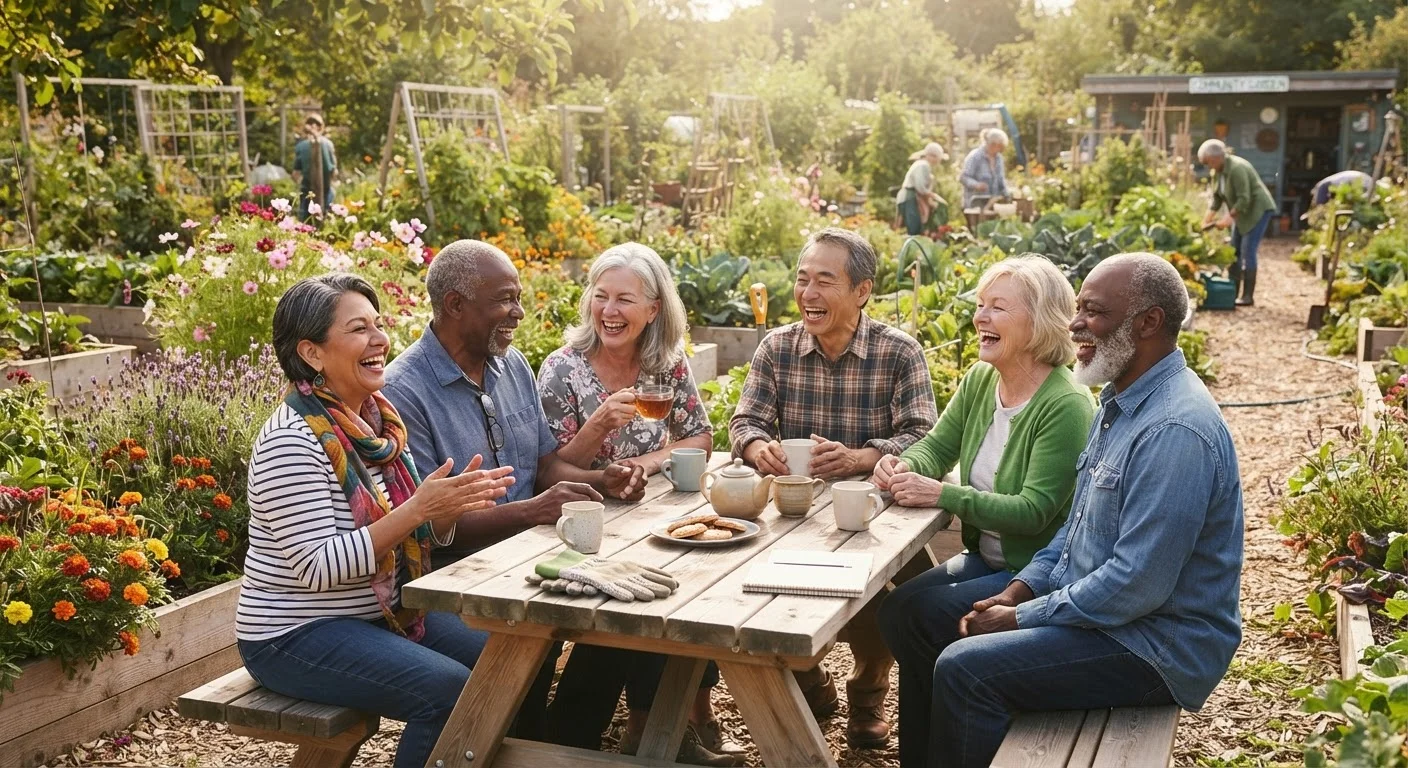
Photo: CoralScripts.com | Explore, Discover, Engage editorial
—— In This Article
Key Takeaways
- Social isolation in older adults has been linked to measurably worse health outcomes in multiple large-scale studies.
- Community participation - in any form - appears to support cognitive function, emotional resilience, and physical activity levels.
- Both offline and online communities can provide meaningful social connection for older adults.
- The quality of social relationships matters as much as, if not more than, the quantity of social contacts.
- Structural barriers such as mobility limitations and digital access gaps can prevent some seniors from participating fully.
Why Community Belongs in the Conversation About Ageing
For decades, health conversations about ageing focused heavily on diet, exercise, and medical care. Those factors remain essential, but a growing body of research has placed social connection firmly alongside them. The question researchers are now asking isn't simply whether older adults are physically active - it's whether they feel embedded in communities that give daily life meaning and purpose.
This shift matters because loneliness and social isolation among older adults are more common than many people assume. According to the U.S. National Academies of Sciences, Engineering, and Medicine, approximately one-third of adults aged 45 and older report feeling lonely, with rates rising among those over 65. For a more detailed look at what the evidence on isolation reveals, see our overview of loneliness research.
~1 in 3
Adults 45+ reporting loneliness
According to a report by the U.S. National Academies of Sciences, Engineering, and Medicine on social isolation and loneliness in older adults.
26%
Higher mortality risk linked to social isolation
A meta-analysis published in Perspectives on Psychological Science (Holt-Lunstad et al.) found social isolation was associated with significantly elevated mortality risk.
70%+
Of older adults who are online in the US
Pew Research Center data indicates the majority of adults over 65 now use the internet, though rates vary by age, income, and education.
What the Research Actually Shows
Multiple large longitudinal studies - including the Harvard Study of Adult Development, one of the longest-running studies of human wellbeing - have found that close, satisfying relationships are among the strongest predictors of health and happiness in later life. Key findings, taken together, point in a consistent direction:
- Cognitive health: Socially engaged older adults show slower rates of cognitive decline in several long-term studies, though researchers are careful to note that social activity is correlated with, rather than proven to cause, better cognitive outcomes.
- Mental health: Regular social participation is associated with lower rates of depression and anxiety among older adults. Having a sense of belonging appears to buffer against the psychological effects of stress and loss.
- Physical health: People with strong social ties tend to have better immune function, lower blood pressure, and lower rates of certain chronic conditions, though lifestyle factors and confounding variables make direct causal claims difficult to establish.
It's important to approach these findings with appropriate nuance. Much of the research is observational, meaning it identifies associations rather than proving direct cause-and-effect. Still, the consistency of findings across diverse populations and study designs is notable. The mind-body connection helps explain some of the biological pathways researchers have proposed.
“The experience of social connection is not a luxury - it is a fundamental human need with measurable consequences for health across the lifespan.”
— Julianne Holt-Lunstad, Professor of Psychology and Neuroscience, Brigham Young University, and leading researcher on social connection and health
Online and Offline: Both Can Matter
Community participation doesn't require a town square. As older adults increasingly navigate mobility challenges, caregiving responsibilities, or geographic distance from family, online communities have become a meaningful supplement - and sometimes a primary venue - for social connection.
Research into online senior communities is still maturing, but early findings suggest that participation in digital forums, video call groups, and interest-based online communities can reduce feelings of isolation, particularly for those with limited in-person access. Our guide to online senior communities explores how these spaces function and what they offer in practice.
Importantly, the quality of interaction appears to matter more than the medium. A meaningful exchange in an online interest group may carry similar psychological weight to an equivalent in-person conversation. Intergenerational programmes also deserve mention here - structured settings where older and younger people collaborate have shown benefits for both groups, including reduced stereotyping and increased sense of purpose.
Quality Over Quantity in Social Connection
Research suggests that a small number of close, supportive relationships can be more protective than a large but superficial social network. If you are thinking about community participation for yourself or an older adult in your life, look for settings that allow for genuine conversation and repeated contact - not just large-scale social events with minimal interaction.
Barriers Worth Acknowledging
Research on community and healthy ageing is only useful if the communities in question are actually accessible. Not every older adult finds it easy to participate, and acknowledging this honestly matters. Common barriers include:
- Mobility and health limitations
- Chronic pain, reduced transportation access, or disability can make leaving home difficult, narrowing in-person options significantly.
- Digital access and literacy gaps
- Online communities are only as inclusive as the devices, internet connections, and skills available to potential participants. Many older adults face structural disadvantages here. Digital inclusion efforts aimed at older adults are an active and necessary area of work.
- Grief and bereavement
- Losing a partner or close friends - more common in later life - can shrink social networks dramatically, making it harder to re-engage with community even when the desire is there.
Understanding these barriers is essential context for anyone thinking about how communities can better serve older adults. For a broader look at how community models are evolving to meet these challenges, senior communities in the digital age offers a comprehensive overview.
A Note on Research Limitations
Most studies on community and healthy ageing are observational, meaning they track associations rather than proving that community participation directly causes better health outcomes. People who are already healthier may be better positioned to participate in social activities, which can make it difficult to separate cause and effect. Researchers continue to develop more rigorous methods for studying these questions, and the field is evolving.
This article is for informational purposes only and does not constitute medical or professional health advice. Readers seeking guidance about their own health or wellbeing should consult a qualified healthcare professional.
Frequently Asked Questions

People & Communities Editorial Team
People & Communities Editorial Team is the collective byline for our editorial team and contributor network. Articles published under this byline or an editorial pen name are researched, written, and reviewed according to our editorial standards for clarity, consistency, and independence before publication.
View author profile