
Intergenerational Community Programmes: How They Work and What They Offer
A look at structured programmes that bring older adults and younger generations together, and the documented social benefits for both groups.
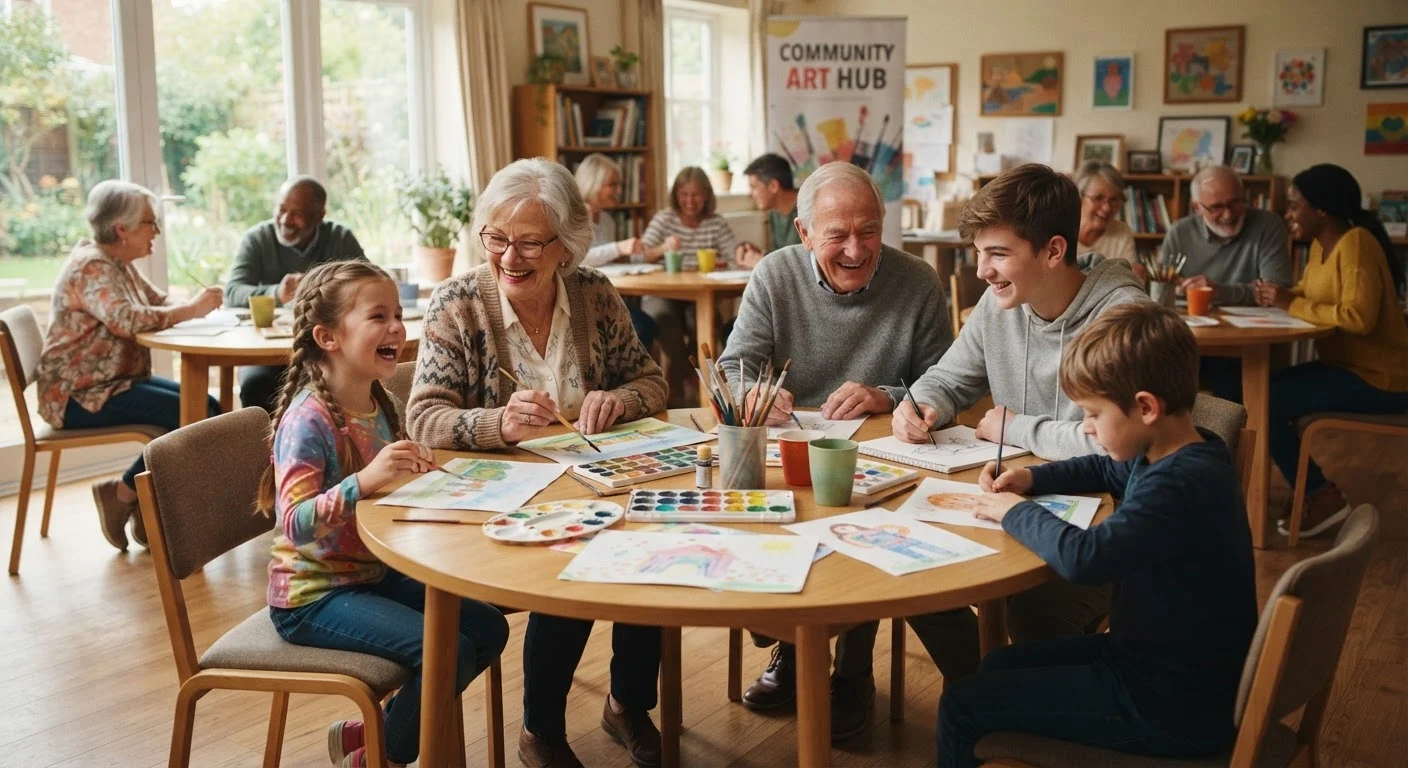
Photo: CoralScripts.com | Explore, Discover, Engage editorial
—— In This Article
Key Takeaways
- Intergenerational programmes are intentionally designed, not simply age-mixed social events.
- Both older adults and younger participants gain documented social and emotional benefits.
- Programmes span schools, senior centers, libraries, housing communities, and digital platforms.
- Reduced loneliness and improved attitudes toward ageing are among the most consistently reported outcomes.
- Volunteer and mentoring roles within these programmes give older adults a meaningful sense of purpose.
What Makes a Programme Truly Intergenerational
Not every situation where different age groups share space qualifies as an intergenerational programme. A holiday concert where grandparents watch grandchildren perform is warm and memorable - but it is not intergenerational practice in the structured sense. What distinguishes a genuine programme is intentionality: a defined purpose, regular contact, and meaningful exchange where both parties contribute and receive.
Practitioners in this field point to three core elements that separate high-quality programmes from well-meaning gestures: reciprocity (both groups gain something), continuity (repeated rather than one-off contact), and structured activity (a shared task or goal that gives the interaction focus). A senior reading aloud to kindergarteners once a year is a nice event. A senior who visits the same classroom weekly, tracks reading progress, and builds a relationship with those children over a school year is participating in intergenerational practice.
This distinction matters because outcomes depend on it. The research on contact between generations consistently shows that sustained, purposeful interaction reduces age-based prejudice and loneliness - while brief or superficial contact sometimes has little measurable effect, or can even reinforce existing stereotypes if the interaction feels obligatory or patronising.
Common Programme Models and Settings
Intergenerational programmes take many forms depending on the host organisation, available resources, and the goals of participants on both ends of the age spectrum.
- School-based programmes bring older adults into classrooms as reading partners, tutors, cultural storytellers, or STEM mentors. Some school districts host senior volunteers on a weekly schedule as a formal component of literacy or arts curricula.
- Shared-site programmes place elder care facilities and childcare centers in the same building, allowing daily or weekly structured interactions - shared meals, craft sessions, or garden projects.
- Community service and civic programmes pair seniors and youth in neighbourhood improvement projects, oral history archives, or environmental initiatives, emphasising mutual contribution rather than one group serving the other.
- Digital and hybrid formats have expanded access considerably. Video platforms allow seniors to support students in reading fluency programmes across geographic distances - a development that has been especially meaningful for homebound older adults. For more on how online formats serve older adults more broadly, see what online senior communities offer.
Look for Programmes With Built-In Continuity
When evaluating an intergenerational programme - whether as a participant, volunteer, or programme coordinator - prioritise formats that involve repeated contact over weeks or months rather than single events. Research consistently finds that sustained relationships, not one-time interactions, produce the strongest outcomes for both older and younger participants.
Volunteer and peer mentoring roles within senior communities often serve as natural entry points into intergenerational work. Explore how seniors contribute through mentoring to understand the fuller range of involvement options.
What the Evidence Shows About Outcomes
Intergenerational programmes have been studied across multiple countries and settings, and while study quality varies, a consistent picture has emerged in the peer-reviewed literature.
76%
Seniors reporting reduced loneliness through intergenerational contact
A review of intergenerational programme evaluations published in research on ageing found the majority of older adult participants reported decreased feelings of social isolation.
2-3x
More positive attitudes toward ageing among young participants
Studies examining youth participants in structured intergenerational programmes found significantly more favourable perceptions of older adults compared with control groups.
40%+
Of US adults 65+ report feeling lonely regularly
According to public health surveys cited by the National Academies of Sciences, Engineering, and Medicine in their social isolation report, social disconnection is widespread among older Americans.
For older adults, the most reliably documented benefits include reduced loneliness and social isolation, a stronger sense of purpose, and more positive self-reported wellbeing. Some studies also suggest modest benefits for cognitive engagement when seniors take on active teaching or mentoring roles rather than passive participation.
For children and young adults, exposure to older generations through structured programmes tends to reduce ageist attitudes and increase comfort with topics like ageing, disability, and death - areas where younger people often have limited real-world experience. Academic outcomes, such as improved literacy scores in reading-buddy programmes, have also been documented in some school-based research, though effect sizes vary by programme design.
Critically, these benefits are not automatic. Programme quality, training for facilitators, and genuine relationship-building between participants all influence how much value either group takes away. Research on community and healthy ageing provides further context on how social connection shapes wellbeing in later life more broadly.
“The evidence is clear that when older and younger people interact regularly in purposeful ways, both groups benefit - and communities become more cohesive. Age segregation is one of the least discussed but most pervasive forms of social division we have.”
— Marc Freedman, Founder of CoGenerate (formerly Encore.org), author and advocate for intergenerational connection
Access, Barriers, and What's Changing
Despite a strong evidence base, intergenerational programmes remain unevenly distributed. Rural communities, lower-income neighbourhoods, and regions with limited nonprofit infrastructure often have fewer formalised options. Transportation, health limitations, and lack of awareness are practical barriers that keep otherwise willing participants from engaging.
Digital formats have created new pathways, but they come with their own access challenges. Older adults who are not yet comfortable with video calls or online platforms may be excluded from the very programmes designed to connect them. Closing this gap requires deliberate digital literacy support - something explored in depth through resources like digital inclusion efforts for older adults.
Policy interest in intergenerational approaches has grown in the United States and internationally, with some cities developing dedicated intergenerational strategies as part of their age-friendly community plans. Organisations like Generations United advocate for federal and state investment in these programmes, reflecting a broader recognition that age segregation - while rarely discussed as openly as other forms of social division - carries real social costs for communities.
For anyone wanting a fuller picture of how older adults connect and build community in today's landscape, the complete overview of senior communities in the digital age offers valuable broader context.
Programmes Vary Widely in Quality and Scope
The term 'intergenerational programme' covers everything from highly structured, evaluated national models to informal local initiatives with little formal design. If you are looking to participate or volunteer, it is worth asking how long participants engage together, whether facilitators receive training, and what goals the programme tracks. These questions can help identify programmes likely to offer genuine, lasting benefit.
Frequently Asked Questions

People & Communities Editorial Team
People & Communities Editorial Team is the collective byline for our editorial team and contributor network. Articles published under this byline or an editorial pen name are researched, written, and reviewed according to our editorial standards for clarity, consistency, and independence before publication.
View author profile