
Senior Communities in the Digital Age: A Complete Overview
From retirement villages to online forums and hybrid models, this end-to-end guide covers how older adults connect, belong, and thrive in community.
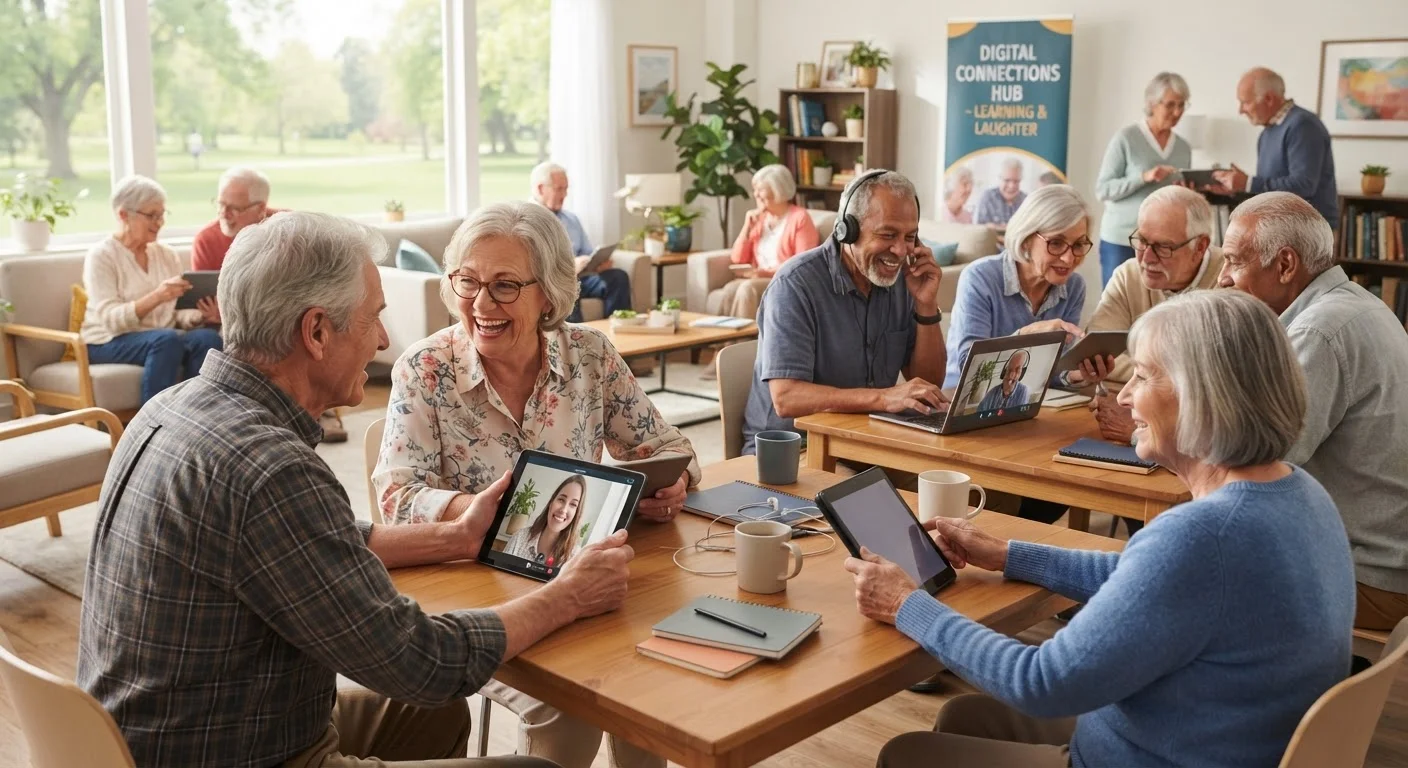
Photo: CoralScripts.com | Explore, Discover, Engage editorial
—— In This Article
Key Takeaways
- Senior communities today range from physical retirement villages to vibrant online forums and hybrid spaces.
- Digital participation among older adults has grown steadily, challenging long-held stereotypes.
- Loneliness is a recognized health concern; community engagement offers meaningful protective benefits.
- Hybrid models combining in-person and online interaction often provide the most flexible support.
- Practical barriers like cost, accessibility, and digital literacy can be navigated with targeted resources.
- Finding the right community is personal - matching your interests and comfort level matters most.
What Senior Communities Look Like Today
The phrase "senior community" once conjured a single image: a retirement village with shuffleboard courts and a shared dining room. That picture is far more varied now. Older adults in the US find belonging across a wide spectrum - from age-restricted active-adult neighborhoods and continuing-care retirement communities (CCRCs) to naturally occurring retirement communities (NORCs), co-housing arrangements, and entirely virtual spaces.
Physical communities still matter deeply. Research consistently links social integration with better health outcomes for older adults, including lower rates of cognitive decline and depression. But the walls of those communities have expanded. A person living independently in rural Kansas can now participate in a book club, a grief support group, or a travel-planning forum without leaving home.
75%
Older adults online in the US
Pew Research Center data indicates roughly three-quarters of adults 65 and older use the internet, a figure that has grown substantially over the past decade.
1 in 3
Adults 45+ reporting loneliness
A large-scale AARP survey found that approximately one in three adults over 45 report chronic loneliness, underscoring community as a health issue.
40%+
Seniors on social media
Pew Research has found that more than 40% of adults 65 and older use at least one social media platform, with Facebook being the most widely used.
It's worth understanding the basic taxonomy. Independent living communities serve active adults who want amenity-rich environments without medical oversight. Assisted living adds personal care services. CCRCs provide a continuum from independent living to skilled nursing on one campus. And increasingly, village networks - grassroots, member-run organizations - help older adults age in place by connecting neighbors who share resources and support.
Online Communities: Forums, Social Media, and Beyond
The idea that older adults are reluctant or unable to engage online is one of the more persistent myths in public discourse. The evidence tells a different story - and our colleagues have explored this in depth in the piece on myths about seniors and technology.
Online spaces designed for or heavily used by older adults include dedicated forums on topics like grandparenting, retirement finances, travel, and chronic illness management. Facebook groups remain among the most active spaces, partly because of their familiar interface and partly because family connections already exist there. Reddit hosts communities like r/retirement and r/AgingParents that attract candid, peer-driven conversation.
When joining an online community, spend two to three weeks reading before posting. Understanding the group's culture and recurring conversations helps you contribute meaningfully from the start.
Community researchers note that 'lurking' before participating reduces early missteps and accelerates genuine integration into a group's norms.
Look for online communities that are moderated by members rather than automated systems - active human moderation strongly predicts a healthier, safer environment.
Platforms relying solely on algorithmic moderation have documented higher rates of misinformation and harassment in older-adult-facing spaces, according to digital safety advocates.
Beyond social media, purpose-built platforms have emerged to address specific needs - telehealth portals that include peer support features, alumni association networks, and faith-based digital communities. The common thread is intentionality: the best online senior communities have clear norms, active moderation, and a genuine sense of shared purpose rather than passive browsing.
Safety awareness matters here too. Online spaces can expose older adults to scams and misinformation. Reputable communities invest in moderation and provide guidance on recognizing manipulation - a feature worth looking for when evaluating any digital group.
Hybrid Models: The Best of Both Worlds
Many of the most vibrant senior communities today operate in both physical and digital space simultaneously. A NORC might hold weekly in-person coffee hours while also running a group chat where members share local news and request rides. A CCRC might offer on-campus programming alongside a resident portal where family members participate in discussions and activities are streamed live.
Ask About Digital Programming Before Choosing a Community
When touring or researching any senior living community, ask specifically about their digital infrastructure: Is there reliable Wi-Fi throughout the campus? Are there technology classes or a tech support resource? Can residents stay connected with family via video call easily? These questions reveal how seriously a community takes digital inclusion as part of overall wellbeing.
Libraries and community centers have quietly become anchor institutions for hybrid senior engagement. Many offer structured digital literacy classes, then facilitate ongoing peer groups that continue online after the in-person sessions end. This scaffolded approach - learn together, then stay connected - mirrors how community formation tends to work best at any age.
Travel is one area where hybrid community particularly shines. Groups of older adults planning international adventures often coalesce online first - vetting destinations, sharing visa information, and organizing logistics - before meeting in person. Our international travel hub offers practical context for those planning journeys abroad with or through a community group.
Overcoming Barriers to Digital Participation
Acknowledging that barriers exist doesn't mean accepting them as permanent. The most common obstacles older adults report are: affordability of devices and broadband, physical limitations (vision, dexterity, hearing), anxiety about making mistakes online, and lack of patient instruction.
Isolation Is a Health Risk - Not Just a Feeling
Public health authorities, including the US Surgeon General, have formally recognized social isolation and loneliness as significant health concerns with measurable effects on physical and mental wellbeing. This context matters: pursuing community isn't a luxury or a pastime for older adults - it's a meaningful investment in overall health. If you or someone you care about is experiencing significant isolation, a conversation with a healthcare provider is a reasonable starting point.
Federal and state programs in the US offer subsidized internet access and device programs for income-eligible older adults, and many Area Agencies on Aging (AAA) can connect individuals with local resources. Searching for your local AAA through the Eldercare Locator (a federally funded service) is a reliable starting point.
Peer-to-peer tech support - sometimes called "digital buddy" programs - has shown particular promise. When learning comes from someone in a similar life stage rather than a younger family member or technical professional, anxiety drops and retention improves. Community organizations, libraries, and senior centers are increasingly formalizing these programs.
Social Connection, Dating, and Belonging
Community isn't only about shared activities - it's about feeling genuinely known. For many older adults, that includes romantic connection. Dating after 60, 70, or beyond is more common than popular culture suggests, and online platforms have made it more accessible. The emotional landscape of later-life dating - navigating grief, adult children's reactions, and shifting priorities - deserves honest recognition rather than dismissal.
Our dating hub explores the dynamics of modern relationships across life stages, including resources relevant to older adults entering or re-entering romantic connection. Community spaces - both online and physical - often play an unexpected role here: friendships formed in senior centers or forums sometimes evolve into something more.
“Social connection is a fundamental human need - as essential to long-term health and wellbeing as food and shelter. When we invest in the conditions that allow people to belong, we reduce suffering and strengthen communities at every level.”
— Vivek Murthy, Former U.S. Surgeon General, author of the 2023 Advisory on Loneliness and Isolation
Belonging, ultimately, is a felt experience. Whether it emerges from a weekly card game, a late-night forum thread, or a group travel adventure, its benefits are real and well-documented. Loneliness carries measurable health risks comparable in magnitude to other recognized risk factors - which is why intentional community-building for older adults is increasingly seen not as a lifestyle preference but as a public health priority.
How to Find the Right Community for You
There is no single best community format - the right fit depends on your health, mobility, interests, geography, and what kind of connection feels most nourishing. A few practical principles can guide the search.
- Start with your interests, not the format. Passion for gardening, genealogy, or faith connects people more durably than proximity alone.
- Evaluate moderation and culture. Any healthy community - online or off - has clear expectations for respectful interaction and some mechanism for addressing conflict.
- Try before you commit. Most online communities allow observation before participation. Many in-person communities offer trial visits or open events.
- Layer your connections. A combination of local, in-person touchpoints and broader online engagement tends to be more resilient than either alone.
- Reassess regularly. Needs change. A community that serves you well at 68 may feel limiting at 75 - and that's a signal to explore, not a failure.
Area Agencies on Aging Are a Key Resource
Every region of the US has a federally designated Area Agency on Aging (AAA) that can connect older adults and caregivers with local programs - including transportation, meal services, digital literacy training, and community referrals. The Eldercare Locator at eldercare.acl.gov is the standard entry point. These services are available regardless of income.
Family members and caregivers often play a meaningful role in helping older adults discover and access communities. If you're supporting someone in this search, prioritize their preferences over convenience, and resist the impulse to choose on their behalf without their full input.

People & Communities Editorial Team
People & Communities Editorial Team is the collective byline for our editorial team and contributor network. Articles published under this byline or an editorial pen name are researched, written, and reviewed according to our editorial standards for clarity, consistency, and independence before publication.
View author profile