
When Nutrient Interactions Complicate the Simplest Dietary Advice
Some nutrients compete for absorption; others enhance each other. Understanding these interactions helps explain why isolated supplement advice often misses the bigger picture.
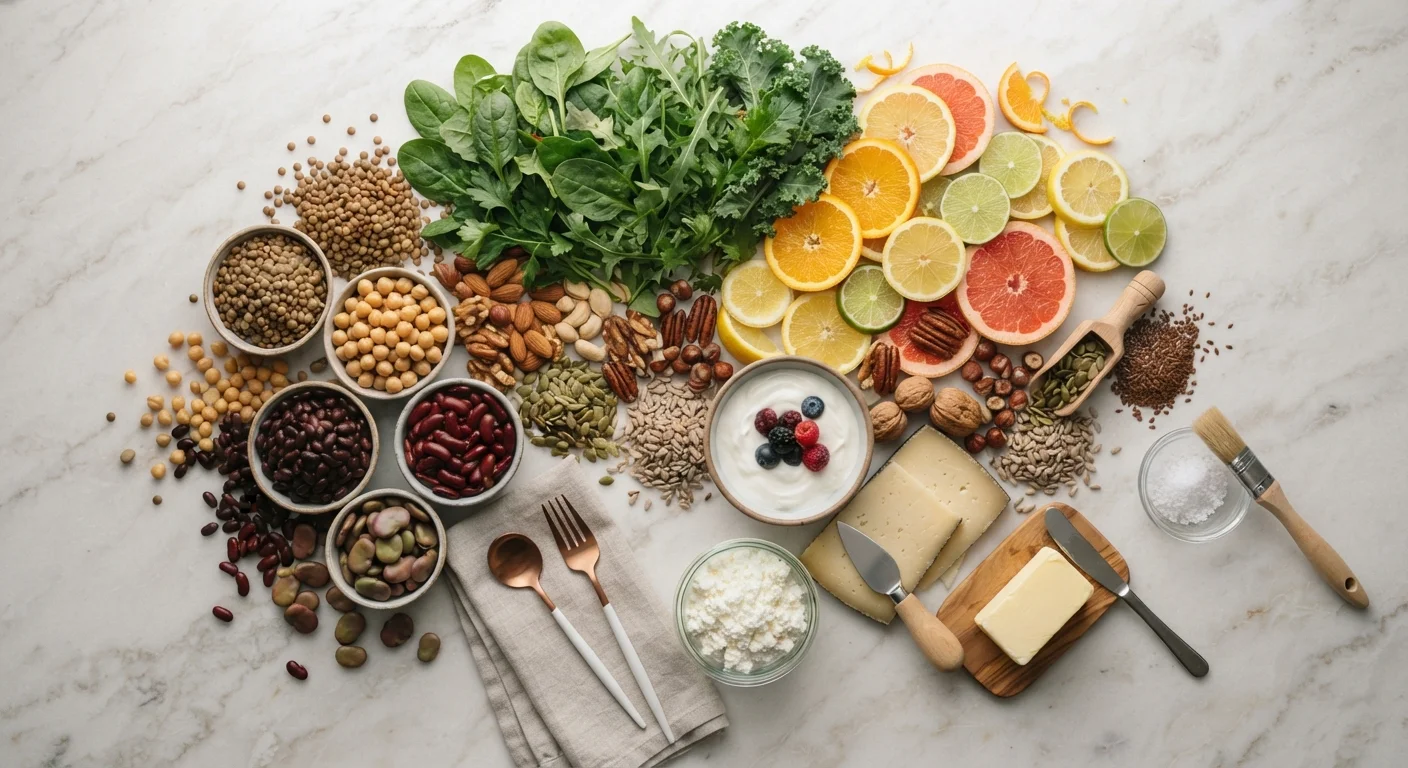
Photo: CoralScripts.com | Explore, Discover, Engage editorial
—— In This Article
Key Takeaways
- Some nutrients enhance each other's absorption, while others directly compete for the same transport pathways.
- Timing and food pairing matter - consuming nutrients together or separately can significantly affect uptake.
- Isolated supplement advice often misses important context about how nutrients behave in combination.
- Dietary variety across whole foods remains the most reliable way to balance complex nutrient interactions.
- Individual factors like gut health, age, and existing deficiencies influence how interactions play out in practice.
Why Nutrients Don't Work in Isolation
Popular nutrition advice tends to spotlight single nutrients - get more iron, take vitamin D, increase your calcium. While these recommendations are grounded in real nutritional science, they often omit a crucial layer of complexity: nutrients are not independent actors. Inside the body, they interact, compete, and collaborate in ways that fundamentally shape whether a given nutrient actually reaches the tissues that need it.
This is not a minor technical footnote. Nutrient interactions are central to how the body manages its chemistry, and they help explain why the same dietary change produces different results in different people. As explored in our article on evaluating nutrition information, context is often the missing piece in simplified health headlines.
Interactions at the Supplement Level vs. Food Level
Competitive nutrient interactions are most clinically significant at the higher doses found in supplements, not typically at the quantities present in whole foods. A diet rich in both calcium-containing dairy and iron-containing legumes is generally not problematic for healthy adults. Concerns become more relevant when supplementation introduces quantities that exceed what diet alone would provide.
Synergistic Pairs: When Nutrients Help Each Other
Some nutrient pairings are well-established enough that they inform standard dietary guidance. Vitamin C and non-heme iron - the form of iron found in plant foods - are the most cited example. Vitamin C reduces iron from its ferric to ferrous form, which intestinal cells absorb far more readily. This is why pairing iron-rich legumes with a vitamin C source like citrus or bell pepper is nutritionally meaningful, not just culinary habit.
Vitamin D and calcium present another synergistic relationship. Without adequate vitamin D, the intestine absorbs calcium poorly regardless of dietary intake. This interaction is part of why vitamin D deficiency can quietly undermine bone health even in people who consume sufficient calcium.
Fat and fat-soluble vitamins (A, D, E, and K) represent a third category of synergy. These vitamins require dietary fat to be absorbed at all, making meal composition relevant to their bioavailability. For a fuller picture of how this works, see our guide on fat-soluble vs. water-soluble vitamins.
2-3×
Iron absorption boost from vitamin C pairing
Research published in nutritional science literature consistently shows that consuming vitamin C alongside non-heme iron can increase its absorption by roughly two to three times compared to iron consumed alone.
<10%
Non-heme iron absorbed without enhancers
The body typically absorbs less than 10% of non-heme iron from plant foods under baseline conditions; the presence of inhibitors or enhancers in the same meal can shift this figure substantially.
~40%
Calcium absorption dependent on vitamin D status
According to nutritional physiology research, adequate vitamin D status supports absorption of roughly 40% of ingested calcium; deficiency can reduce this to around 10-15%.
Competitive Interactions: When Nutrients Get in Each Other's Way
Nutrients that share absorption mechanisms can limit each other when consumed simultaneously in large amounts. Calcium and iron are frequently cited here: both compete for the same intestinal transport proteins, so high calcium intake at mealtime can reduce the amount of iron absorbed from that meal. This interaction is particularly relevant for individuals at risk of iron deficiency, such as people following plant-based diets.
Zinc and copper follow a similar pattern. Zinc and copper share a common transporter, meaning very high zinc supplementation - well above normal dietary levels - can deplete copper status over time. This is an important consideration when evaluating high-dose supplement regimens, a topic examined honestly in our piece on supplement evidence.
For those who want to understand iron absorption specifically, our dedicated article on iron absorption factors covers how inhibitors like tannins and phytates interact with iron uptake alongside calcium and vitamin C.
What This Means for Practical Dietary Choices
Nutrient interactions do not demand a rigid, calculated approach to eating. For most people consuming a varied whole-food diet, the body manages these dynamics within a reasonable range. Diverse eating patterns naturally provide both the nutrients and their cofactors - the supporting cast that aids proper absorption and function.
The picture becomes more complicated when high-dose supplements enter the equation, or when dietary patterns are highly restricted. Nutritional needs also shift across life stages, and interactions that are negligible in one population may be significant in another - a dynamic explored in our guide on nutrition across the life span.
Rather than optimising every meal around absorption percentages, a more sustainable takeaway is this: vary food sources, be thoughtful about high-dose supplementation, and recognize that the same nutrient in a supplement context behaves differently than it does embedded in a whole food matrix.
“The whole food is greater than the sum of its nutrients. When we extract a single compound and study it in isolation, we inevitably miss how it behaves in the complex environment of a real meal.”
— Marion Nestle, Professor Emerita of Nutrition, Food Studies, and Public Health
This article is for general informational and educational purposes only and does not constitute medical or dietary advice. Consult a qualified healthcare professional or registered dietitian for guidance specific to your health needs.
Frequently Asked Questions

Health & Wellness Editorial Team
Health & Wellness Editorial Team is the collective byline for our editorial team and contributor network. Articles published under this byline or an editorial pen name are researched, written, and reviewed according to our editorial standards for clarity, consistency, and independence before publication.
View author profile