
Vitamin Supplements - What the Evidence Actually Supports
An honest look at where vitamin supplementation has solid research support and where the evidence is weaker than popular belief suggests. Not medical advice.
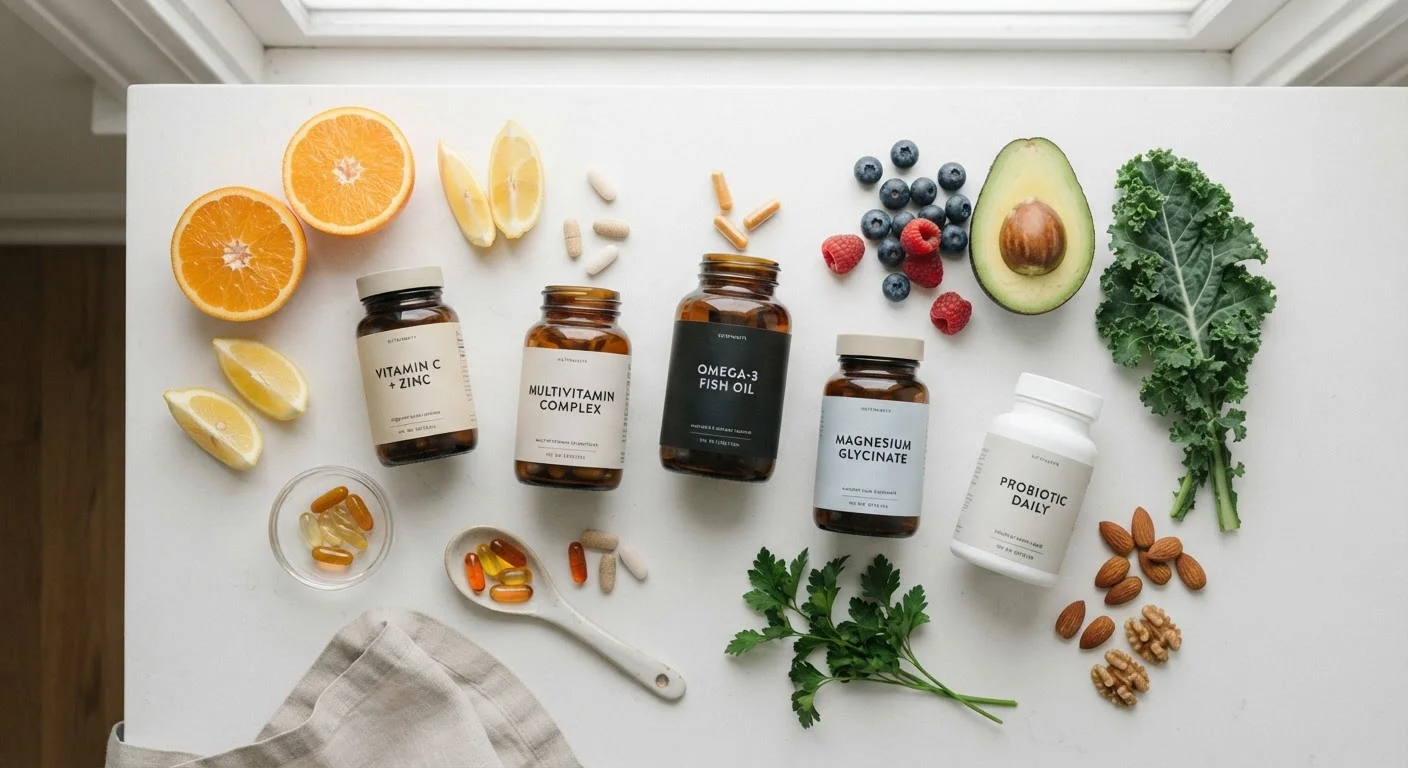
Photo: CoralScripts.com | Explore, Discover, Engage editorial
—— In This Article
Key Takeaways
- Vitamin D and B12 supplementation has the strongest evidence base for specific at-risk populations.
- Most healthy adults eating a varied diet do not benefit measurably from broad multivitamin use.
- High-dose supplements of fat-soluble vitamins can accumulate to toxic levels in the body.
- Research context matters - a supplement that corrects a deficiency may not benefit someone already replete.
- Always consult a qualified healthcare professional before starting or changing any supplement regimen.
The Gap Between Supplement Popularity and Supplement Science
Americans spend billions of dollars annually on vitamin and mineral supplements, yet the gap between what consumers believe these products do and what clinical research consistently demonstrates is striking. This disconnect isn't simply a matter of marketing - it reflects genuine complexity in nutritional science. A supplement that restores normal function when someone is deficient may show no measurable benefit, or even cause harm, in a person with adequate levels. Understanding that distinction is the foundation of reading vitamin research critically.
For a broader primer on evaluating nutritional claims, see our guide to assessing nutrition information. And because many nutrients work synergistically or competitively, our piece on nutrient interactions adds important context.
Myth
Taking a daily multivitamin is a reliable safety net that improves health for most adults.
Fact
Large, well-controlled trials have not found that multivitamin use meaningfully reduces mortality or major chronic disease risk in generally healthy, well-nourished adults.
The appeal of a nutritional safety net is understandable, but the evidence from landmark trials - including the Physicians' Health Study II - consistently shows little to no benefit for cardiovascular disease, cancer, or all-cause mortality in populations that are not deficient. Where multivitamins may provide modest value is in specific contexts: older adults with reduced dietary variety, people with malabsorption conditions, or individuals with documented deficiencies. For those without these risk factors, a varied whole-food diet remains the better-evidenced foundation.
Myth
More vitamin C means a stronger immune system and fewer colds.
Fact
Vitamin C supplementation does not prevent colds in the general population; evidence suggests it may modestly shorten duration, but only in some subgroups.
Decades of randomized trials, most synthesized in a Cochrane review, have consistently shown that regular vitamin C supplementation does not reduce cold incidence in the general public. There is a signal for reduced duration - roughly 8-14% shorter in adults - and some evidence of protection in people under extreme physical stress, such as marathon runners or military personnel in subarctic conditions. The body's saturation point for vitamin C is reached at relatively modest intakes; megadoses beyond that are largely excreted.
Myth
Vitamin D supplements benefit everyone, regardless of their existing blood levels.
Fact
Evidence for vitamin D supplementation benefits is strongest in people who are genuinely deficient; supplementing in those already replete shows less consistent benefit.
This is one of the most important nuances in vitamin D research. Correcting a deficiency - typically defined as serum 25(OH)D below 20 ng/mL - has clear support for bone health outcomes. However, large-scale trials such as VITAL found more modest effects on outcomes like cancer and cardiovascular disease in the general population, and some analyses suggest benefit may be concentrated in those who were deficient at baseline. Testing before supplementing allows for informed, targeted use rather than assumption-based dosing.
Myth
Fat-soluble vitamins are always safe because they come from natural sources.
Fact
Fat-soluble vitamins (A, D, E, K) accumulate in body tissue and can reach toxic levels with prolonged high-dose supplementation.
Unlike water-soluble vitamins, fat-soluble vitamins are stored in adipose tissue and the liver, meaning excess accumulates rather than being excreted. Vitamin A toxicity (hypervitaminosis A) can cause liver damage, bone loss, and birth defects at high doses; paradoxically, high-dose beta-carotene supplements were associated with increased lung cancer risk in smokers in two major trials (CARET and ATBC). Vitamin D toxicity leads to hypercalcemia. The word "natural" on a label does not determine safety at supplemental doses.
Myth
If a supplement is sold in stores, it has been tested and approved for safety and efficacy.
Fact
In the United States, dietary supplements are not required to demonstrate safety or efficacy before reaching store shelves; the FDA regulates them differently from pharmaceutical drugs.
Under the Dietary Supplement Health and Education Act (DSHEA) of 1994, manufacturers are responsible for ensuring their products are safe, but they do not need to provide evidence to the FDA before selling. The FDA can only act after a product is on the market and harm has been reported. Third-party certification programs (such as USP, NSF International, or ConsumerLab) voluntarily test for purity and label accuracy, and selecting products with such verification is generally considered better practice - though it still does not validate health claims.
Where the Evidence Is Genuinely Stronger
A handful of vitamins have accumulated enough well-designed trial data to support targeted supplementation in defined groups. Vitamin D stands out: its deficiency is widespread, particularly among people with limited sun exposure, darker skin tones, or older age, and supplementation has been shown to support bone health and reduce fracture risk in deficient individuals. Our dedicated article on why vitamin D deficiency is harder to fix than it sounds explores the nuances in depth.
Vitamin B12 is another case with strong clinical grounding. Because B12 is found almost exclusively in animal products and requires intrinsic factor for absorption, older adults, people on metformin, and those following plant-based diets face meaningful risk of deficiency. Our plant-based nutrition guide covers B12 alongside other nutrients requiring deliberate attention. Folate supplementation prior to and during early pregnancy is another area of established consensus, reducing neural tube defect risk - though dosing and timing decisions belong with a healthcare provider.
~35%
U.S. adults estimated to have vitamin D insufficiency
According to National Health and Nutrition Examination Survey (NHANES) data, vitamin D insufficiency (serum levels below 20 ng/mL) affects a substantial portion of the U.S. adult population, with higher rates among older adults and non-Hispanic Black individuals.
57%
U.S. adults who report taking a dietary supplement
The CDC's NHANES survey data indicate that more than half of U.S. adults report using at least one dietary supplement, with multivitamins being the most commonly used product category.
~6%
Adults over 60 with probable B12 deficiency
Research published in nutrition epidemiology literature estimates that clinically significant vitamin B12 deficiency affects roughly 6% of U.S. adults aged 60 and older, rising to higher rates when borderline deficiency is included.
Practical Takeaways Without the Overreach
The most defensible approach to supplementation is targeted rather than blanket. A blood test can identify genuine deficiencies that warrant correction; self-prescribing high-dose fat-soluble vitamins (A, D, E, K) without knowing your status carries real risk since these accumulate in tissue. Water-soluble vitamins like C and the B group are excreted more readily, but megadosing still carries potential adverse effects and does not confer proportionally greater benefit.
Supplements Can Interact With Medications
Vitamin K can reduce the effectiveness of anticoagulants like warfarin. High-dose vitamin E may increase bleeding risk. St. John's Wort (often sold alongside vitamins) can interfere with numerous prescription drugs. If you take any prescription medication, discuss all supplements with your prescribing provider before use.
Antioxidant supplements deserve special mention: the plausible biological rationale for antioxidants does not automatically translate to benefit from isolated high-dose supplementation, as our article on antioxidants and marketing explains. Iron is similarly nuanced - absorption is affected by a web of dietary factors discussed in our piece on iron absorption. The conclusion across most of these nutrients is consistent: context, status, and individual health history determine whether a supplement helps, does nothing, or potentially harms.
This article is for general informational and educational purposes only and does not constitute medical advice. Always consult a qualified healthcare professional before starting, stopping, or changing any supplement or treatment.

Health & Wellness Editorial Team
Health & Wellness Editorial Team is the collective byline for our editorial team and contributor network. Articles published under this byline or an editorial pen name are researched, written, and reviewed according to our editorial standards for clarity, consistency, and independence before publication.
View author profile