
Fat-Soluble vs Water-Soluble Vitamins: How Your Body Handles Each
Explore how fat-soluble and water-soluble vitamins are absorbed, stored, and excreted differently — and why that distinction shapes nutritional guidance.
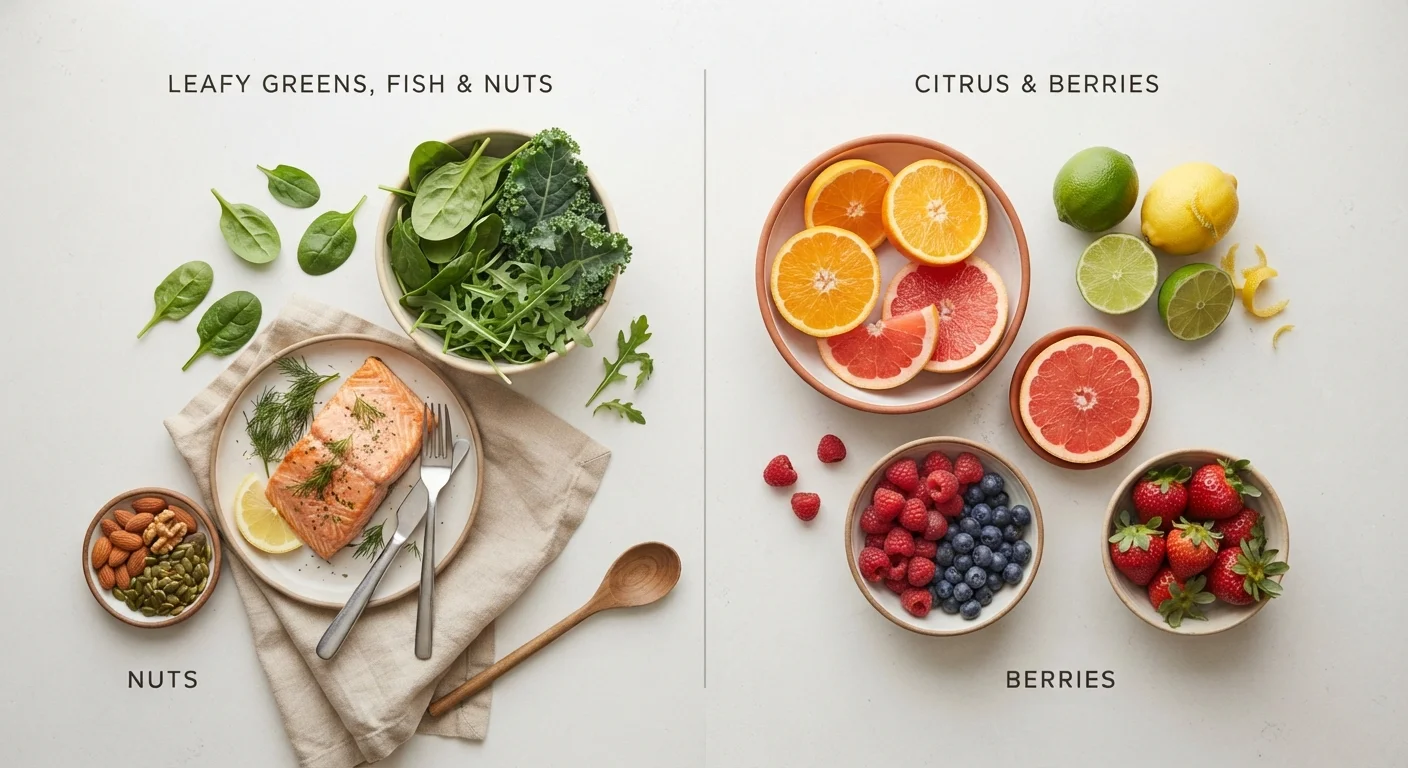
Photo: CoralScripts.com | Explore, Discover, Engage editorial
—— In This Article
Key Takeaways
- Fat-soluble vitamins (A, D, E, K) are stored in body fat and liver tissue, meaning excess builds up over time.
- Water-soluble vitamins (C and B-complex) dissolve in water and are excreted in urine, requiring regular dietary intake.
- Fat-soluble vitamin toxicity from over-supplementation is a real clinical concern, particularly for vitamins A and D.
- Dietary fat is necessary for the absorption of fat-soluble vitamins, making meal composition relevant.
- Most people obtain adequate water-soluble vitamins through a varied diet, though certain groups face deficiency risk.
What Solubility Actually Means for Vitamins
When nutrition scientists classify vitamins as fat-soluble or water-soluble, they are describing a fundamental chemical property that determines how each vitamin is absorbed, transported, stored, and removed from the body. This is not merely an academic distinction - it directly shapes how much of a vitamin you need each day, how dangerous excess intake can be, and how your meal composition affects absorption. For a broader foundation on how vitamins fit into the overall nutrient landscape, see our guide on macronutrients and micronutrients.
Fat-soluble vitamins - A, D, E, and K - dissolve in lipids and require the presence of dietary fat to be properly absorbed through the intestinal wall. Once absorbed, they travel via the lymphatic system and are deposited in the liver and adipose (fat) tissue, where they can remain for weeks or months. Water-soluble vitamins - vitamin C and the eight members of the B-vitamin family (thiamine, riboflavin, niacin, B6, folate, B12, biotin, and pantothenic acid) - dissolve readily in water, are absorbed directly into the bloodstream through the intestinal lining, and excess amounts are typically filtered out by the kidneys and excreted in urine.
| Criterion | Fat-Soluble Vitamins | Water-Soluble Vitamins |
|---|---|---|
| Vitamins included | A, D, E, K | C, B1, B2, B3, B5, B6, B7, B9, B12 |
| Absorption route | Via lymphatic system with dietary fat | Direct absorption into bloodstream |
| Storage in body | Liver and adipose tissue; long-term | Minimal; not significantly stored |
| Excretion pathway | Metabolized slowly; not readily excreted | Excess filtered by kidneys, excreted in urine |
| Toxicity risk from excess | Higher; accumulation can be harmful | Lower overall; some B vitamins still carry risk at very high doses |
| Deficiency speed | Slower; reserves buffer short-term gaps | Faster; reserves depleted within weeks (B12 excepted) |
| Meal composition impact | Significant - dietary fat needed for absorption | Minimal - absorbed regardless of meal fat content |
Absorption, Storage, and Excretion: Where the Differences Matter Most
The storage capacity of fat-soluble vitamins is both an advantage and a risk factor. On the positive side, the body can draw on its reserves during periods of low dietary intake - a particularly important feature for vitamin D, which many people obtain primarily through sun exposure rather than food. On the risk side, consistent high-dose supplementation of fat-soluble vitamins can lead to accumulation in tissue to levels that become harmful. Hypervitaminosis A and hypervitaminosis D are recognized clinical conditions associated with chronic over-supplementation, and both can produce serious symptoms.
Water-soluble vitamins face the opposite challenge. Because the body does not store them in appreciable quantities, deficiency can develop relatively quickly when dietary intake is inadequate. Vitamin C deficiency - historically known as scurvy - can manifest within weeks of severe deprivation. B12 is a partial exception: small amounts are stored in the liver, and deficiency may take years to develop, especially important context for people following restrictive dietary patterns.
~42%
U.S. adults estimated to be vitamin D deficient or insufficient
Data from the National Health and Nutrition Examination Survey (NHANES) indicates a substantial proportion of the U.S. population has suboptimal vitamin D levels, reflecting both dietary and sun-exposure factors.
1 in 6
Older U.S. adults with vitamin B12 deficiency
Research published in nutritional epidemiology literature suggests B12 deficiency is prevalent among older adults, partly due to reduced gastric acid production impairing B12 absorption from food.
Understanding these dynamics also matters when nutrients interact with one another. Nutrient interactions can amplify or blunt absorption - for instance, fat-soluble vitamin K's absorption is affected by the presence of other fat-soluble vitamins in the same meal.
Practical Implications for Diet and Supplementation
For fat-soluble vitamins, meal timing and composition carry practical weight. Consuming foods rich in vitamins A, D, E, or K alongside a source of dietary fat - such as olive oil, avocado, or nuts - meaningfully improves absorption. Research has shown that vitamin D absorption, in particular, can be significantly higher when taken with a fat-containing meal compared to a fasting state.
For water-soluble vitamins, the key consideration is consistency. Since these vitamins are not banked for future use (with the partial exception of B12), a varied diet that regularly includes fruits, vegetables, legumes, and whole grains is generally sufficient for most healthy adults. However, certain populations - including older adults, individuals following plant-exclusive diets, people with gastrointestinal conditions affecting absorption, and those who are pregnant - may face elevated deficiency risk and should consult a healthcare provider about appropriate intake strategies.
Upper Tolerable Intake Levels Exist for a Reason
Health authorities including the National Academies of Sciences, Engineering, and Medicine have established Tolerable Upper Intake Levels (ULs) for many vitamins, particularly the fat-soluble ones. These thresholds represent the highest daily intake unlikely to cause adverse effects in most healthy adults - not a recommended target. Exceeding the UL for vitamins A or D over sustained periods carries documented health risks, making self-directed high-dose supplementation inadvisable without professional oversight.
When evaluating any vitamin supplement, understanding its solubility class is a logical first step. Fat-soluble vitamins warrant more caution around dose, frequency, and upper intake levels. Water-soluble vitamins carry lower toxicity risk at moderate supplemental doses, though very high doses of certain B vitamins - notably niacin and B6 - have been associated with adverse effects in clinical literature. Always consult a qualified healthcare professional before beginning a supplementation regimen, particularly at high doses or if you have an existing health condition.
This article is for general informational and educational purposes only and does not constitute medical advice. Consult a qualified healthcare professional before making changes to your diet or supplementation routine.

Health & Wellness Editorial Team
Health & Wellness Editorial Team is the collective byline for our editorial team and contributor network. Articles published under this byline or an editorial pen name are researched, written, and reviewed according to our editorial standards for clarity, consistency, and independence before publication.
View author profile