
What Your Car's Warning Lights Are Actually Telling You
Decode the dashboard symbols that most drivers ignore until it's too late. A plain-language guide to what each warning light means.
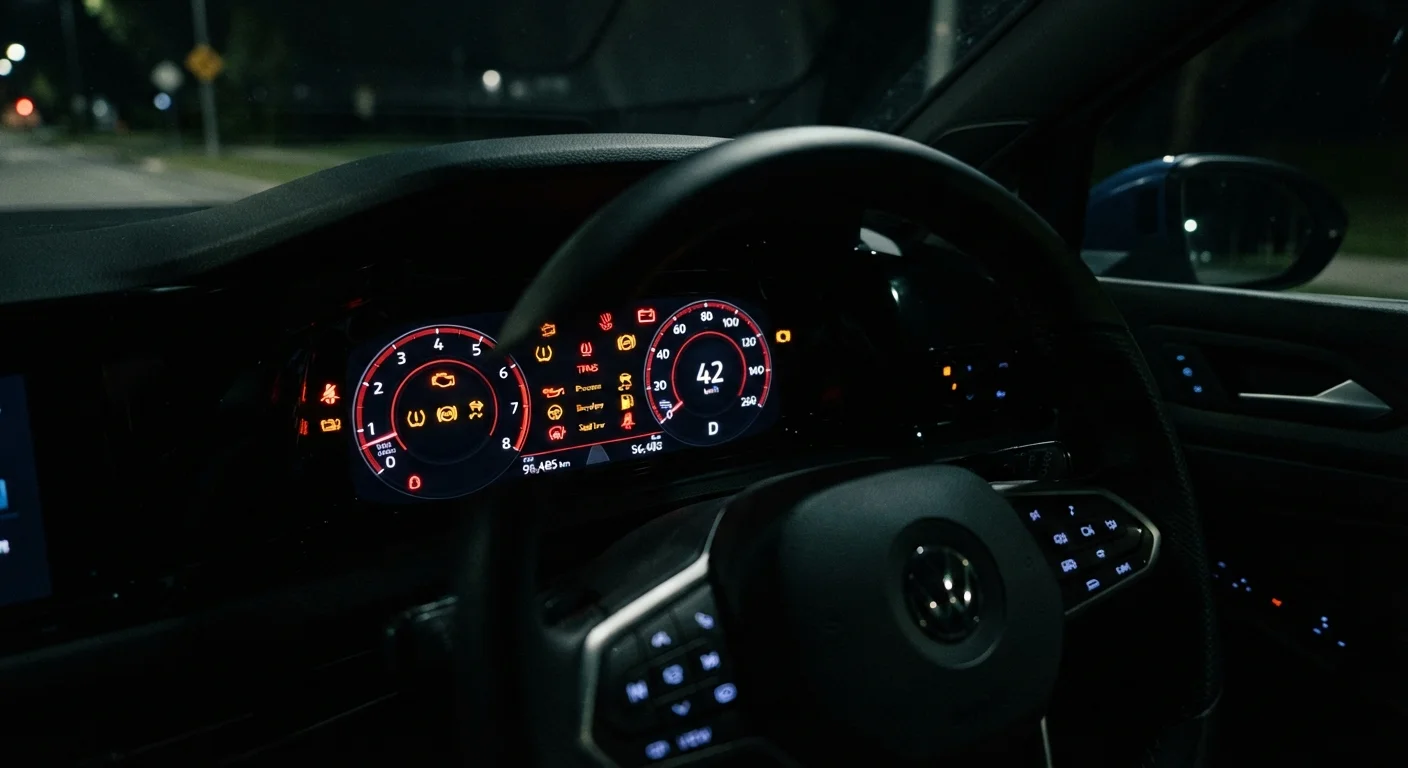
Photo: CoralScripts.com | Explore, Discover, Engage editorial
—— In This Article
Why Warning Light Colors Matter First
Before decoding individual symbols, understand the color-coded urgency system built into every modern vehicle. Red lights signal conditions requiring immediate attention - continuing to drive could cause serious damage or create a safety risk. Amber or yellow lights indicate a fault that needs attention soon but is not immediately dangerous. Green or blue lights are informational, confirming that a system is active.
This color hierarchy is defined by SAE International standards and is largely consistent across manufacturers, though exact symbols can vary. Always cross-reference your owner's manual for vehicle-specific meanings - it remains the single most authoritative source for your particular model.
| Warning light colors | Red (urgent), Amber (attention needed), Green/Blue (informational) (SAE International J1930 standard) |
| Most common amber light | Check Engine / Malfunction Indicator Lamp (MIL) |
| Oil pressure response time | Pull over immediately - engine damage can occur within minutes |
| TPMS trigger threshold | Typically 25% below recommended PSI (NHTSA TPMS regulations) |
| Fault code retrieval | OBD-II scanner reads stored codes from the vehicle's ECU |
| Flashing vs. steady MIL | Flashing = active misfire (urgent); Steady = logged fault (schedule service) |
Red Warning Lights: Stop and Investigate
Oil Pressure Warning - An icon resembling an old oil can means engine oil pressure has dropped dangerously low. Pull over safely and shut off the engine immediately. Running the engine without adequate oil pressure can cause irreversible internal damage within minutes. Check the oil level; if it is correct and the light remains on after a restart, do not drive - have the vehicle inspected by a qualified mechanic.
Engine Temperature - A thermometer submerged in liquid indicates the engine is overheating. Turn off the A/C, pull over safely, and let the engine cool before opening the hood. Never remove the radiator cap on a hot engine. See our guide to vehicle fluid checks for context on coolant levels and what warning signs look like.
Battery / Charging System - A battery icon means the electrical charging system is not functioning correctly. The alternator may have failed, or there may be a loose connection. Drive directly to a service facility - the vehicle may shut down without warning as the battery depletes.
Brake System Warning - If this light appears while driving (not just at startup with the parking brake on), it may indicate low brake fluid or a hydraulic fault. Do not ignore it; brake system integrity is critical to safety.
Amber Warning Lights: Schedule Attention Soon
Check Engine (MIL) - The malfunction indicator lamp, often an engine silhouette, is one of the most misunderstood lights on any dashboard. It signals that the onboard diagnostic system has logged a fault code - anything from a loose gas cap to a misfiring cylinder. A steadily glowing amber MIL typically allows continued driving to a repair facility; a flashing MIL indicates an active misfire that can damage the catalytic converter and warrants prompt action. For a deeper breakdown, see what your engine warning light is actually telling you.
Tire Pressure Monitoring System (TPMS) - An exclamation point inside a tire cross-section means one or more tires have dropped significantly below recommended pressure. Underinflated tires affect handling, fuel economy, and wear. Check pressure at the earliest opportunity. Our guide to reading your tires before they fail explains how tire condition connects to broader vehicle health.
Traction Control / Stability Control - A car with wavy lines beneath it may flash during wheel slip (normal on slippery surfaces) or stay on to indicate the system has been disabled or has faulted. If it illuminates on dry pavement without input, have the system diagnosed.
Transmission Temperature - Indicates the transmission fluid is running hotter than normal, often under towing or stop-and-go loads. Reducing load and allowing the vehicle to idle can help; persistent illumination warrants inspection.
MIL (Malfunction Indicator Lamp)
The federally mandated check-engine warning light connected to the vehicle's onboard diagnostic (OBD-II) system. It illuminates when a fault code is stored by the engine or emissions control system.
OBD-II
On-Board Diagnostics, second generation - a standardized vehicle self-diagnostic system required on all US passenger vehicles sold from 1996 onward. It logs fault codes that can be read with an external scanner.
TPMS
Tire Pressure Monitoring System - a sensor network that alerts the driver when one or more tires drop significantly below the manufacturer's recommended inflation pressure.
ADAS
Advanced Driver-Assistance Systems - a collective term for electronic safety features such as lane-keep assist, automatic emergency braking, and adaptive cruise control that support (but do not replace) driver judgment.
Catalytic Converter
An emissions-control device in the exhaust system that converts harmful combustion byproducts into less harmful gases. Engine misfires can overheat and permanently damage the converter.
Alternator
A generator driven by the engine that charges the battery and powers the vehicle's electrical systems while the engine runs. Failure causes the battery warning light to illuminate.
ADAS and Driver-Assistance Lights
Modern vehicles include an expanding set of driver-assistance systems - lane-keep assist, forward collision warning, blind-spot monitoring - each with its own indicator. These lights typically glow green or amber and indicate whether a system is active, temporarily unavailable (often due to sensor obstruction by dirt or weather), or has detected a fault. A faulted ADAS system does not affect the vehicle's ability to drive but does reduce your safety envelope. For a thorough explanation of how these systems function, see how modern ADAS technologies work.
If you encounter a dashboard symbol you cannot identify, consult your owner's manual first, then use an OBD-II scanner for fault codes, and finally visit a qualified technician. Familiarity with terminology helps significantly - our automotive terminology guide covers many of the underlying system names you'll encounter during diagnosis.
Your Owner's Manual Is the Final Authority
Symbol shapes and colors are largely standardized, but some manufacturers use proprietary icons or assign additional meanings to shared symbols. Your vehicle's owner's manual - usually accessible as a PDF on the manufacturer's website - is the definitive reference for your specific model year. Keeping a digital copy on your phone means you always have it when it matters most.

Cars & Driving Editorial Team
Cars & Driving Editorial Team is the collective byline for our editorial team and contributor network. Articles published under this byline or an editorial pen name are researched, written, and reviewed according to our editorial standards for clarity, consistency, and independence before publication.
View author profile