
Modern Driver-Assistance Systems: What ADAS Actually Does
Lane-keeping assist, autonomous emergency braking, blind-spot monitoring — how modern ADAS technologies work and what their limits are.
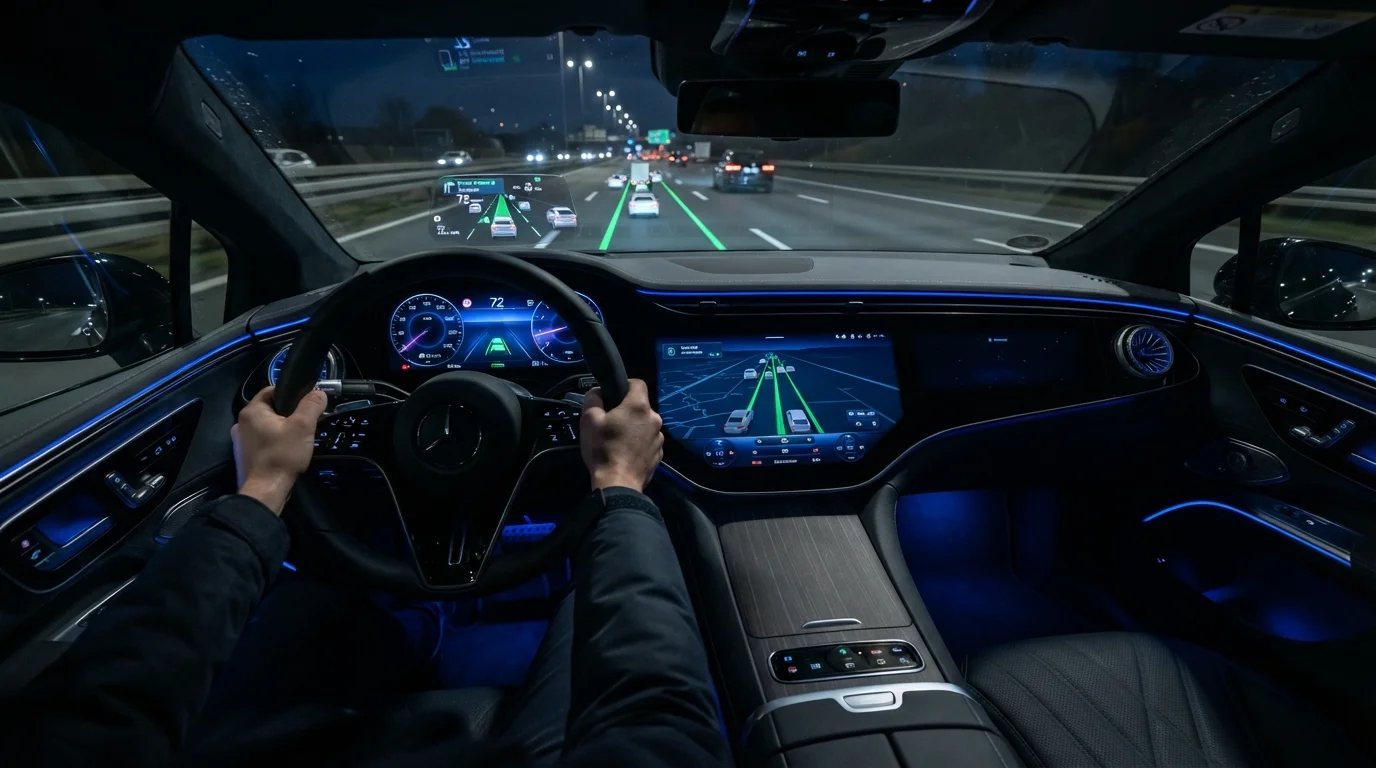
Photo: CoralScripts.com | Explore, Discover, Engage editorial
—— In This Article
Key Takeaways
- ADAS covers a wide range of systems - from simple alerts to active steering and braking interventions.
- Sensors have real-world limits; adverse weather, worn lane markings, and unusual road geometry can degrade performance.
- ADAS is designed to assist drivers, not replace their attention or judgment.
- Understanding what each feature actually does helps drivers use it correctly and recognize its boundaries.
- Regular sensor calibration is essential - especially after windshield replacements or front-end repairs.
The Core Systems and What They Actually Do
ADAS is not a single feature - it's a layered suite of technologies, each addressing a different risk area. Understanding them individually is essential for any driver who wants to use them effectively. Our automotive terminology guide covers many of these terms in broader context, but here's how each major system functions in practice.
Autonomous Emergency Braking (AEB)
AEB uses forward-facing radar and cameras to monitor the gap between your vehicle and the one ahead. If the system calculates an imminent collision and the driver hasn't responded, it applies braking autonomously - sometimes achieving a full stop, sometimes only a partial reduction in speed. Pedestrian and cyclist detection variants extend this coverage to vulnerable road users crossing the vehicle's path.
Lane-Keeping Assist and Lane Departure Warning
Lane departure warning (LDW) alerts the driver - usually via steering wheel vibration or a dashboard chime - when the vehicle drifts over lane markings without a turn signal active. Lane-keeping assist (LKA) goes further by applying gentle counter-steering to guide the car back within the lane. Neither system substitutes for attentive steering; they are corrective nudges, not autopilot.
Adaptive Cruise Control (ACC)
Unlike conventional cruise control, ACC adjusts vehicle speed automatically to maintain a driver-set following distance from the vehicle ahead, using radar to track traffic flow. In stop-and-go variants, the system can bring the car to a complete halt and resume - though driver re-engagement is typically required after a brief standstill.
Blind-Spot Monitoring and Rear Cross-Traffic Alert
Blind-spot monitoring (BSM) uses rear-corner radar to detect vehicles in the zones beside and behind the car that mirrors don't cover, illuminating a warning indicator in the corresponding mirror. Rear cross-traffic alert extends similar detection to vehicles approaching from the sides when the car is reversing - a meaningful aid in parking lots with obstructed sightlines.
~360,000
Crashes AEB estimated to prevent annually in the US
NHTSA analysis has projected AEB's potential crash-prevention capacity if universally adopted across the US vehicle fleet.
94%
Of serious crashes involving human error
According to NHTSA research, approximately 94% of serious crashes involve human error as a critical factor - the core problem ADAS aims to address.
Level 1-2
Automation level of most production ADAS
The SAE International automation scale runs from Level 0 (no automation) to Level 5 (full automation); most current consumer ADAS sits at Level 1 or 2.
The Sensor Stack: How ADAS Perceives the World
Every ADAS feature depends on accurate environmental sensing. Most vehicles combine multiple sensor types because each has distinct strengths and weaknesses.
- Cameras - Excel at reading lane markings, traffic signs, and recognizing pedestrians. Highly sensitive to lens contamination, glare, and low light.
- Radar - Measures distance and relative speed with high accuracy in most weather conditions. Less capable of distinguishing object shape or reading road markings.
- Ultrasonic sensors - Short-range detection used primarily for parking assist and low-speed obstacle alerts. Limited range, typically under 15 feet.
- Lidar - High-resolution 3D mapping of the environment. Currently more common in development and testing fleets than in mass-market consumer vehicles.
Sensor fusion - combining data from multiple sensor types simultaneously - is what allows modern ADAS to be meaningfully reliable across varied conditions. Even so, no single combination eliminates all gaps.
ADAS Calibration After Repairs
Windshield replacement is one of the most common triggers for ADAS recalibration requirements, because forward-facing cameras are typically mounted to or near the glass. Static calibration (performed in a controlled shop environment using targets) or dynamic calibration (a drive cycle under specific conditions) may be required depending on the vehicle. Always confirm with a qualified technician that calibration has been completed to manufacturer specifications after any relevant repair.
Real Limitations Drivers Must Understand
Overconfidence in ADAS is one of the more documented contributors to crashes involving these systems. The technology has well-understood constraints that every driver should internalize before relying on these features.
Faded or missing lane markings - common on older rural highways and active construction zones - can render lane-keeping and lane-departure systems inoperative. Unusual road geometry, such as sharp curves or merging lanes, can confuse ACC and LKA in ways that require immediate driver override.
Camera lenses obscured by mud, snow, or ice can blind the system entirely. Radar can be confused by metal objects like highway overpasses or dense traffic producing overlapping returns. And critically, AEB systems are calibrated for specific speed ranges - at highway speeds, they may reduce impact severity but cannot guarantee a full stop.
Read Your Owner's Manual for ADAS Settings
Every manufacturer implements ADAS features differently - sensitivity thresholds, alert types, and intervention timing vary significantly between vehicles. Spend time in your owner's manual to understand how your specific system behaves, what its documented limitations are, and how to adjust or disable individual features when road conditions make them counterproductive.
Drive configuration also affects how ADAS behaves. Understanding how your vehicle's drivetrain distributes power and grip in a corrective maneuver matters. See our overview of FWD, RWD, and AWD differences for context on how vehicle dynamics interact with these interventions.
For ongoing reliability, ADAS sensors must be properly calibrated - particularly after windshield replacement (which repositions forward-facing cameras), front-end collision repairs, or wheel alignment adjustments. This is specialized work that requires manufacturer-approved procedures; it falls squarely under the kind of maintenance covered in the car maintenance essentials hub.
Frequently Asked Questions

Cars & Driving Editorial Team
Cars & Driving Editorial Team is the collective byline for our editorial team and contributor network. Articles published under this byline or an editorial pen name are researched, written, and reviewed according to our editorial standards for clarity, consistency, and independence before publication.
View author profile