
What Your Engine Warning Light Is Actually Telling You
Dashboard warning lights decoded: what each symbol means, which ones need urgent attention, and when to see a mechanic.
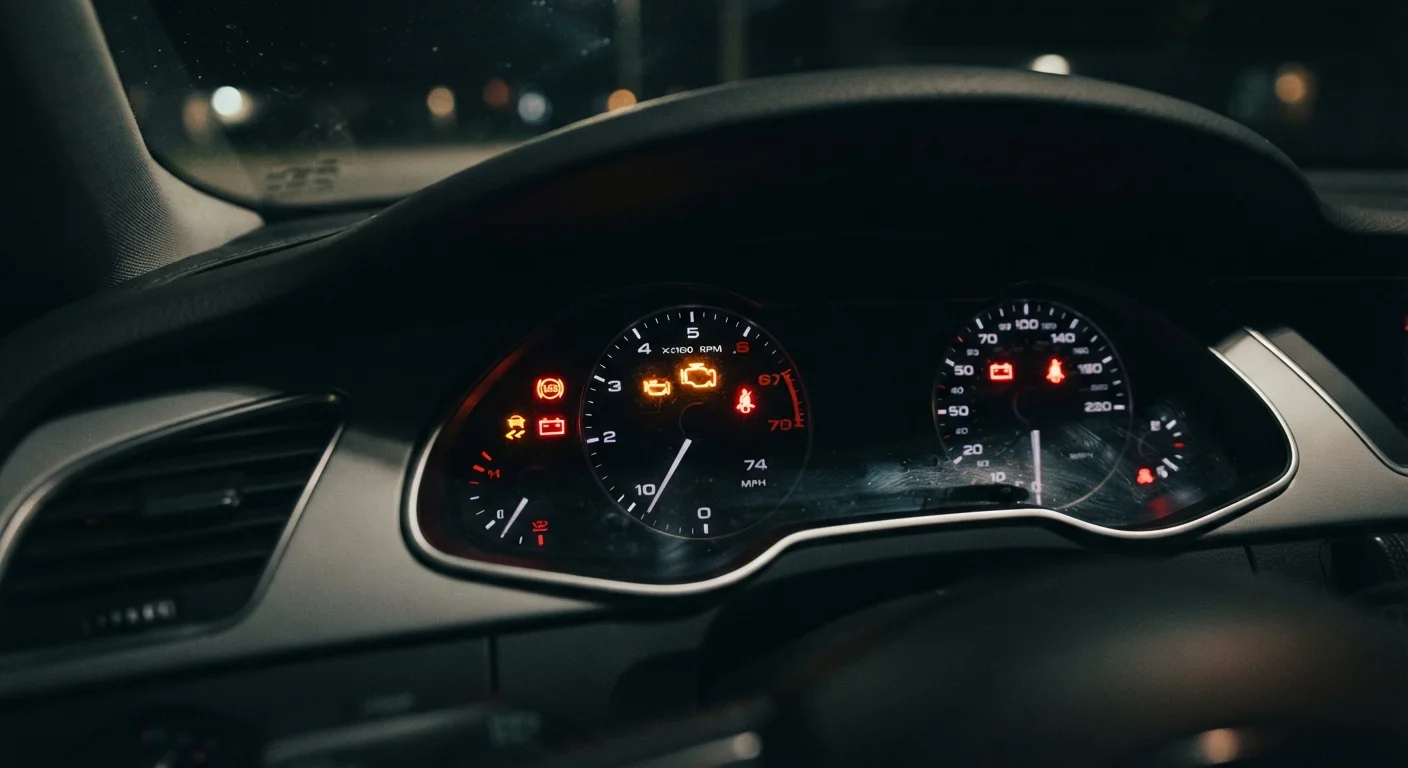
Photo: CoralScripts.com | Explore, Discover, Engage editorial
—— In This Article
Key Takeaways
- A solid amber engine light signals a stored fault that needs diagnosis but not always immediate roadside action.
- A flashing engine light indicates an active misfire that can damage the catalytic converter - reduce speed and seek service promptly.
- The light itself does not specify the problem; an OBD-II scan is the only way to retrieve the stored fault code.
- Ignoring the light rarely makes the underlying issue cheaper or easier to fix.
- Some triggers are minor (a loose gas cap), while others signal serious mechanical faults requiring professional attention.
Solid vs. Flashing: The Distinction That Matters Most
Before anything else, look at how the light is behaving. A steady amber engine light means the OBD-II system has logged a fault code but is not detecting an acute, ongoing event. The car may drive normally. You have time to book a diagnostic appointment - but don't postpone indefinitely, as faults compound.
A flashing or blinking engine light is a different matter entirely. It indicates an active engine misfire severe enough that unburned fuel is entering the exhaust stream. This can rapidly overheat and destroy the catalytic converter - a repair that typically runs into the hundreds or thousands of dollars. When the light flashes: ease off the throttle, avoid sustained highway speeds, and get the vehicle to a mechanic that same day.
Solid Light vs. Flashing Light - Quick Rule
Treat a solid engine light as 'schedule a diagnosis soon.' Treat a flashing engine light as 'stop driving hard, get to a mechanic today.' The difference in repair cost between acting promptly and waiting can be significant - catalytic converters are expensive components.
For a broader guide to all dashboard symbols - not just the engine light - see our complete warning lights guide.
What the OBD-II System Is Actually Monitoring
Your vehicle's OBD-II system continuously reads data from dozens of sensors across the engine, transmission, and emissions hardware. When a sensor reading falls outside an acceptable range for long enough, the system logs a Diagnostic Trouble Code (DTC) and illuminates the MIL. Common categories of faults include:
- Oxygen sensor faults - sensors before and after the catalytic converter monitor exhaust composition. A degraded sensor skews fuel trims and increases emissions.
- Catalytic converter efficiency - if the converter isn't processing exhaust gases adequately, the OBD-II system detects the mismatch between upstream and downstream O2 readings.
- Engine misfires - individual cylinder misfire codes (e.g., P0301 for cylinder 1) point toward ignition, fuel delivery, or compression issues.
- Evaporative emission system leaks - the EVAP system prevents fuel vapors from escaping to atmosphere. A loose gas cap is the most common culprit.
- Mass airflow or throttle position sensor faults - these affect how accurately the engine computer calculates fuel delivery.
~400
OBD-II parameters monitored per drive cycle
Modern OBD-II systems track hundreds of sensor inputs continuously; the exact count varies by vehicle make and model year.
P0420
One of the most common fault codes recorded
Catalyst system efficiency below threshold (Bank 1) is among the most frequently retrieved codes at US diagnostic shops, according to scan tool data aggregators.
1996
Year OBD-II became mandatory in the US
The EPA required standardized OBD-II compliance on all light-duty passenger vehicles sold in the United States from model year 1996 onward.
Understanding these categories helps you have an informed conversation with a mechanic rather than arriving blind. For precise terminology, our automotive terminology guide defines these systems in plain language.
Common Causes - From Trivial to Serious
Not every engine light signals imminent mechanical failure. The range of causes is genuinely wide:
- Low-urgency causes
- Loose or missing fuel cap; a single failed oxygen sensor on an otherwise healthy engine; a minor EVAP leak from an aging vapor canister purge valve.
- Moderate-urgency causes
- Failing ignition coil or spark plugs producing intermittent misfires; a degraded mass airflow sensor causing rough idle and poor fuel economy; a thermostat stuck open keeping the engine from reaching operating temperature.
- High-urgency causes
- Sustained engine misfires (flashing light); low oil pressure faults appearing alongside the engine light; coolant temperature sensor readings suggesting overheating risk.
The engine light does not distinguish between these categories by itself - the severity is encoded in the fault code and confirmed through live sensor data. This is why a scan is always step one. Routine fluid checks, covered in our guide to vehicle fluid checks, can sometimes reveal related issues before they escalate.
When to See a Mechanic - and Why Waiting Costs More
A persistent engine light is your vehicle's way of telling you something has moved outside normal parameters. Secondary damage is the real risk of delay: an unresolved misfire destroys a catalytic converter; a sluggish oxygen sensor causes the ECU to run rich, fouling spark plugs and increasing fuel consumption; an ignored coolant fault can escalate to head gasket failure.
Qualified mechanics have access to more capable scan tools that go beyond simple code reading - they can view live data streams, perform component-specific tests, and confirm whether a repair actually resolved the condition. Clearing a code with a basic OBD-II reader without fixing the root cause means the light returns within a few drive cycles.
For context on maintenance misconceptions that cause drivers to underestimate warning signs, see our article on common car maintenance myths. And if abnormal tire wear or handling changes accompany your engine light, consider whether tire condition is part of a broader picture. The Car Maintenance hub covers the full spectrum of upkeep topics to keep your vehicle reliable.
Frequently Asked Questions

Cars & Driving Editorial Team
Cars & Driving Editorial Team is the collective byline for our editorial team and contributor network. Articles published under this byline or an editorial pen name are researched, written, and reviewed according to our editorial standards for clarity, consistency, and independence before publication.
View author profile