
Battery Health and the Electrical Systems That Depend on It
Your car battery does more than start the engine. Understand its role in the broader electrical system and how to monitor its condition over time.
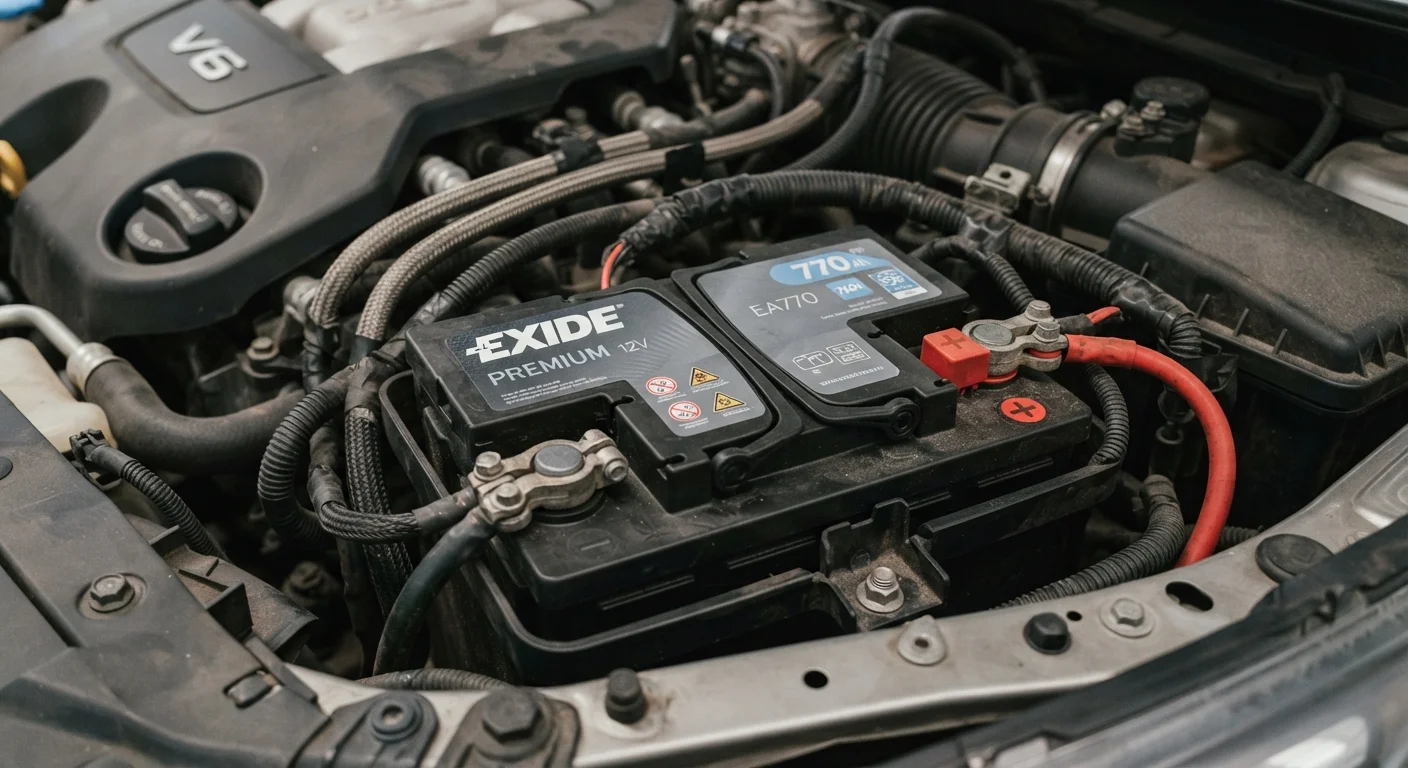
Photo: CoralScripts.com | Explore, Discover, Engage editorial
—— In This Article
Key Takeaways
- A car battery powers far more than the starter motor - it stabilizes voltage for every electronic system on board.
- Most 12-volt lead-acid batteries last three to five years under typical driving conditions.
- Short trips and extreme temperatures are among the leading causes of premature battery degradation.
- Modern vehicles with advanced electronics are more sensitive to low battery voltage than older cars.
- A battery load test provides more reliable health data than a basic voltage reading alone.
- Addressing battery issues early helps protect connected components like the alternator and ECU.
More Than a Starter: The Battery's Role in Modern Vehicles
Most drivers think of the battery as the component that gets the engine running and little else. In practice, the 12-volt battery in a conventional vehicle is the electrical anchor for nearly every system on board. It provides startup current to the starter motor, stabilizes voltage across the electrical network while the engine runs, and supplies power directly to electronics when the engine is off.
Modern vehicles have dramatically increased their reliance on stable, continuous electrical power. Features like keyless entry, infotainment displays, automatic start-stop systems, parking sensors, and driver-assistance modules all draw from - or depend on the stability of - the main battery. In hybrid and electric powertrains, a separate high-voltage traction battery handles propulsion, but a conventional 12-volt battery still manages vehicle electronics independently.
The alternator replenishes the battery while the engine runs, but it is not a substitute for a healthy battery. The battery buffers voltage spikes and provides surge current that the alternator alone cannot deliver during high-demand moments like starting the engine.
How Batteries Degrade - and What Accelerates It
Lead-acid batteries degrade through a combination of sulfation, corrosion, and electrolyte loss. Each charge-discharge cycle causes minor structural changes to the lead plates inside the battery. Over hundreds of cycles, capacity gradually declines. This process is natural and irreversible, but several factors accelerate it significantly.
3-5 years
Typical lead-acid battery lifespan
Industry consensus from automotive testing and battery manufacturers places average 12-volt battery service life in this range under normal use.
~70%
SOH threshold for noticeable performance decline
Battery testing standards generally identify batteries below 70-80% State of Health as candidates for replacement due to reduced cranking reliability.
12.6 V
Fully charged resting voltage (12V lead-acid)
A properly charged, healthy 12-volt lead-acid battery should hold approximately 12.6 volts at rest after several hours without use.
Short trips are one of the most common causes of premature degradation. When a vehicle is driven only briefly, the alternator doesn't have time to fully recharge the battery after the high-current draw of starting. Repeated partial discharge cycles accelerate sulfation - the buildup of lead sulfate crystals on battery plates - which permanently reduces capacity.
Extreme temperatures affect batteries at both ends. Heat speeds up internal corrosion and accelerates fluid loss. Cold reduces the battery's available energy at exactly the moment - startup - when demand is highest. Seasonal maintenance checks that include battery testing are particularly valuable for drivers in regions with significant temperature swings.
Parasitic drain - small but continuous current draws from modules that remain active when the car is parked - can also discharge a battery over days if a vehicle sits unused. This is explored in more depth in what genuinely shortens battery life.
Testing Battery Health: Beyond the Voltage Check
A basic open-circuit voltage reading - checking the battery with a multimeter when the vehicle has rested overnight - is a useful first step. A fully charged, healthy 12-volt lead-acid battery should read approximately 12.6 volts. Readings below 12.4 volts suggest a partially discharged state; below 12.0 volts indicates a significantly discharged or degraded battery.
However, voltage alone doesn't capture how a battery performs when it matters most: under load. A battery can hold an acceptable resting voltage while failing to deliver adequate current during engine cranking.
Get a Load Test, Not Just a Voltage Reading
When having your battery evaluated, ask specifically for a load test or conductance test rather than a simple voltage check. Many service shops and auto parts retailers offer these at no charge. The results give a far more actionable picture of whether the battery is likely to fail under real-world starting conditions.
Two more informative tests are available at most auto parts stores and service shops:
- Load test: Applies a controlled high current draw and measures voltage drop. A battery that collapses in voltage under load is nearing failure even if it reads normal at rest.
- Conductance test: Uses an electronic tester to assess internal resistance and remaining capacity. This method doesn't require a fully charged battery and provides a State of Health (SOH) percentage.
Annual testing after a battery's third year of service is a practical threshold, consistent with the broader value of preventive maintenance in avoiding more expensive failures downstream.
Protecting the Systems That Depend on Battery Voltage
When battery voltage becomes unstable or insufficient, the effects ripple through interconnected systems. The alternator works harder to compensate, which can shorten its lifespan. More critically, the vehicle's electronic control units - including the engine control module (ECM), body control module (BCM), and transmission control unit - depend on stable voltage to operate correctly. Erratic voltage can trigger fault codes, reset learned calibrations, or cause temporary loss of features like throttle response and shift quality.
Vehicles equipped with advanced driver-assistance systems (ADAS) are especially sensitive. Cameras, radar processors, and electronic stability control systems all require consistent power to function as designed.
Understanding these dependencies makes battery health a genuinely systemic concern, not just a starter-motor issue. It fits naturally within the habits covered in building a solid maintenance routine from day one. A battery inspection costs little and takes minutes; replacing a damaged alternator or resetting corrupted control modules does not.
The information in this article is intended for general educational purposes. Always consult a qualified mechanic for diagnosis and repair decisions specific to your vehicle.
Frequently Asked Questions

Cars & Driving Editorial Team
Cars & Driving Editorial Team is the collective byline for our editorial team and contributor network. Articles published under this byline or an editorial pen name are researched, written, and reviewed according to our editorial standards for clarity, consistency, and independence before publication.
View author profile