
Motorsport Heritage and Road Cars: How Racing Shapes What Reaches the Showroom
Discover how a brand's racing history filters into everyday road car development, from aerodynamics to suspension tuning and engine design.
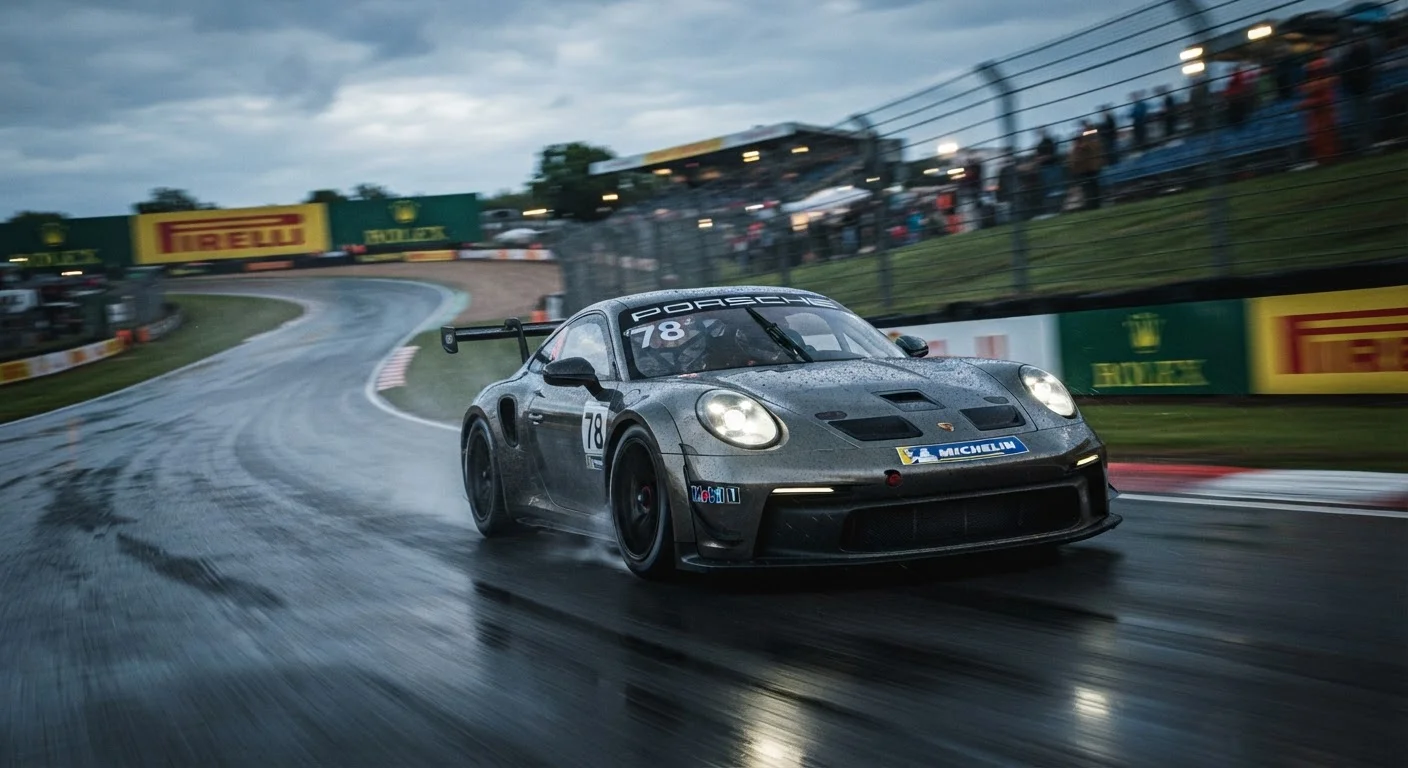
Photo: CoralScripts.com | Explore, Discover, Engage editorial
—— In This Article
Key Takeaways
- Racing programs force engineers to solve problems under extreme conditions that accelerate civilian technology development.
- Aerodynamic features like rear diffusers, active spoilers, and underbody channeling all trace roots to motorsport.
- Turbocharged engines became mainstream partly because of lessons learned in Formula 1 and endurance racing.
- Electronic stability control and advanced braking systems were refined in motorsport before reaching everyday cars.
- A brand's racing heritage shapes its engineering culture, influencing road cars even decades after competition ends.
The Pipeline From Track to Showroom
The relationship between competition motorsport and production road cars is one of the most consequential feedback loops in automotive history. It isn't mere marketing mythology - manufacturers who compete at elite levels face engineering problems that no laboratory simulation fully replicates. Sustained 200 mph cornering loads, thermal stress on braking systems, and aerodynamic instability at high speed demand solutions that are then quietly folded into the vehicles sold to everyday drivers.
The pipeline isn't linear. A technology might debut in a prototype racing program, spend years being refined, get tested in a performance road variant, and finally trickle down to a mainstream model a decade later. Understanding that timeline helps explain why some innovations feel sudden when they appear in production cars - they've actually been maturing in competition environments for years.
For a deeper look at how engine architecture underpins all of this, see The Anatomy of a Car Engine. The Car Knowledge hub also provides broader context on how modern automotive systems evolved.
40+
Years turbocharging has been in mainstream road cars
Turbocharged engines, whose principles were proven in 1970s-80s Formula 1, became mainstream in road cars by the 1980s and now dominate global production.
~50%
Weight reduction carbon fiber offers vs. steel
Carbon fiber reinforced polymer, first used structurally in Formula 1 chassis, can reduce component weight by roughly half compared to equivalent steel structures, according to materials engineering references.
1966
Year Ford GT40 won Le Mans - influencing road car heritage
The GT40's Le Mans victories are frequently cited as a landmark moment demonstrating how a manufacturer's racing program could reshape its engineering identity and road car aspirations for decades.
Aerodynamics: Shaping Air Before Styling Does
Modern production cars feature underfloor diffusers, front splitters, active rear wings, and carefully managed airflow channels - all concepts born on racing circuits. In competition, aerodynamic downforce is the difference between a car that handles predictably at 180 mph and one that becomes a liability. Engineers solving that problem inevitably produce insights about airflow management that apply equally, if at reduced intensity, to a road car traveling at highway speeds.
The rear diffuser is a particularly clear example. Developed in endurance racing to accelerate airflow beneath the car and reduce lift, the diffuser is now a standard feature on performance road vehicles. Active aerodynamics - spoilers and flaps that change position depending on speed - followed the same path from prototype racers to production sports cars.
Look Beyond the Badge When Evaluating Aero Features
When assessing a vehicle's aerodynamic claims, look for specific engineering details - underbody panels, active elements, and cooling duct placement - rather than broad marketing language about 'racing-inspired' design. Real motorsport-derived aero features serve measurable functions: reducing lift, managing brake cooling, or lowering drag coefficients. Ask whether the manufacturer competes in a series where those problems actually get solved.
Even mainstream sedan and crossover design has been quietly influenced by motorsport aerodynamics research, particularly in roofline shaping, mirror housing profiles, and underbody panels designed to reduce drag and improve fuel efficiency.
Powertrains: Forced Induction and the Racing Laboratory
Turbocharging is perhaps the most widely recognized example of racing-to-road technology transfer. Early turbo applications in Formula 1 during the 1970s and 1980s demonstrated the potential for dramatically increased power from smaller displacement engines - lessons that resonated deeply with road car engineers grappling with fuel economy regulations and emissions standards in subsequent decades.
The so-called 'downsizing' trend - replacing large naturally aspirated engines with smaller turbocharged units - owes a conceptual debt to forced induction research conducted under race conditions. The thermal management challenges, intercooler design, and turbo lag mitigation techniques that engineers confronted in competition became the foundation for the turbocharged four-cylinder engines now standard across mainstream automotive segments.
Direct fuel injection, variable valve timing, and high-revving engine architectures all carry similar lineages. As German and Japanese engineering philosophies illustrate, different racing traditions shaped different road car powertrain priorities across manufacturers.
Chassis, Suspension, and Driver Electronics
Racing demands suspension geometries that maintain optimal tire contact patches through extreme cornering, acceleration, and braking simultaneously. Multi-link rear suspension arrangements, double-wishbone front setups, and adaptive damping systems were all developed in motorsport environments before becoming defining features of performance road cars - and eventually filtering into more affordable segments.
Electronic driver aids tell a particularly compelling story. Anti-lock braking systems (ABS), traction control, and electronic stability control all had motorsport research in their developmental history, before regulatory mandates made them universal in production vehicles. Modern drive modes - adjusting throttle response, transmission behavior, and steering weight - are a direct outgrowth of the differential calibration work conducted in endurance racing programs.
This engineering culture, built up through decades of competition, shapes a brand's identity long after specific race programs end. As explored in our article on how country of origin shapes brand reputation, engineering heritage and national motorsport traditions continue to influence how manufacturers approach road car development - and how consumers perceive the results.
Heritage as Engineering Culture, Not Just Marketing
It's tempting to treat motorsport heritage purely as a branding exercise - a way for manufacturers to borrow credibility from past competition victories. But its deeper effect is cultural. Organizations that compete seriously at the highest levels of motorsport develop engineering talent, testing methodologies, and institutional problem-solving approaches that permeate their road car divisions for generations.
This is why manufacturers with long competition histories often display distinctive engineering philosophies in their road cars - not because race parts are bolted directly onto production vehicles, but because the same minds trained on circuits apply their discipline to showroom products. The challenge for brands reinventing themselves is preserving that engineering culture even as product lines, ownership structures, and powertrains change fundamentally.
As the industry moves toward electrification - a shift examined in detail in the context of the EV transition's impact on legacy brands - motorsport itself is evolving to remain the relevant proving ground it has always been, now generating data and solutions for a fundamentally different type of drivetrain.
“Racing is the ultimate laboratory. You get data in an afternoon that would take years of road testing to accumulate, and the solutions you find under those conditions tend to be very, very good.”
— Carroll Smith, Motorsport engineer and author of foundational race car engineering texts
Frequently Asked Questions

Cars & Driving Editorial Team
Cars & Driving Editorial Team is the collective byline for our editorial team and contributor network. Articles published under this byline or an editorial pen name are researched, written, and reviewed according to our editorial standards for clarity, consistency, and independence before publication.
View author profile