
How Country of Origin Still Shapes a Car Brand's Global Reputation
National stereotypes about reliability, performance, and craftsmanship influence how consumers perceive car brands — even when assembly happens elsewhere.
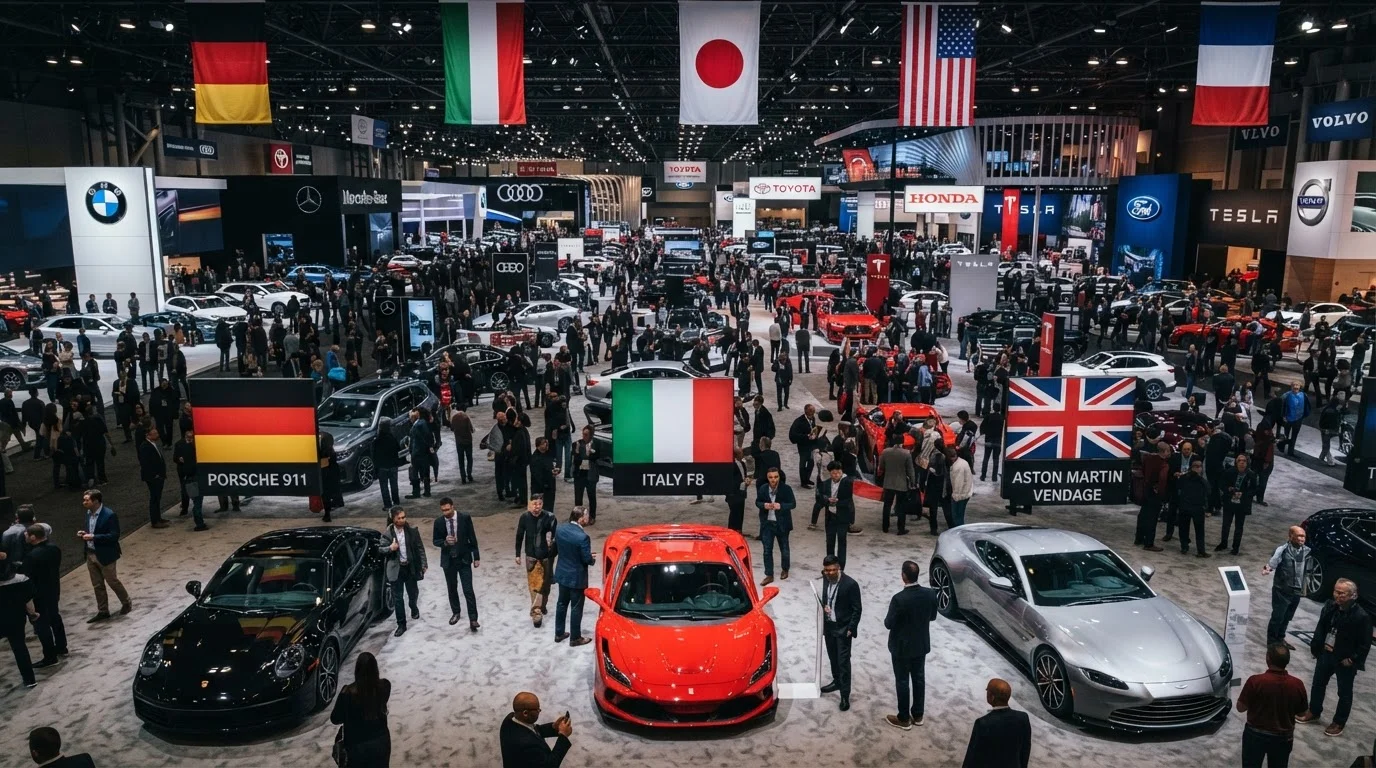
Photo: CoralScripts.com | Explore, Discover, Engage editorial
—— In This Article
Key Takeaways
- National reputation acts as a cognitive shortcut that shapes consumer trust before any vehicle data is reviewed.
- Country-of-origin associations are built over decades and can outlast actual shifts in manufacturing quality.
- Globalized production means a car's assembly country often differs from the brand's home nation.
- Automakers actively manage origin narratives through design language, marketing, and brand heritage storytelling.
- Buyer awareness of globalized supply chains is growing, but origin bias remains a measurable market force.
Where the Idea Comes From
Consumer psychology has long recognized that the label "Made in Germany" or "Made in Japan" does more work than just stating geography - it triggers a chain of associations about precision, dependability, or value. Automotive brands have been among the most powerful carriers of national identity in any product category, partly because cars are high-stakes purchases with long ownership cycles that make the decision feel personal.
These perceptions didn't emerge from thin air. Japan's automakers earned reliability reputations through consistent, measurable quality improvements that became evident to American drivers during the fuel crises of the 1970s. German brands built an engineering narrative through decades of motorsport investment and technical marketing. The reputations were earned - but the associations have since taken on a life independent of ongoing evidence.
For a deeper look at how these national engineering philosophies actually differ in practice, see German Engineering vs. Japanese Reliability.
70%+
Consumers influenced by brand's home country
Multiple consumer behavior studies in international marketing literature have found that country-of-origin is a significant purchase-influencing factor for a majority of automotive buyers in major markets.
~60%
US-sold vehicles assembled domestically
According to data from the American Automotive Policy Council and NHTSA, a substantial share of vehicles sold in the US are assembled at North American plants, often by brands perceived as foreign.
The Disconnect Between Origin and Assembly
Modern vehicle production complicates the origin narrative considerably. A brand headquartered in Stuttgart may produce vehicles in Alabama, Mexico, or China for local markets. Conversely, brands perceived as American may source significant portions of their components internationally. The concept of a purely "domestic" vehicle has become largely obsolete in a globalized supply chain.
This disconnect matters because consumer perception often lags behind reality. Buyers may consciously choose a brand based on national origin associations while unknowingly purchasing a vehicle assembled thousands of miles from that nation. What's being bought, in effect, is the brand's inherited cultural identity - not necessarily a reflection of current production geography.
Platform Sharing Blurs National Lines Further
Many vehicles from different brands and even different countries now share underlying platforms, engines, and supplier-sourced components. A vehicle bearing a European badge may share its transmission with a model from an entirely different national brand. This shared-platform reality means origin-based quality inferences are becoming increasingly unreliable as a technical guide, even if they remain powerful as marketing signals.
Automakers are well aware of this dynamic. Many deliberately reinforce their country-of-origin signals through design language, naming conventions, and advertising that emphasizes national heritage even as physical production disperses globally. The symbolism embedded in brand logos often does exactly this kind of cultural signaling work.
How Origin Shapes Premium Perception
Country of origin functions differently depending on a brand's market position. For premium and luxury vehicles, origin is integral to the value proposition - the German triumvirate's appeal in the US market is inseparable from German engineering mythology. Stripping that narrative away would undermine the brand equity that justifies pricing premiums.
For volume-market brands, origin associations tend to cluster around reliability and value rather than prestige. Shifts in those associations can be commercially significant: the ascent of South Korean automakers in quality perception surveys during the 2000s and 2010s translated directly into market share gains in the United States.
“Consumers use country of origin as an information cue - a signal that helps them resolve uncertainty about quality when they lack the technical knowledge to evaluate a product directly. In no product category is this more persistent than automobiles.”
— Johny K. Johansson, Professor of International Business, Georgetown University, and country-of-origin researcher
Understanding the gap between mass-market and premium positioning - and how origin narratives feed into it - is explored further in our piece on what actually separates mass market from premium brands.
Managing and Evolving Origin Narratives
Brands don't passively inherit their national reputations - they actively manage them. This includes everything from emphasizing founding-country engineering teams in press materials to localizing design studios while ensuring vehicles retain identifiable stylistic DNA tied to their home market traditions. When a brand faces reputational challenges, origin narrative management becomes part of the recovery strategy.
Occasionally, brands need to evolve beyond their origin story without abandoning it entirely - a delicate exercise that involves maintaining continuity for loyal customers while signaling change to skeptical ones. The broader dynamics of that challenge are covered in our analysis of how car brands reinvent themselves without losing their identity.
It's worth noting that origin perceptions can be highly resistant to correction even when the underlying facts have changed. Persistent myths about German automotive quality illustrate how durable these associations can be - sometimes to manufacturers' advantage, sometimes not.
Look Past the Badge When Researching a Vehicle
When evaluating a vehicle purchase, consult model-specific reliability data from independent sources rather than relying on national brand stereotypes. Long-term owner surveys, drivetrain warranty claims data, and independent road tests give a more accurate picture of a specific vehicle's quality than its country of origin alone can provide.
Frequently Asked Questions

Cars & Driving Editorial Team
Cars & Driving Editorial Team is the collective byline for our editorial team and contributor network. Articles published under this byline or an editorial pen name are researched, written, and reviewed according to our editorial standards for clarity, consistency, and independence before publication.
View author profile