
German Engineering vs. Japanese Reliability: Two Philosophies Behind the Wheel
A look at how German and Japanese automakers approached car design differently and what those philosophies mean for drivers today.
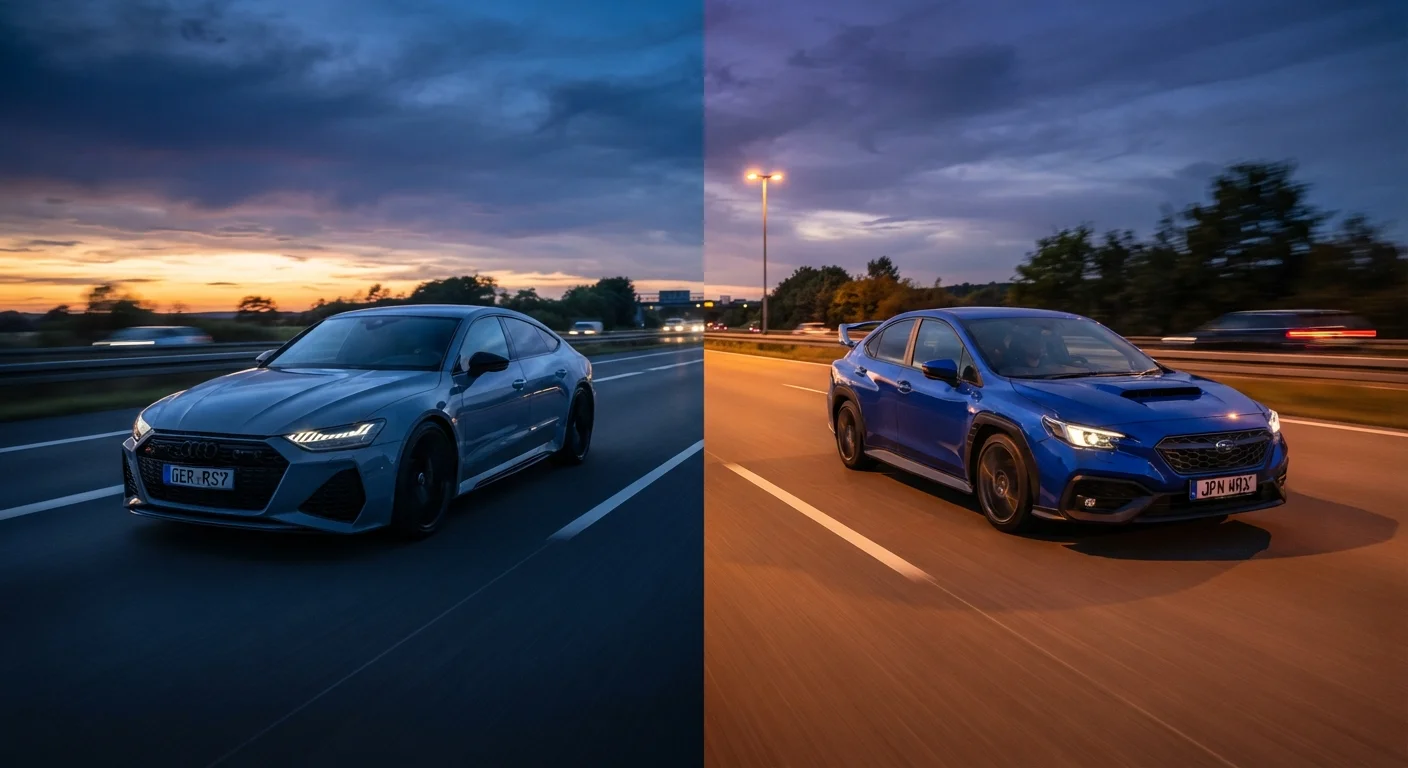
Photo: CoralScripts.com | Explore, Discover, Engage editorial
—— In This Article
Key Takeaways
- German automakers historically prioritize dynamic performance, handling precision, and cutting-edge technology integration.
- Japanese manufacturers built their global reputation on disciplined quality control, mechanical simplicity, and low long-term ownership costs.
- Both philosophies have evolved significantly, with each tradition now incorporating elements of the other.
- Ownership costs, not sticker price, often separate the two approaches most meaningfully for everyday drivers.
- Neither philosophy is universally superior - the right choice depends on how, where, and how long you drive.
Two Philosophies, One Road
Few comparisons in automotive culture generate more debate than German engineering versus Japanese reliability. These aren't just marketing slogans - they reflect genuinely different industrial traditions, design priorities, and answers to the question of what a car should fundamentally be. Understanding the origins of each approach helps drivers make more informed decisions and cuts through decades of accumulated myth.
Germany's automotive identity is inseparable from the Autobahn. With sections of unrestricted highway forming part of everyday infrastructure, German manufacturers engineered cars to be stable, precise, and confident at sustained high speeds. That constraint shaped everything: suspension geometry, steering calibration, engine tuning, and braking systems were all developed with high-speed dynamics as a baseline requirement rather than an afterthought.
Japan's postwar automotive industry, by contrast, emerged under very different pressures. Resource scarcity, export ambitions, and a manufacturing culture influenced by lean production principles led to an emphasis on reducing waste - in materials, in mechanical complexity, and in failure rates. The goal was a car that worked, kept working, and cost its owner as little as possible to maintain over time. For more on how national context shapes brand identity, see how country of origin still shapes a car brand's global reputation.
Engineering Priorities Side by Side
The mechanical differences between these two traditions are real, even if they've narrowed over time. German automakers have long favored complex multi-link suspension setups, turbocharged engines with sophisticated management systems, and tightly integrated electronic control networks. The result is a vehicle that can feel almost alive - responsive, precise, and deeply satisfying when everything is working as designed.
| Criterion | German Engineering | Japanese Reliability |
|---|---|---|
| Core design priority | Dynamic performance & driving feel | Mechanical durability & low ownership cost |
| Typical suspension approach | Complex multi-link, precision-tuned | Simpler proven layouts, easier to service |
| Engine philosophy | Turbocharged, high-output, tech-intensive | Naturally aspirated heritage, proven internals |
| Electronics complexity | Highly integrated, feature-dense | Functional, gradually increasing in complexity |
| Long-term repair costs | Can be high; specialist labor often needed | Generally lower; broad mechanic availability |
| High-speed stability | Historically a core engineering focus | Competent; less emphasized in development |
| Manufacturing philosophy | Precision craft and performance validation | Lean production and defect minimization |
Japanese manufacturers have historically leaned toward simpler, proven architectures. Naturally aspirated engines remained standard in many Japanese lineups long after European brands had turbocharged their ranges. Suspension layouts were often less exotic but easier to service. This wasn't a lack of ambition - it was a deliberate engineering choice that prioritized durability over peak performance figures. The myths surrounding German cars article examines how perception has sometimes outpaced reality on reliability and value retention.
Top 3
Japanese brands in long-term dependability studies
J.D. Power's Vehicle Dependability Study has consistently placed multiple Japanese brands among the top three most dependable nameplates across several survey years.
~40%
Higher average maintenance cost for European vs. Japanese vehicles
Industry maintenance cost analyses have found European-branded vehicles averaging roughly 30-50% higher annual maintenance costs compared to Japanese-branded equivalents over a five-year ownership period.
250+ km/h
Unrestricted Autobahn speed design baseline
Many German manufacturers engineer and test vehicles to perform stably at speeds exceeding 250 km/h (155 mph), reflecting real-world Autobahn usage that has directly influenced road car development priorities.
What Both Traditions Have Learned From Each Other
The gap between these two philosophies has closed considerably. Japanese brands now develop vehicles with driving dynamics that regularly earn critical praise. German automakers have adopted lean manufacturing concepts and quality auditing processes that have improved their long-term reliability records. Platform sharing within large automotive groups has further blurred the lines - a reality explored in depth in the guide to automaker alliances and mergers.
Motorsport has played a role on both sides. German and Japanese brands have used racing programs to test engineering concepts before applying them to road cars - from aerodynamic management to suspension kinematics. The connection between motorsport heritage and road cars illustrates how track-proven technology eventually reaches everyday drivers.
For owners, the practical question is often about total cost of ownership rather than engineering philosophy. German vehicles can carry higher maintenance costs due to complex systems and specialist parts. Japanese vehicles tend to offer broader mechanic availability and lower parts costs. Good car maintenance practices matter with either tradition - no philosophy eliminates the need for disciplined upkeep.
Philosophy Doesn't Equal Predictability
Neither engineering tradition guarantees a trouble-free ownership experience. Individual model lines, model years, and even production batches can vary significantly in reliability within the same brand. Long-term owner surveys and independent reliability data for specific models offer a more accurate picture than national reputation alone. Always research the particular vehicle, not just the badge.

Cars & Driving Editorial Team
Cars & Driving Editorial Team is the collective byline for our editorial team and contributor network. Articles published under this byline or an editorial pen name are researched, written, and reviewed according to our editorial standards for clarity, consistency, and independence before publication.
View author profile