
The Electrification Challenge: What the EV Transition Means for Legacy Car Brands
Legacy automakers face a complex shift to electric vehicles. Explore the strategic and identity pressures reshaping brands with combustion-era roots.
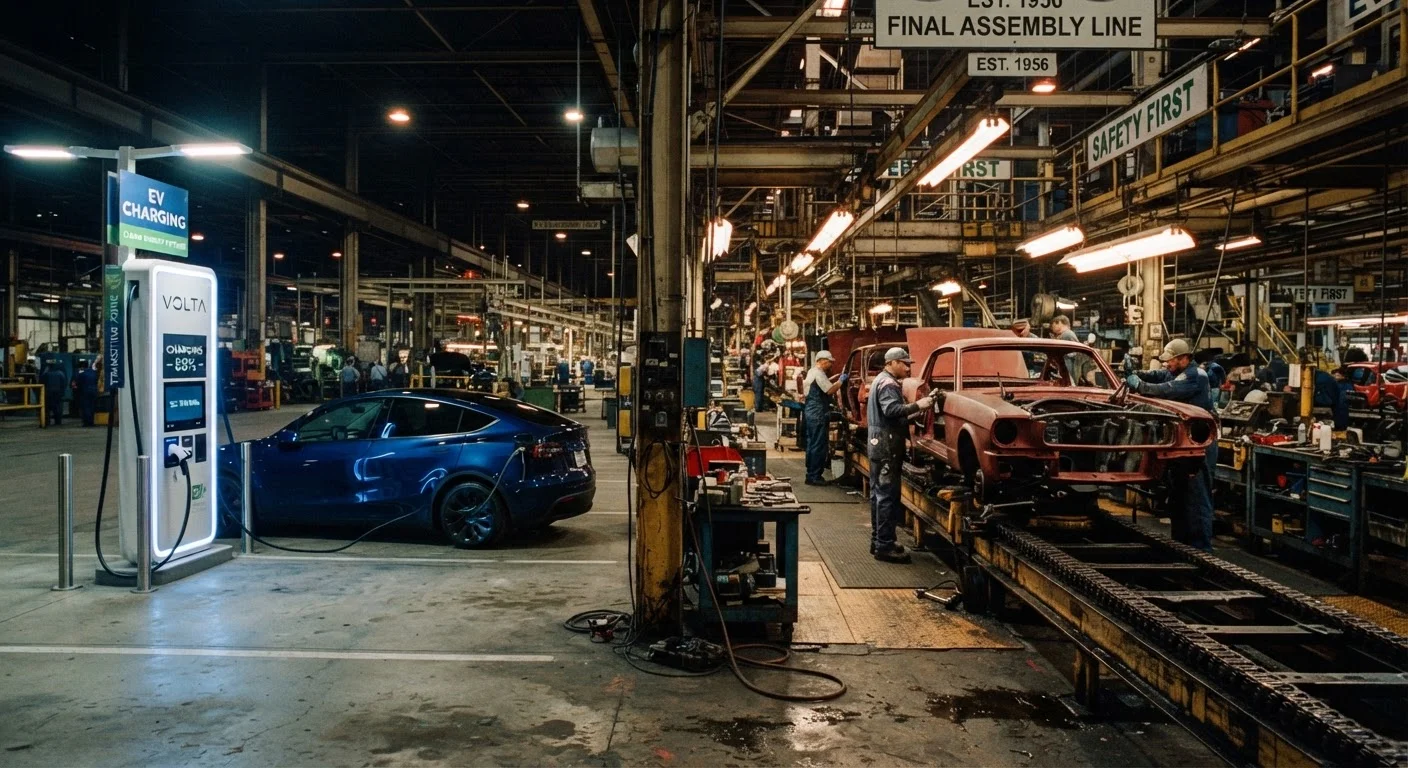
Photo: CoralScripts.com | Explore, Discover, Engage editorial
—— In This Article
Key Takeaways
- Legacy automakers carry significant manufacturing infrastructure that makes rapid electrification costly and complex.
- Brand identity built around engine sound and performance character must be reinterpreted for electric drivetrains.
- Established dealer networks and supply chains are both assets and sources of transition friction.
- Startups without combustion-era baggage have moved faster, forcing incumbents to accelerate timelines.
- Regulatory pressure across major markets is the primary external driver of legacy brand electrification strategies.
Established brand trust accelerates EV adoption among loyal customers
Consumers who already own and service vehicles from a given brand are more likely to consider that brand's first EV than to switch to an unfamiliar startup. Brand equity translates directly into a lower customer acquisition cost for new electric models.
Volume purchasing power reduces battery and component costs
Legacy automakers producing millions of vehicles annually can negotiate battery cell supply agreements at a scale that meaningfully reduces per-unit cost - a critical factor given that battery packs remain the largest single cost driver in EV manufacturing.
Global service networks provide immediate geographic coverage
An established dealer and service footprint means customers in markets large and small can access warranty support and maintenance from day one of a new EV model's launch, without the years required to build that infrastructure from zero.
Manufacturing expertise transfers to EV production quality
Decades of quality management systems, production engineering, and supplier relationships mean legacy brands can scale EV production with fewer of the early build-quality problems that have challenged some newer entrants.
Existing factory infrastructure is expensive to retool or replace
Engine plants, transmission lines, and exhaust assembly operations represent billions in capital tied to technologies with a shrinking future. Converting or mothballing these assets requires massive reinvestment and creates write-down pressure on financial statements.
Dealer network resistance can slow EV sales model adoption
Traditional franchised dealerships generate significant revenue from combustion-vehicle service and parts - revenue streams that shrink substantially with EVs. This creates structural tension between manufacturer electrification timelines and dealer business interests.
Brand identity tied to engine character is difficult to translate
When a brand's heritage is inseparable from V8 rumble, manual gearbox feel, or turbocharged response, moving to instant-torque electric silence requires either redefining brand character or risking disconnect with core enthusiasts.
Software-defined vehicle development demands new organizational skills
Modern EVs are as much software platforms as mechanical products, requiring deep embedded software engineering, cybersecurity expertise, and over-the-air update infrastructure that most legacy automakers have had to build or acquire rapidly.
Supply chain realignment creates medium-term cost and risk exposure
Shifting from a combustion supply chain to one centered on battery cells, power electronics, and electric motors requires re-qualifying hundreds of suppliers - a process that introduces both cost and production risk during the transition period.
Why the Transition Is Structurally Different for Legacy Brands
When a startup builds an electric vehicle from scratch, every design decision - battery placement, software architecture, thermal management - is made with electrons in mind from day one. Legacy automakers don't have that luxury. Brands with decades of combustion-engine production carry factories tooled for specific powertrains, supplier agreements tied to components like exhaust systems and transmissions, and workforces trained in skills that partially become redundant under electrification.
This structural inertia isn't simply inefficiency - it represents billions in sunk investment. Converting or replacing a stamping plant or engine assembly line requires capital, time, and significant labor negotiations. For automakers operating across large corporate group structures, those decisions ripple across multiple brands sharing the same platforms and facilities.
Regulatory timelines in markets like the EU, California, and the UK are accelerating EV adoption mandates. That external pressure means legacy brands can't phase the transition on their own schedule - they must accelerate capital expenditure even while existing combustion-vehicle lines remain profitable.
Not All Legacy Brands Face Identical Pressure
The electrification challenge varies considerably by brand positioning and market exposure. A brand deriving the majority of its revenue from North American truck and SUV sales faces a different regulatory and demand timeline than a European brand selling primarily compact passenger cars. Volume mainstream brands generally face faster regulatory deadlines than low-volume luxury or performance specialists, who may qualify for exemptions or extended phase-in periods under some regulatory frameworks. Readers interested in the broader brand landscape can consult the reference guide to major automotive brands for context on each manufacturer's home market and parent group.
The Advantages Legacy Brands Bring to Electrification
Despite the friction, established automakers hold real structural advantages that pure-play EV startups cannot easily replicate.
Established brand trust accelerates EV adoption among loyal customers
Consumers who already own and service vehicles from a given brand are more likely to consider that brand's first EV than to switch to an unfamiliar startup. Brand equity translates directly into a lower customer acquisition cost for new electric models.
Volume purchasing power reduces battery and component costs
Legacy automakers producing millions of vehicles annually can negotiate battery cell supply agreements at a scale that meaningfully reduces per-unit cost - a critical factor given that battery packs remain the largest single cost driver in EV manufacturing.
Global service networks provide immediate geographic coverage
An established dealer and service footprint means customers in markets large and small can access warranty support and maintenance from day one of a new EV model's launch, without the years required to build that infrastructure from zero.
Manufacturing expertise transfers to EV production quality
Decades of quality management systems, production engineering, and supplier relationships mean legacy brands can scale EV production with fewer of the early build-quality problems that have challenged some newer entrants.
Brand trust accumulated over generations gives legacy manufacturers a customer base already willing to consider their electric models. Supply chain scale - the ability to negotiate battery cell contracts or semiconductor allocations at volume - can translate into cost and availability advantages that smaller entrants struggle to match. And global dealer and service networks, while requiring adaptation, offer immediate geographic reach that a new EV brand must build from scratch over years.
The Disadvantages Holding Legacy Brands Back
The same scale that creates advantages also generates friction. Legacy brands face challenges that are simultaneously financial, organizational, and cultural.
Existing factory infrastructure is expensive to retool or replace
Engine plants, transmission lines, and exhaust assembly operations represent billions in capital tied to technologies with a shrinking future. Converting or mothballing these assets requires massive reinvestment and creates write-down pressure on financial statements.
Dealer network resistance can slow EV sales model adoption
Traditional franchised dealerships generate significant revenue from combustion-vehicle service and parts - revenue streams that shrink substantially with EVs. This creates structural tension between manufacturer electrification timelines and dealer business interests.
Brand identity tied to engine character is difficult to translate
When a brand's heritage is inseparable from V8 rumble, manual gearbox feel, or turbocharged response, moving to instant-torque electric silence requires either redefining brand character or risking disconnect with core enthusiasts.
Software-defined vehicle development demands new organizational skills
Modern EVs are as much software platforms as mechanical products, requiring deep embedded software engineering, cybersecurity expertise, and over-the-air update infrastructure that most legacy automakers have had to build or acquire rapidly.
Supply chain realignment creates medium-term cost and risk exposure
Shifting from a combustion supply chain to one centered on battery cells, power electronics, and electric motors requires re-qualifying hundreds of suppliers - a process that introduces both cost and production risk during the transition period.
40%+
Share of new car sales that must be electric in the EU by 2030
The European Union's phased CO₂ emissions targets for new passenger cars effectively require automakers to dramatically shift their sales mix toward zero-emission vehicles within this decade.
~$35B
Single-automaker EV and battery investment commitment (illustrative scale)
Several major legacy automakers have publicly announced cumulative EV investment commitments in the range of tens of billions of dollars across a five-to-ten-year horizon, reflecting the capital intensity of platform transitions.
Perhaps the subtler challenge is identity. Brands like those explored in studies of automaker reinvention have demonstrated that customers attach emotional meaning to engine character, exhaust sound, and mechanical feedback. Replicating that connection through electric drivetrains - or convincingly redefining it - is a creative and engineering challenge that goes well beyond swapping a motor for an engine. Some brands that built equity through motorsport heritage, as examined in discussions of racing's influence on road cars, face particular pressure to demonstrate that electric performance carries the same credibility.
Platform Strategy and the Path Forward
The automakers making the most coherent progress are those that have committed to purpose-built EV platforms rather than adapting existing combustion architectures. A dedicated electric platform - with the battery integrated structurally into the floor, software-defined vehicle controls, and over-the-air update capability - delivers a fundamentally different product experience than an ICE model with its engine swapped out.
Platform investment is expensive and long-horizon, which is precisely why some brands within larger corporate groups share development costs. That shared-platform logic, central to understanding how automotive groups allocate resources, applies equally to EV architecture. A single electric platform might underpin vehicles across several brands simultaneously, spreading billions in R&D across higher combined volume.
History offers cautionary context: the brands that failed to adapt to structural industry shifts often didn't survive them. The history of discontinued automotive brands includes names that were once dominant but couldn't navigate a fundamental change in market demand or technology. The electrification transition presents a parallel pressure point for today's incumbents.

Cars & Driving Editorial Team
Cars & Driving Editorial Team is the collective byline for our editorial team and contributor network. Articles published under this byline or an editorial pen name are researched, written, and reviewed according to our editorial standards for clarity, consistency, and independence before publication.
View author profile