
Luxury Marques Explained: Why Some Car Brands Exist Only at the Top of the Market
Understand what separates luxury automotive marques from mainstream brands — from manufacturing philosophy to positioning and heritage.
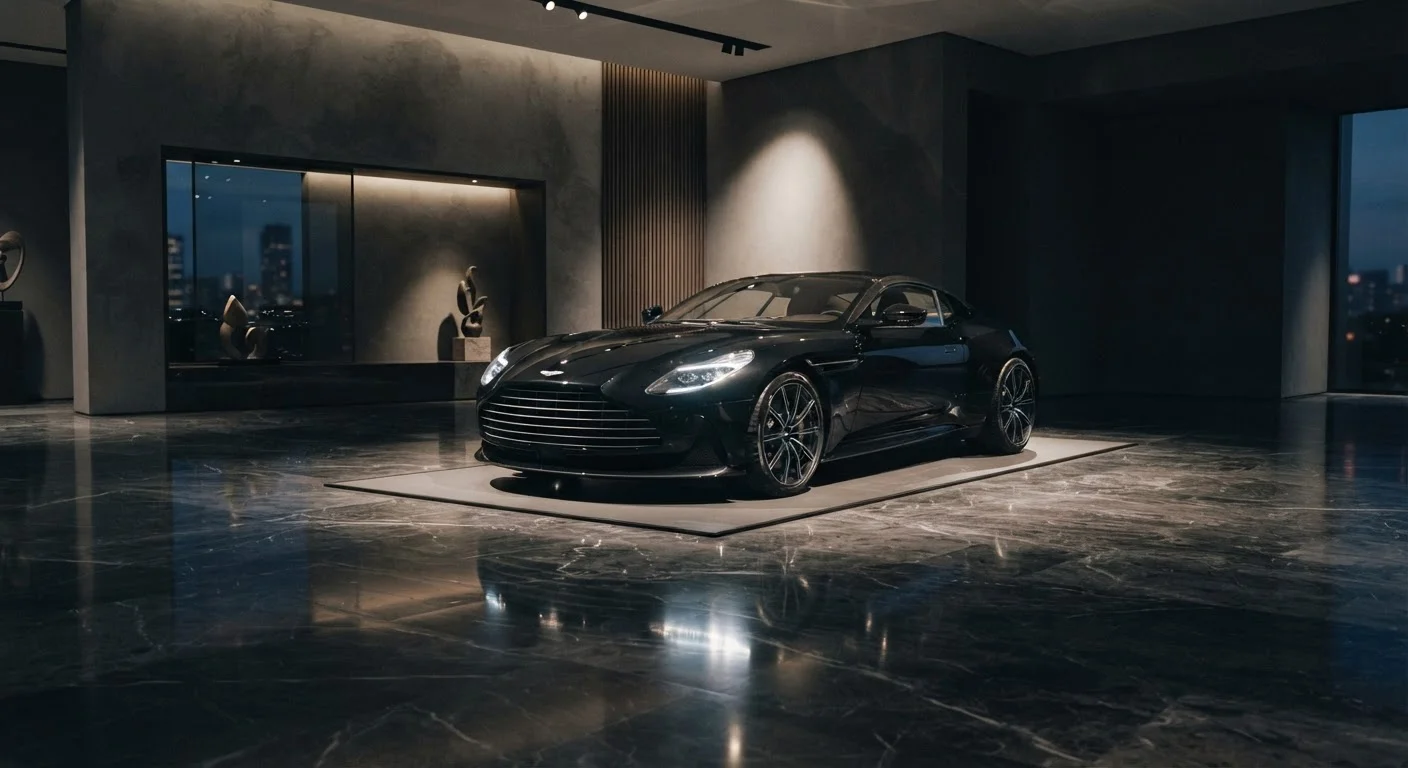
Photo: CoralScripts.com | Explore, Discover, Engage editorial
—— In This Article
Key Takeaways
- Luxury marques are defined by manufacturing philosophy and market positioning, not price alone.
- Many operate as subsidiaries of large automotive groups while maintaining distinct brand identities.
- Exclusivity - through limited production volumes or bespoke options - is a core strategic tool.
- Heritage and racing history often reinforce a brand's credibility at the luxury tier.
- The distinction between 'luxury' and 'ultra-luxury' marques reflects meaningful differences in volume, customization, and price.
What Separates a Luxury Marque from the Rest
The automotive market is typically divided into segments by price, but luxury marques don't simply occupy a higher price bracket - they operate under an entirely different set of design, manufacturing, and business principles. While a mainstream automaker engineers to a cost target and then maximizes features within that constraint, a luxury marque generally begins with an experiential benchmark and builds the vehicle accordingly.
This distinction shapes everything: the ratio of human assembly hours to automated production, the grade of leather and timber sourcing, the tolerance thresholds in machining, and even how a door sounds when it closes. These aren't just amenities - they are signals of a manufacturing covenant the brand makes with its buyers.
The gap between a premium brand and a true luxury marque is real and structural, not merely a matter of badge prestige or higher-spec trim levels. Premium brands serve a much broader audience and rely on volume for profitability. Luxury marques, by contrast, often treat constrained production as a feature of the brand itself.
Luxury vs. Ultra-Luxury: A Meaningful Distinction
Industry observers typically distinguish between 'luxury' marques - which may sell tens of thousands of vehicles annually - and 'ultra-luxury' or 'coachbuilder' marques operating in the hundreds or low thousands per year. The latter category often involves near-complete bespoke customization and direct relationships between the buyer and the manufacturer's design team. Both tiers share a commitment to craftsmanship, but the degree of individualization and the buyer relationship differ substantially.
The Role of Heritage and Corporate Structure
Heritage is not nostalgia in the luxury segment - it functions as verifiable proof of long-term engineering commitment. A marque with a century of documented history carries implicit evidence that its standards have persisted across generations of ownership and economic cycles. That continuity is a form of consumer assurance that newer brands must work hard to replicate.
Interestingly, heritage doesn't require independence. Most marquee luxury brands are now subsidiaries of global automotive conglomerates. Automaker alliances and corporate structures can support luxury marques by providing access to shared R&D budgets, electrification platforms, and global distribution - without forcing brand homogenization, provided the parent manages brand architecture carefully.
The risk is always dilution: using shared platforms too visibly, or badge-engineering vehicles that appear across the conglomerate's portfolio, can undermine the perception of exclusivity that defines the marque's value proposition.
~5,900
Annual units produced by Rolls-Royce in a recent production year
Rolls-Royce Motor Cars reported approximately 5,900 vehicles delivered in a recent full production year, illustrating how ultra-luxury marques deliberately constrain volume.
~75%
Share of global luxury car sales dominated by three conglomerates
Industry analysts broadly estimate that the majority of prestige automotive brands globally sit within a small number of large ownership groups, reflecting decades of acquisition activity.
1,000+
Hours of hand assembly in some ultra-luxury vehicles
Certain bespoke coach-built models from ultra-luxury producers involve over a thousand hours of skilled human assembly per vehicle, according to manufacturer-published production documentation.
Exclusivity as Strategy, Not Accident
True luxury marques manage scarcity deliberately. Production volumes are kept low - sometimes by design, sometimes by the constraints of bespoke manufacturing. Many offer extensive personalization programs where buyers specify paint formulations, interior materials, stitching patterns, and mechanical configurations that are effectively unique to their vehicle.
This bespoke approach serves multiple purposes. It deepens buyer engagement and loyalty. It creates vehicles with individual stories, which reinforces resale and collectibility. And it makes the brand difficult to commoditize - when no two cars are identical, comparative shopping on price alone becomes less meaningful.
“Luxury is not the opposite of poverty. It is the opposite of vulgarity.”
— Coco Chanel, Fashion designer and cultural commentator on luxury positioning
The distinction between ultra-luxury and luxury marques often comes down to the degree of this personalization. Ultra-luxury brands may produce vehicles almost entirely to individual order, with delivery timelines measured in months or years. Understanding how manufacturers use multiple brand names helps clarify why some groups maintain separate ultra-luxury marques alongside their flagship luxury lines.
Motorsport, Technology, and Brand Credibility
For a significant number of luxury marques, competition history underpins the engineering credibility the brand claims on the road. How racing heritage filters into road car development is well-documented: aerodynamic knowledge, suspension geometry, braking systems, and powertrain management have all migrated from track programs into production vehicles.
Even marques that no longer compete actively often maintain this narrative through historical positioning. The credibility accumulated through past competition success continues to function as a brand asset - communicated through design language, technical documentation, and heritage collections.
Evaluating a Luxury Marque's Authenticity
When assessing whether a brand truly qualifies as a luxury marque, look beyond price and examine production philosophy: What percentage of assembly is hand-executed? Does the brand offer genuine bespoke programs, or just trim-level variations? How clearly can the brand articulate its engineering heritage? These factors tend to separate marques with durable positioning from those using luxury language as a marketing overlay on volume product strategies.
It's also worth noting that the luxury segment is not static. As electrification reshapes the industry, marques that built identity around combustion engineering are recalibrating what performance and refinement mean in an EV context - a transition that will test the durability of legacy brand positioning for years to come. Some marques have historically failed to navigate market transitions, a reminder that even established luxury brands are not immune to structural industry change.
Frequently Asked Questions

Cars & Driving Editorial Team
Cars & Driving Editorial Team is the collective byline for our editorial team and contributor network. Articles published under this byline or an editorial pen name are researched, written, and reviewed according to our editorial standards for clarity, consistency, and independence before publication.
View author profile