
Automaker Alliances and Mergers: The Corporate Structures Behind the Badges
Many car brands share platforms, engines, and ownership. This guide explains the major automotive groups and what connects the brands within them.
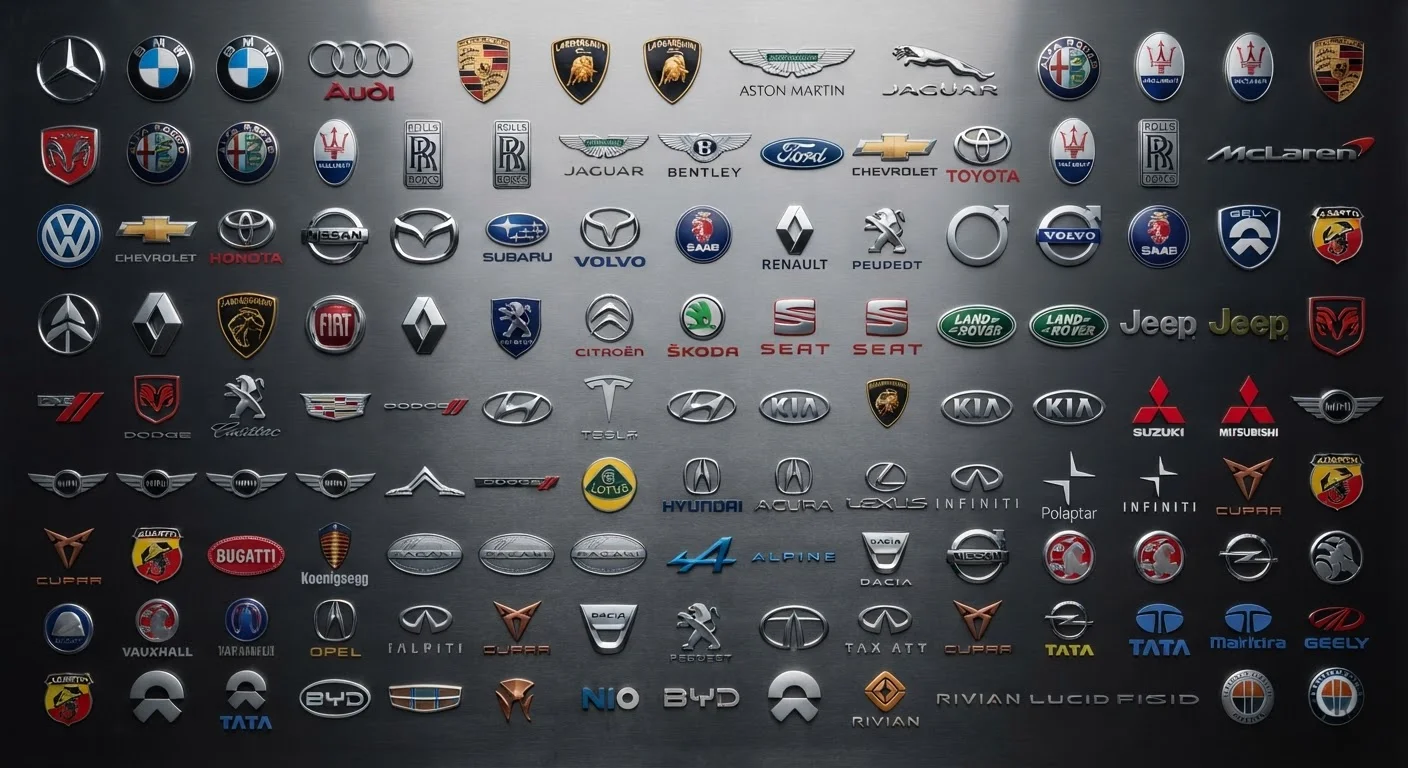
Photo: CoralScripts.com | Explore, Discover, Engage editorial
—— In This Article
Why Corporate Structure Matters to Car Buyers
When you buy a Porsche, you're transacting with the Volkswagen Group. When you purchase an Acura, Honda Motor Company built it. The badge on the grille tells you the brand; the corporate structure beneath it determines the engineering, platform, capital, and long-term direction of that vehicle. Understanding who owns whom - and why those relationships form - helps decode why two vehicles from different brands can share identical underpinnings, why a marque can survive bankruptcy under new ownership, and how a mass-market automaker funds a supercar division.
Automakers consolidate for straightforward industrial reasons: shared development costs, combined purchasing power for raw materials, and pooled R&D spending on expensive technology such as electrification and autonomous systems. Each brand carries its own heritage, but the parent group determines where the money flows.
| Volkswagen Group brands | 12+ marques including VW, Audi, Porsche, Lamborghini, Bentley, Škoda, SEAT/Cupra (Volkswagen Group annual report) |
| Stellantis founding year | 2021 (merger of PSA Group and FCA) (Stellantis corporate history) |
| Renault-Nissan Alliance established | 1999 (Alliance corporate history) |
| Toyota equity in Subaru | Approximately 20% (Toyota Motor Corporation disclosures) |
| GM brands discontinued (2000s-2010s) | Pontiac, Saturn, Hummer, Saab (sold) (GM corporate restructuring, 2009) |
| Hyundai Motor Group global rank | Top 5 by annual vehicle sales volume (Industry sales data, multiple years) |
The Major Automotive Groups at a Glance
A small number of conglomerates account for the majority of global vehicle production. Here are the most consequential groups and their principal brands:
- Volkswagen Group (Germany): Volkswagen, Audi, SEAT, Škoda, Porsche, Lamborghini, Bentley, Bugatti (sold to Rimac consortium in 2021), and commercial vehicle brands including MAN and Scania. The group's modular toolkit strategy - particularly the MQB and MLB platforms - means a Škoda Octavia and an Audi A3 share significant structural DNA.
- Stellantis (Netherlands/international): Formed in 2021 from the merger of PSA Group and Fiat Chrysler Automobiles. Brands include Jeep, Ram, Dodge, Chrysler, Fiat, Alfa Romeo, Maserati, Peugeot, Citroën, Opel/Vauxhall, and DS Automobiles - among others. It is one of the largest automakers by volume.
- Toyota Motor Corporation (Japan): Toyota, Lexus, and a controlling stake in Daihatsu and Hino. Toyota also holds equity in Subaru and Suzuki, enabling technology-sharing arrangements without full absorption.
- Renault-Nissan-Mitsubishi Alliance: A cross-shareholding structure rather than a single parent company. Renault and Nissan hold equity in each other; Mitsubishi Motors is majority-owned by Nissan. The alliance coordinates on platforms, powertrains, and purchasing while the three brands operate with distinct identities.
- General Motors (USA): GM's current brand portfolio - Chevrolet, GMC, Buick, and Cadillac in North America - is leaner than its historic peak. GM sold Opel/Vauxhall to PSA in 2017 and discontinued Pontiac, Saturn, and Hummer (though the Hummer name was later revived under GMC).
- Ford Motor Company (USA): Ford and Lincoln operate under a single corporate roof, with Ford spinning off distinct operating units for its internal combustion and electric businesses.
- Hyundai Motor Group (South Korea): Hyundai, Kia, and Genesis. The group has grown into a global top-five producer and now develops its own dedicated electric vehicle architecture.
Nameplate strategy explains much of why these groups maintain distinct brands rather than consolidating under a single name - different price points, market segments, and regional identities serve commercial purposes that a single brand cannot.
Vehicle Platform
The standardized engineering foundation shared by multiple vehicle models, encompassing the floor structure, suspension geometry, and drivetrain mounting points. Sharing a platform allows automakers to spread development costs across several models or brands.
Parent Company
A corporation that owns a controlling interest in one or more subsidiary companies. In automotive contexts, the parent group sets capital allocation and long-term strategic direction for its subsidiary brands.
Strategic Alliance
A formal cooperation agreement between independent companies to share resources, technology, or purchasing power without either party acquiring full ownership of the other. The Renault-Nissan-Mitsubishi Alliance is the most prominent automotive example.
Badge Engineering
The practice of selling mechanically similar or identical vehicles under different brand names, typically to reach different market segments or price points. It is a direct consequence of platform sharing within automotive groups.
Marque
An individual car brand or make, distinct from the parent corporate entity. Porsche is a marque; Volkswagen Group is the corporate owner.
Conglomerate
A large corporation made up of multiple distinct businesses or brands. In the auto industry, groups like Stellantis and Volkswagen Group are conglomerates controlling many marques simultaneously.
Platforms, Shared Architecture, and What It Means for Drivers
A vehicle platform is the standardized underpinning - floor structure, suspension mounting points, wheelbase dimensions, and drivetrain layout - that multiple models share. Platform sharing is the primary mechanism through which automotive groups extract value from mergers and alliances. Development of a new platform can cost billions of dollars; spreading that investment across a Volkswagen, an Audi, a Seat, and a Škoda makes it economically viable.
For drivers, platform sharing means predictable engineering relationships: comparable ride quality characteristics, overlapping parts availability, and sometimes - though not always - similar reliability profiles. It does not mean identical vehicles. Automakers differentiate within the same platform through tuning, materials, feature sets, and powertrains. A luxury badge typically brings recalibrated suspension damping, higher-grade interior materials, and more powerful engine variants, even when the core architecture is shared with a volume brand.
The line between mass-market and premium is partly constructed on top of shared platforms - which is precisely why critics scrutinize whether the price premium is always justified.
Alliances vs. Full Mergers: Two Different Structures
Not every corporate relationship is a full acquisition. The automotive industry uses at least two distinct structural models:
- Full Acquisition / Parent-Subsidiary
- One company owns a controlling or complete stake in another. The Volkswagen Group's ownership of Lamborghini is an example. Strategic decisions, investment priorities, and technology direction flow from the parent.
- Strategic Alliance / Cross-Shareholding
- Companies retain separate identities and governance but coordinate on specific functions. The Renault-Nissan-Mitsubishi Alliance operates this way. Neither Renault nor Nissan fully owns the other, and both have independent boards.
Alliances are more fragile than full mergers - they depend on mutual benefit and can unwind if priorities diverge, as tensions within the Renault-Nissan structure have occasionally demonstrated. Full mergers eliminate that instability but risk diluting brand identities if integration is handled poorly. Maintaining brand identity through structural change is a persistent challenge for any automaker absorbed into a larger group.
Not every brand survives a corporate transition - some are discontinued when the acquiring group determines they overlap too heavily with existing offerings or no longer justify the investment.
Corporate Structure Can Change Quickly
Automotive group ownership and alliance arrangements shift regularly through acquisitions, divestitures, and renegotiated equity stakes. Brand portfolios listed here reflect publicly reported structures and may not reflect the most current corporate changes. For definitive ownership details, refer to each group's most recent annual report or investor disclosures.

Cars & Driving Editorial Team
Cars & Driving Editorial Team is the collective byline for our editorial team and contributor network. Articles published under this byline or an editorial pen name are researched, written, and reviewed according to our editorial standards for clarity, consistency, and independence before publication.
View author profile