
Understanding Animal Venom: From Biology to Ecological Role
Venom is more than a defence mechanism. Explore how it evolved, which animals use it, and why it matters to ecosystems.
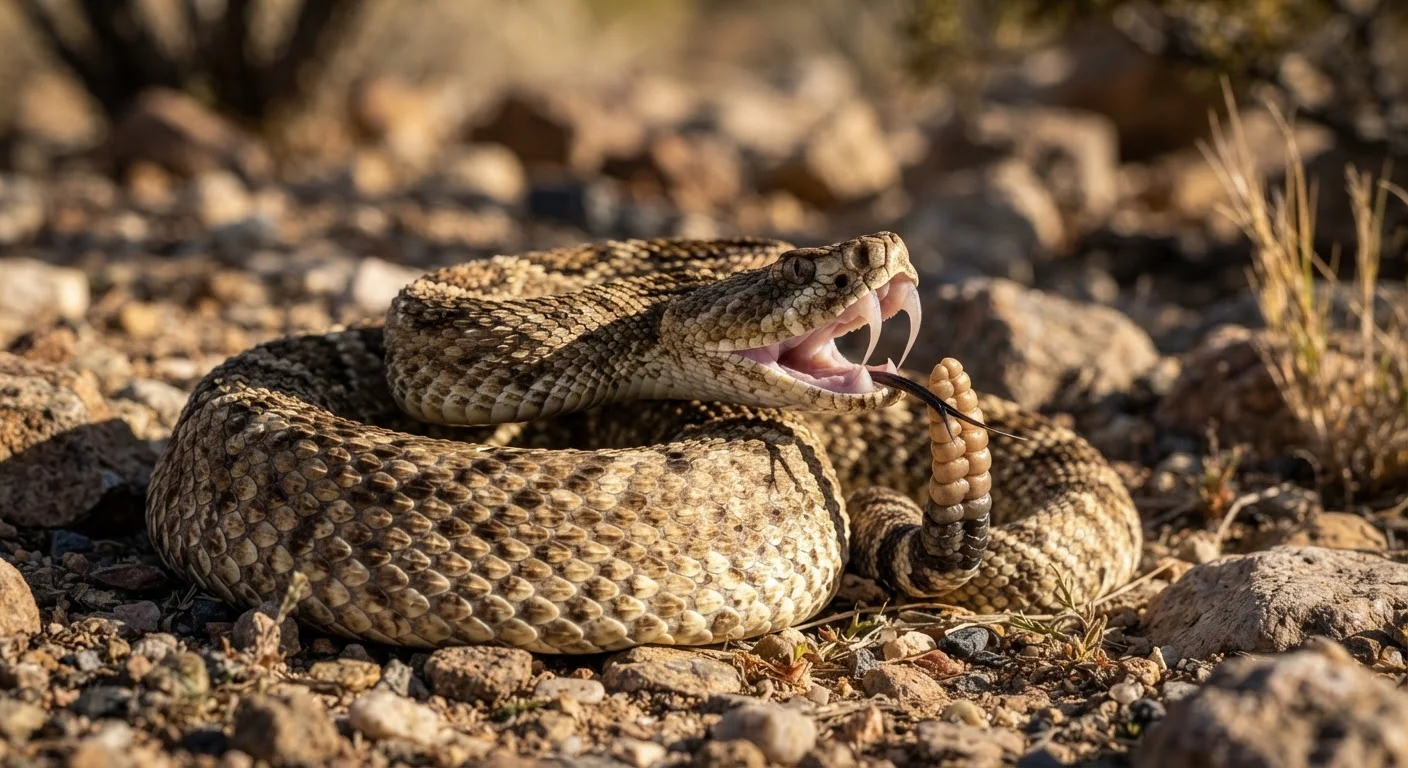
Photo: CoralScripts.com | Explore, Discover, Engage editorial
—— In This Article
Key Takeaways
- Venom is a chemically complex cocktail of proteins, enzymes, and peptides with distinct biological targets.
- Venom evolved independently in dozens of animal lineages — it is not exclusive to snakes or spiders.
- Venomous animals play critical roles in controlling prey populations and shaping ecosystems.
- Many life-saving pharmaceuticals have been derived directly from animal venom compounds.
- Most venomous animals use venom defensively; unprovoked attacks on humans are uncommon.
What Is Venom, and How Does It Work?
Venom is a biologically produced secretion that an animal actively delivers into another organism, typically through a specialized structure such as fangs, a stinger, a spine, or a nematocyst. This distinguishes it from poison, which causes harm through passive contact or ingestion. A rattlesnake is venomous; a poison dart frog is poisonous — the distinction matters both biologically and medically.
At its core, venom is a mixture of proteins, enzymes, and peptides engineered by evolution to disrupt the physiology of a target organism. Individual venom components — collectively called toxins — are classified by their primary biological targets:
- Neurotoxins interfere with nerve signal transmission, causing paralysis or respiratory failure.
- Hemotoxins attack blood cells, disrupt clotting, or destroy vessel walls.
- Cytotoxins break down cellular tissue at and around the site of envenomation.
- Myotoxins cause direct muscle cell destruction.
A single species may produce venom containing dozens or even hundreds of distinct compounds — a complexity that reflects millions of years of co-evolutionary arms races between predator and prey.
Venom
A toxic secretion produced by an animal and actively delivered into another organism through a specialized structure such as fangs or a stinger.
Toxin
An individual biologically produced compound within venom that disrupts a specific physiological process in the target organism.
Convergent evolution
The process by which unrelated species independently evolve similar traits — like venom systems — in response to similar environmental pressures.
Aposematism
A strategy in which an animal uses bright or conspicuous coloration to warn potential predators that it is toxic or venomous.
Envenomation
The biological process of venom being introduced into another organism, resulting in a toxic effect.
Nematocyst
A microscopic, spring-loaded cell found in jellyfish and related animals that fires a tiny harpoon to inject venom on contact.
How Venom Evolved Across the Animal Kingdom
One of venom biology's most striking findings is that venom has evolved independently at least 100 times across the animal kingdom — a phenomenon biologists call convergent evolution. Snakes, cone snails, spiders, scorpions, platypuses, and certain shrews all arrived at venom through separate evolutionary paths, using different molecular raw materials to solve similar problems.
Most venom systems appear to have originated from ordinary proteins that were already present in the body — digestive enzymes, immune proteins, or hormones — that were gradually co-opted and modified for a toxic function. Genes encoding these proteins were often duplicated, with one copy retained for its original role and the other free to evolve novel chemistry.
This explains why venom composition can differ dramatically even between closely related species. Two pit viper species from the same genus may have radically different venom profiles depending on their prey base and local ecology. As environments shift, so can venom chemistry — a dynamic process that researchers continue to study.
Venom Complexity Varies by Diet
Species that feed on a wider variety of prey tend to produce more chemically diverse venom. This variability is an evolutionary advantage — a broader chemical toolkit improves effectiveness across multiple prey types. Researchers study this relationship to understand how ecology shapes biochemistry over time.
The Diversity of Venomous Animals
Popular imagination tends to limit venomous animals to snakes and spiders, but the reality is far richer. Across the five major groups below, venom appears in forms ranging from microscopic harpoon-like structures to highly evolved glandular systems:
- Reptiles: Over 600 snake species are considered medically significant to humans. Gila monsters and Komodo dragons also produce venom, challenging older assumptions about exclusive snake venomousness.
- Arachnids: Most spider species are venomous to some degree, though only a small fraction pose a risk to humans. Scorpions deliver venom via a tail-mounted stinger and use it primarily for prey capture.
- Marine invertebrates: Cone snails fire a harpoon-like tooth to inject venom capable of killing a human. Jellyfish and sea anemones use nematocysts — microscopic spring-loaded cells — to deliver toxins on contact.
- Mammals: The male platypus possesses a venomous spur on its hind leg used during competition with other males. Several shrew species produce venomous saliva.
- Fish: Stonefish, the world's most venomous fish, deliver venom through dorsal spines. Stingrays deploy venom defensively via a serrated barb.
Venom also intersects fascinatingly with other survival strategies. Warning coloration and mimicry often accompany venomous traits, with bright patterns signalling toxicity to predators — a strategy called aposematism.
Venom's Role in Ecosystems
Venom is not merely a weapon — it is an ecological force. By enabling efficient prey capture, venomous predators help regulate herbivore and small mammal populations that would otherwise grow unchecked. This cascading influence on prey density, vegetation structure, and species diversity mirrors the broader regulatory role described in apex predator ecology.
Venomous animals also participate in complex ecological relationships. Some parasitic wasps inject venom into hosts not to kill them but to paralyze and preserve them as living food stores for larvae — a strategy that itself fits within the spectrum of parasitic symbiosis.
Predation pressure from venomous species can also drive adaptive evolution in prey populations — selecting for resistance, behavioral avoidance, or physical defenses — contributing to the broader biodiversity of a region. Remove a key venomous predator and the effects ripple outward in ways that are not always immediately visible.
Do Not Attempt to Handle Venomous Wildlife
Encountering a venomous animal in the wild — even one that appears calm or docile — carries real risk. Most envenomations occur when animals are handled, cornered, or startled. Observe from a safe distance and never attempt to capture or relocate a venomous species without professional training and appropriate equipment.
Why Venom Research Matters
Venom science — formally called toxinology — sits at the intersection of ecology, biochemistry, and medicine. Researchers have already translated venom components into approved treatments: a peptide derived from the venom of the South American pit viper Bothrops jararaca led to the development of ACE inhibitors, now a cornerstone class of blood pressure medication. Ziconotide, a painkiller derived from cone snail venom, is used for severe chronic pain.
Beyond pharmacology, venom research informs antivenin (antivenom) development — a field still critically underfunded relative to global envenomation burden, particularly in sub-Saharan Africa and South Asia. The World Health Organization classifies snakebite as a neglected tropical disease, underscoring the public health stakes of this science.
From a purely scientific standpoint, venomous animals offer a window into evolutionary innovation — how biology solves complex problems through chemistry. Understanding these systems deepens our appreciation of animal behavior, much like studying how we misread animal behavior when fear and instinct cloud observation.
This article is for general educational purposes only and does not constitute medical advice. If you experience or witness a venomous bite or sting, seek emergency medical attention immediately.
AvenomA — Global Venom Database
A searchable scientific database cataloguing venom compositions across hundreds of species, useful for understanding the biochemical diversity of animal venoms.
WHO Snakebite Initiative
The World Health Organization's official resource on global snakebite burden, treatment guidelines, and efforts to improve antivenom access in underserved regions.
Venom Evolution Lab (University of Queensland)
A research group publishing peer-reviewed findings on venom evolution, diversity, and drug discovery applications — a valuable entry point into the academic literature.
Frequently Asked Questions

Pets & Animal Life Editorial Team
Pets & Animal Life Editorial Team is the collective byline for our editorial team and contributor network. Articles published under this byline or an editorial pen name are researched, written, and reviewed according to our editorial standards for clarity, consistency, and independence before publication.
View author profile