
Symbiosis in the Wild: Mutualism, Commensalism, and Parasitism Explained
Nature rarely works alone. Unpack the three types of symbiotic relationships and the remarkable partnerships they produce.
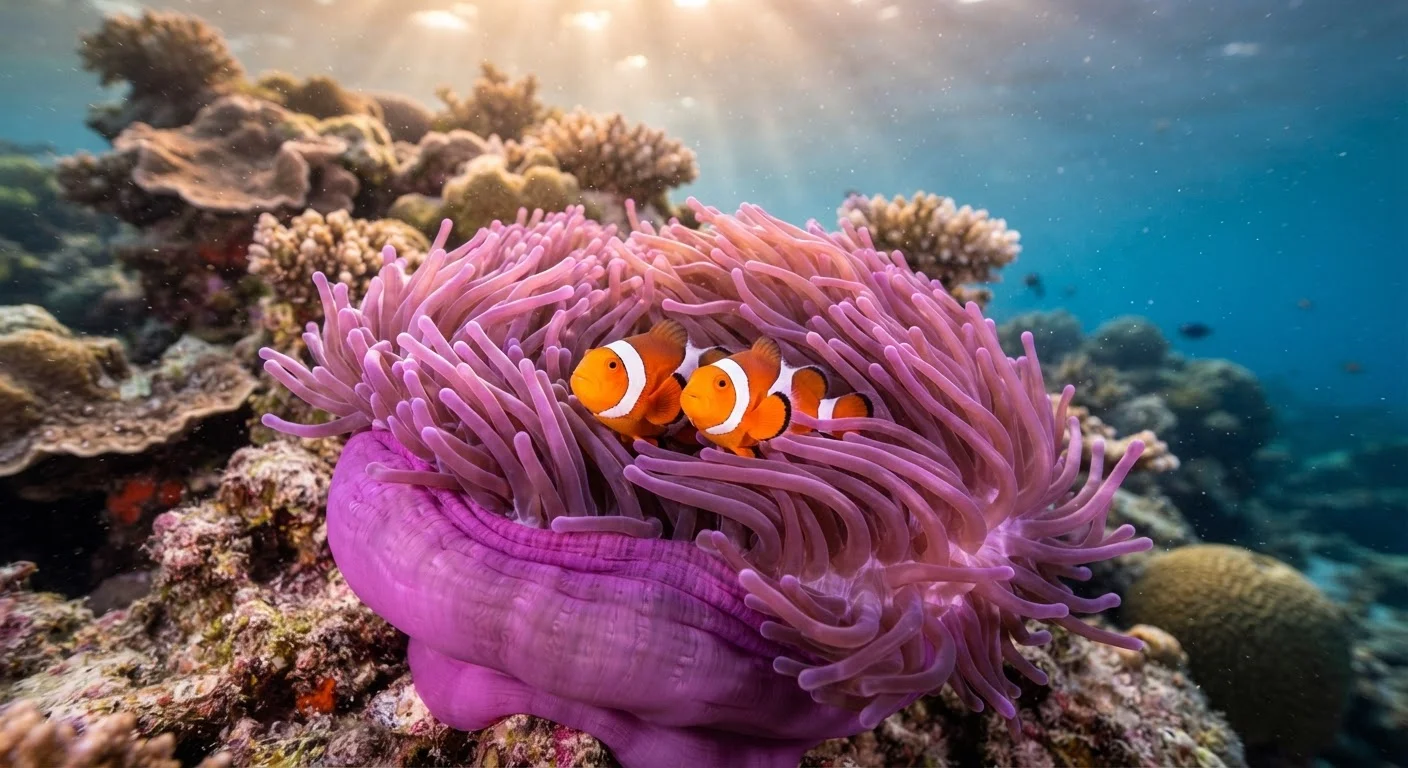
Photo: CoralScripts.com | Explore, Discover, Engage editorial
—— In This Article
What Is Symbiosis?
Symbiosis describes any close, long-term biological interaction between two different species. The word comes from the Greek for "living together," and in ecology it encompasses a wide range of relationships — some cooperative, some neutral, and some outright exploitative. Understanding these partnerships is fundamental to ecology because almost no species exists in isolation. As biodiverse habitats demonstrate, the richness of an ecosystem depends not just on which species are present, but on how they interact.
Ecologists categorize symbiotic relationships by measuring the fitness outcome — whether each participant gains, loses, or remains unaffected. Three primary categories emerge: mutualism, commensalism, and parasitism. A fourth type, amensalism (one species is harmed, the other unaffected), is sometimes included but receives less research attention.
| Number of symbiosis categories | 3 primary (mutualism, commensalism, parasitism) |
| Plants with mycorrhizal partnerships | Approximately 80–90% of land plant species (Widely cited in mycology and plant ecology literature) |
| Most common symbiotic relationship | Parasitism (by number of species involved) (Ecological consensus across multiple biodiversity studies) |
| Key distinction | Fitness outcome for each partner (gain, neutral, or loss) |
| Obligate vs. facultative | Obligate partners cannot survive without each other; facultative partners can |
Mutualism: Both Species Benefit
Mutualism is the symbiotic relationship most people find intuitively satisfying — both partners gain measurable fitness advantages. Examples span every major ecosystem on Earth.
- Clownfish and sea anemones: The anemone's stinging tentacles repel most fish, but clownfish are immune thanks to a protective mucus layer. The clownfish gains shelter and food scraps; in return it chases away butterflyfish that would graze on the anemone's tentacles.
- Mycorrhizal fungi and plant roots: An estimated 80–90% of land plants form partnerships with mycorrhizal fungi. The fungal network extends the plant's effective root surface, dramatically improving water and nutrient uptake. The plant reciprocates by supplying the fungi with carbohydrates produced through photosynthesis.
- Oxpeckers and large mammals: Oxpecker birds perch on rhinos, zebras, and giraffes, feeding on ticks, lice, and other external parasites. The mammal benefits from pest control; the bird gets a reliable food source.
Some mutualistic relationships are obligate — neither partner can survive without the other — while others are facultative, meaning both could persist alone but perform better together. The distinction matters to conservation: losing one partner in an obligate mutualism can collapse both populations. Keystone species research shows how these cascading effects ripple across entire ecosystems.
Commensalism: One Benefits, One Is Unaffected
Commensalism describes interactions where one species gains a clear advantage while the other appears to experience no meaningful benefit or harm. In practice, proving true commensalism is difficult — researchers often discover subtle effects once they look more carefully.
Symbiosis
A long-term, close biological interaction between two different species. The term covers mutualistic, commensal, and parasitic relationships, as well as other categories such as amensalism.
Mutualism
A symbiotic relationship in which both participating species gain a measurable fitness benefit. Mutualism can be obligate (both depend on each other) or facultative (both can survive independently).
Commensalism
A symbiotic relationship in which one species benefits while the other experiences no significant benefit or harm. True commensalism is difficult to confirm and often reclassified as more data becomes available.
Parasitism
A symbiotic relationship in which one species (the parasite) benefits at the direct expense of the other (the host). Parasites reduce host fitness but generally do not kill the host immediately.
Obligate mutualism
A mutualistic relationship in which neither species can survive or reproduce without the other. The loss of one partner typically causes the collapse of both populations.
Brood parasitism
A behavioral form of parasitism in which one species lays its eggs in another species' nest, forcing the host to expend resources raising offspring that are not its own.
Ectoparasite
A parasite that lives on the external surface of its host, such as ticks, fleas, or lice. Many ectoparasites also serve as vectors for bacterial or viral pathogens.
Mycorrhizal fungi
Fungi that form mutualistic partnerships with plant roots, extending the plant's nutrient and water absorption while receiving carbohydrates produced through photosynthesis.
- Remoras and sharks: Remora fish attach to sharks using a modified dorsal fin that acts as a suction disk. They feed on the shark's leftover food and parasites, and gain effortless transportation across vast ocean distances. Evidence suggests sharks are largely unaffected, though some researchers propose low-level drag costs.
- Epiphytes and trees: Orchids and bromeliads that grow on rainforest tree branches use the tree purely for structural support and light access. They extract no nutrients from the host, and well-established trees show no measurable harm — though a very large epiphyte load can occasionally contribute to branch breakage.
- Cattle egrets and grazing animals: Egrets follow cattle or bison herds to catch insects disturbed by the animals' hooves. The large grazers neither gain nor lose from the arrangement.
The boundary between commensalism and mutualism is often blurry, and as scientific methods improve, many assumed commensal relationships are reclassified. This is part of what makes symbiosis research an active and evolving field.
Parasitism: One Benefits, One Is Harmed
Parasitism is the most common symbiotic relationship in nature by sheer number of species involved. A parasite extracts resources from a host in a way that reduces the host's fitness, though the relationship rarely kills the host outright — a dead host is an unusable resource.
~80–90%
Land plants in mycorrhizal partnerships
According to plant ecology literature, the vast majority of terrestrial plant species form mutualistic relationships with mycorrhizal fungi.
50%+
Animal species estimated to be parasitic at some life stage
Some ecologists estimate that more than half of all known animal species engage in parasitism during at least one phase of their life cycle.
- Ectoparasites live on the host's surface: ticks, fleas, lice, and lampreys are well-known examples. Ticks are particularly important vectors of disease, transmitting pathogens between hosts as they feed.
- Endoparasites live inside the host: tapeworms, liver flukes, and Toxoplasma gondii — a protozoan that can alter host behavior to complete its life cycle — fall into this category.
- Brood parasitism is a behavioral variant: cuckoos lay their eggs in other birds' nests, leaving the unwitting host species to raise the cuckoo chick, often at the expense of its own offspring.
Parasites also play a significant ecological role. They regulate host population sizes, maintain genetic diversity by selecting against homozygous individuals, and can shift the balance of competition between species — effects explored in detail in research on how different ecosystems operate under distinct survival rules. Understanding animal-level partnerships also connects to broader behavioral patterns shaped by social living.
This article is for educational purposes only and does not constitute veterinary or scientific advice. Consult a qualified ecologist or veterinarian for specific concerns related to wildlife or animal health.

Pets & Animal Life Editorial Team
Pets & Animal Life Editorial Team is the collective byline for our editorial team and contributor network. Articles published under this byline or an editorial pen name are researched, written, and reviewed according to our editorial standards for clarity, consistency, and independence before publication.
View author profile