
Misreading Animal Behaviour: Why Human Instincts Often Lead Us to the Wrong Conclusions
Anthropomorphism and fear responses distort how we interpret what wild animals are actually doing. Science offers a clearer lens.
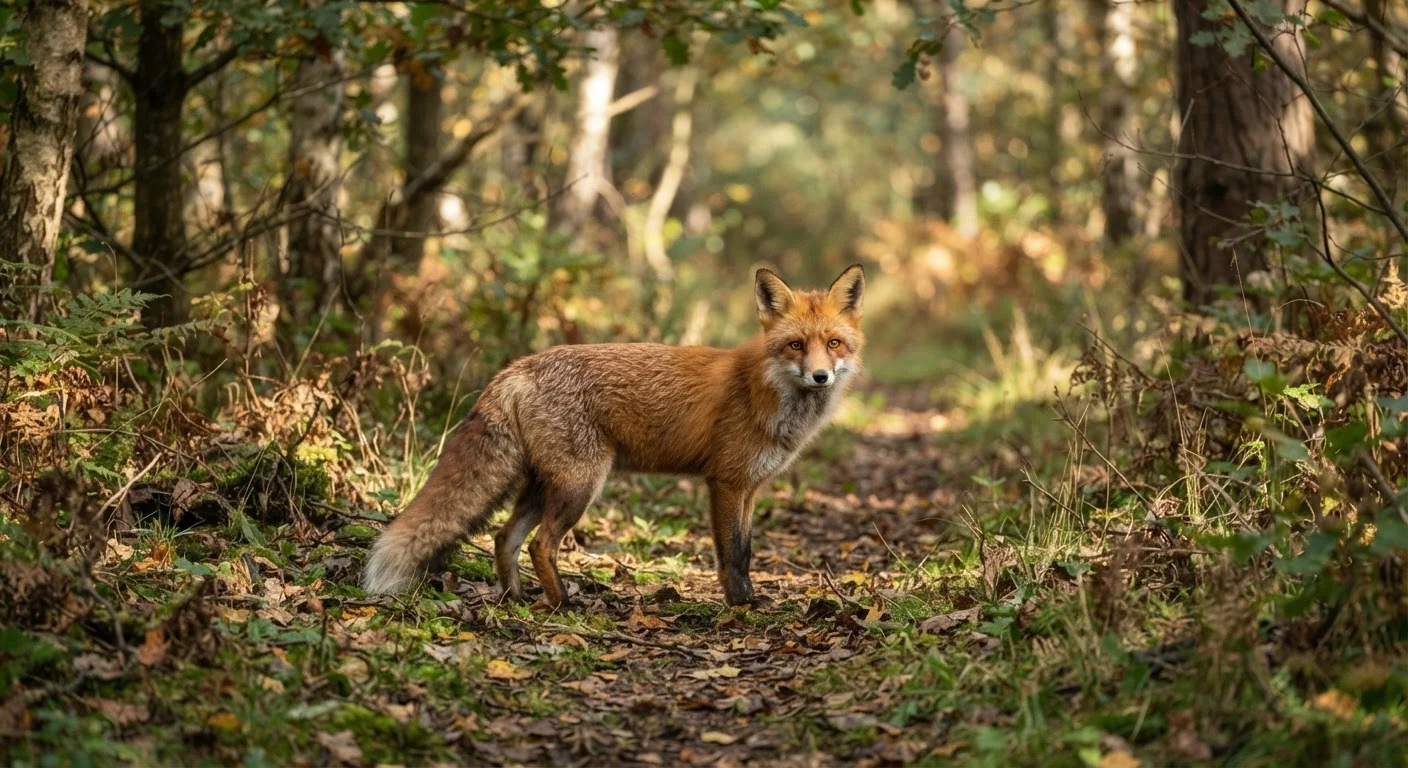
Photo: CoralScripts.com | Explore, Discover, Engage editorial
Key Takeaways
- Anthropomorphism — projecting human emotions onto animals — leads to systematic misreading of wildlife behaviour.
- Fear and aggression signals in animals are often species-specific and easily confused with opposite intentions.
- Stillness, tooth display, and vocalisation each carry meanings that differ sharply across species.
- Ethology (the scientific study of animal behaviour) provides reliable frameworks where instinct misleads.
- Accurate interpretation protects both human safety and animal welfare in wild encounters.
Why Our Instincts Misfire When Reading Animals
Human beings are pattern-recognition specialists. We read faces, postures, and vocal tones to decode intention — and we're good at it, within our own species. The problem is that we apply the same cognitive shortcut to every animal we encounter, regardless of how evolutionarily distant they are from us. Biologists call this anthropomorphism: the attribution of human traits, emotions, or motivations to non-human animals.
Anthropomorphism isn't inherently wrong. It can generate useful hypotheses and foster empathy for wildlife. But when it replaces careful observation with assumption, it distorts what we actually see. A chimp "smiling" for a camera is almost certainly expressing fear or submission — not joy. A dog rolling onto its back during a confrontation isn't necessarily being playful; it may be offering appeasement under stress. The gap between what an animal displays and what a human observer concludes is where most misreading begins.
For a deeper look at the distinction between innate and learned animal responses, see our guide to instinct vs. learned behaviour — understanding that divide is foundational to accurate interpretation.
Interpreting a primate's open-mouth "grin" as happiness or friendliness.
Why it happens: Human smiles signal warmth, and we unconsciously map that template onto any face showing teeth. The resemblance to our own expression feels obvious and trustworthy.
Assuming a still or stationary animal is calm, tame, or approachable.
Why it happens: Humans associate stillness with relaxation. Freezing behaviour in animals is often the opposite: a classic anti-predator fear response or the "freeze" phase of a threat assessment.
Reading vocalisation volume as a reliable indicator of danger level.
Why it happens: Loud sounds feel threatening; quiet animals feel safe. This heuristic works well for human social signals but fails systematically across species.
Confusing nocturnal activity with distress or illness.
Why it happens: Humans are diurnal (day-active), so nighttime movement in an animal intuitively reads as unusual or problematic. Seeing an owl or possum active after dark can trigger unwarranted concern.
Treating an animal's approach toward humans as a sign of affection or tameness.
Why it happens: We're accustomed to domestic animals — dogs especially — approaching us as a social gesture. We generalise that framework onto wildlife encounters.
Reading the Evidence More Clearly
Correcting these misreadings doesn't require a zoology degree, but it does require deliberate habits of observation. Ethologists — scientists who study animal behaviour in natural contexts — approach encounters with a methodology rather than an emotional reaction. They document what an animal does, not what it appears to feel.
~50%
Animal species that are primarily nocturnal
Estimates from comparative zoology suggest roughly half of all described animal species are active primarily at night, yet human observers consistently over-flag nocturnal behaviour as abnormal.
35+
Distinct facial muscles in dogs vs. 4 in wolves
Research published in the Proceedings of the National Academy of Sciences found that domesticated dogs have evolved facial musculature specifically for communicating with humans — a trait absent or minimal in their wild relatives, underscoring how domestic-based assumptions fail when applied to wildlife.
Key principles include noting the full behavioural context (what preceded the display), species-typical norms (what is baseline for this animal), and the distinction between signals directed at conspecifics (members of the same species) versus those directed at predators or humans. A rattlesnake's rattle, for example, is specifically an anti-predator warning — not aggression toward a threat it intends to pursue.
When observing wildlife in the field, accuracy matters for safety as much as science. Our wildlife photography ethics guide outlines how to observe without altering the behaviour you're trying to understand — a critical consideration when proximity itself changes what animals do.
For those looking to apply these principles closer to home, a structured framework for observing pet behaviour translates ethological method into everyday practice. Dominance-based interpretations in particular have caused significant harm in domestic settings — an issue explored in detail in our article on misconceptions about dominance and aggression in domestic animals.
Animal cognition research continues to refine our understanding of what animals actually experience. What science knows about animal cognition provides a research-grounded counterweight to both over- and under-attribution of inner life to non-human minds.
Never Approach or Feed Wild Animals Based on Behavioural Misreading
Misinterpreting a wild animal's signals as friendliness or curiosity is one of the most common triggers for dangerous human–wildlife encounters. Feeding wild animals compounds this risk: it conditions them to associate humans with food, which ultimately harms the animal and can result in its removal or euthanasia. If you encounter an animal that appears injured or behaving in a genuinely unusual way, contact your local wildlife rehabilitator or animal control authority rather than intervening directly.

Pets & Animal Life Editorial Team
Pets & Animal Life Editorial Team is the collective byline for our editorial team and contributor network. Articles published under this byline or an editorial pen name are researched, written, and reviewed according to our editorial standards for clarity, consistency, and independence before publication.
View author profile