
Camouflage, Mimicry, and Warning Colours: Nature's Visual Survival Toolkit
How do animals use colour and pattern to hide, deceive, or signal danger? A deep dive into evolutionary visual strategies.
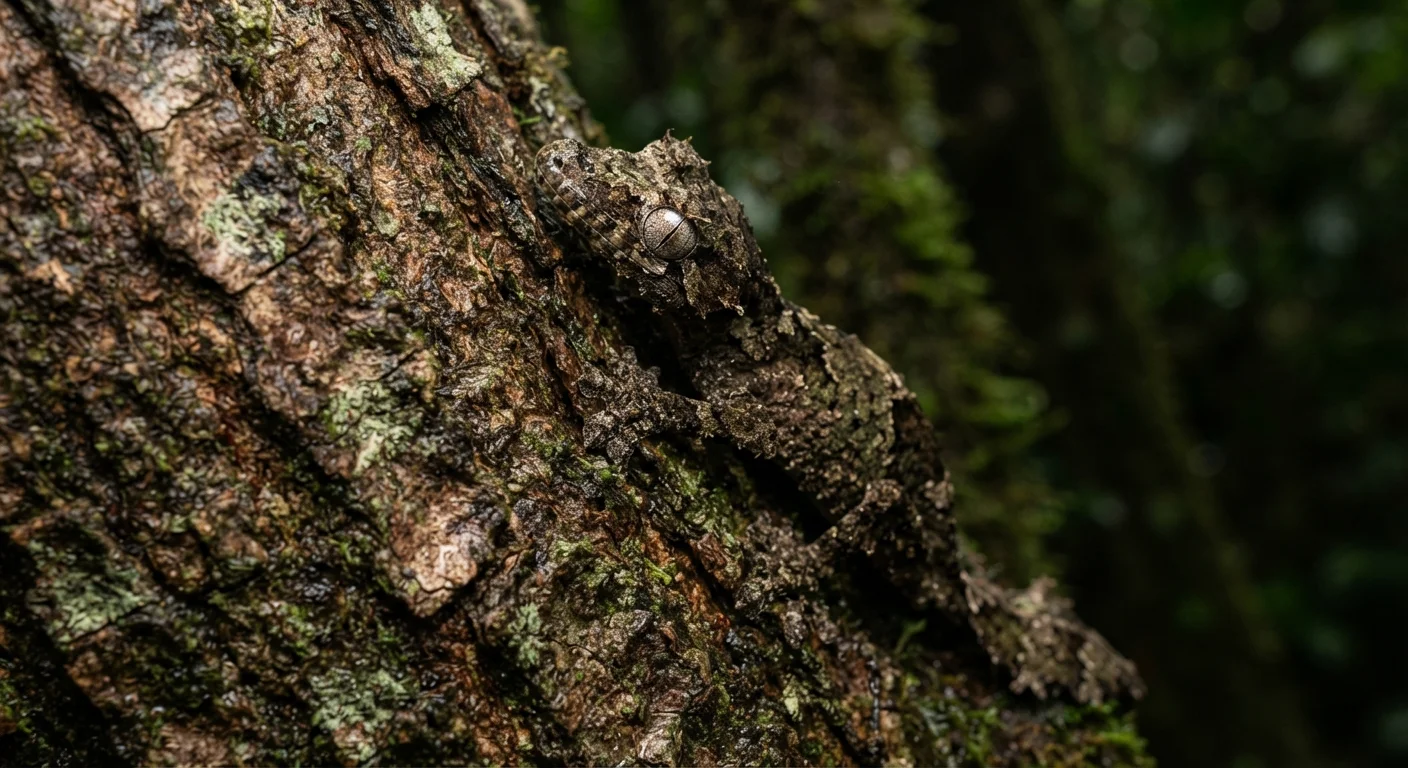
Photo: CoralScripts.com | Explore, Discover, Engage editorial
—— In This Article
Key Takeaways
- Camouflage hides animals from predators or prey by matching their background environment.
- Mimicry involves resembling another species - harmful or otherwise - to gain a survival advantage.
- Warning coloration (aposematism) signals genuine toxicity or danger to deter predators.
- Batesian mimicry is deceptive; Müllerian mimicry is a shared, honest signal among truly defended species.
- These strategies co-evolve with the visual systems of the animals they target.
- Colour perception varies widely across species, meaning these signals are tuned to specific audiences.
Camouflage: The Art of Disappearing
Camouflage - technically termed crypsis - is arguably the most widespread visual survival strategy in the animal kingdom. Rather than advertising presence, crypsis suppresses it. Animals achieve this through several distinct mechanisms.
Background matching is the most intuitive form: a flounder that mirrors sandy seafloor patterns, or a stick insect so faithful in its replication of a twig that entomologists sometimes reach past it. Disruptive coloration takes a different approach - instead of blending, it uses bold, contrasting patches to break the body's outline, preventing a predator's visual system from resolving a recognisable shape. Zebra stripe research has explored this and related hypotheses, though the precise selective advantage remains scientifically debated.
A third category is countershading, where an animal's dorsal (upper) surface is darker than its ventral (lower) surface. Because sunlight typically comes from above, this gradient flattens the appearance of three-dimensionality, making an animal harder to detect in open water or grassland. Many open-ocean fish and large terrestrial mammals demonstrate this pattern.
Behaviour Completes the Camouflage
Even the most intricate cryptic patterning is undermined by the wrong movement or substrate choice. Many camouflaged species exhibit specific resting postures, freeze responses, or habitat preferences that are inseparable from their visual disguise. The pattern and the behaviour co-evolve as a package.
Camouflage is not purely passive. Behavioural posture matters enormously - a well-camouflaged moth that lands on the wrong substrate, or faces the wrong direction, loses much of its advantage. Staying still at the right moment, on the right surface, is inseparable from the visual strategy itself.
Mimicry: Deception and Shared Signals
Where camouflage erases an animal from view, mimicry constructs a false identity. Evolutionary biologists distinguish two foundational types, each with a different relationship to honesty.
In Batesian mimicry, a palatable, harmless species evolves to resemble a genuinely dangerous or unpalatable one. The mimic free-rides on the predator's learned aversion to its model. Classic examples include hoverflies bearing the yellow-and-black banding of wasps, and certain harmless king snake subspecies sharing colour-band arrangements with venomous coral snakes. The system only holds so long as genuine models remain common enough to maintain predator avoidance - if mimics outnumber models, the bluff erodes.
Müllerian mimicry operates on an entirely different logic. Here, two or more species that are all genuinely toxic or harmful converge on a shared warning pattern. No one is deceiving anyone; each species contributes to and benefits from a pooled signal that is more quickly learned by naive predators. Heliconius butterflies across Central and South America are a textbook example - geographically distinct populations co-mimic each other across multiple species, producing a patchwork of local warning patterns.
Mimicry Systems Are More Varied Than Textbooks Suggest
Beyond Batesian and Müllerian categories, biologists recognise aggressive mimicry, automimicry, and even olfactory or acoustic mimicry. The visual forms are simply the most studied because they align with human perceptual strengths. Many mimicry relationships in chemically or acoustically oriented species likely remain underdescribed in the literature.
There are also subtler mimicry categories: aggressive mimicry, where a predator imitates a harmless species to approach prey undetected (the anglerfish's lure is a structural analogue), and automimicry, where one body part mimics another to redirect predator attacks away from vital organs. The diversity of mimicry systems reflects how powerful an evolutionary pressure predation exerts. For a broader look at visual communication across taxa, see non-mammalian animal communication.
Warning Coloration and the Honest Signal
Aposematism - from the Greek for 'away' and 'sign' - is the inverse of camouflage. Instead of hiding, an animal advertises itself with high-contrast, easily learned patterns precisely because it is genuinely dangerous. Bright red, orange, and yellow paired with black are the most common combinations, though blues and whites also appear in specific taxa.
Poison dart frogs (Dendrobatidae) are perhaps the most cited examples: their intense patterning correlates with the concentration of alkaloid toxins in their skin, derived from their diet of arthropods. Predators that survive a sampling learn to avoid the pattern. Importantly, this learning can be innate as well as acquired - some predator species show aversion to warning colours without prior experience, suggesting that the association has been baked into their behavioural repertoire through evolutionary time.
Warning coloration also creates the conditions for Batesian mimicry to emerge, which introduces an interesting evolutionary tension: if too many harmless mimics invade a warning signal, predators lose confidence in the signal and begin sampling again, which in turn relaxes the selection pressure that built the mimicry in the first place. These feedback loops make aposematic systems dynamic rather than static - they evolve continuously. The ecological richness that enables this diversity is explored further in our look at the world's most biodiverse habitats.
The Sensory Arms Race Behind the Colours
These visual strategies do not evolve in isolation - they are shaped by the sensory systems of the animals perceiving them. A warning pattern that works against a bird with tetrachromatic (four-receptor) vision may be far less effective against a mammal with limited colour discrimination. Many insects perceive ultraviolet wavelengths invisible to humans, meaning some patterns that appear plain to us carry additional information in UV channels.
This creates a genuine arms race dynamic: as predators improve their ability to detect mimics or penetrate camouflage, prey populations face renewed selective pressure to refine their visual strategies. The result is the extraordinary diversity of coloration observed across the animal kingdom - not random decoration, but the accumulated outcome of millions of years of reciprocal evolutionary pressure.
Understanding these systems also reshapes how we interpret animal behaviour in the field. What looks like bold, reckless visibility in a poison dart frog is, in ecological context, a sophisticated investment in honest signalling. Human intuition often misreads these signals, projecting familiarity onto strategies that operate on entirely different evolutionary logic. Colour in nature is not aesthetic - it is functional, precise, and deeply embedded in the ecology of survival.
~170
Dendrobatid frog species exhibiting aposematism
The family Dendrobatidae contains roughly 170 species, the majority of which display some form of warning coloration correlated with skin toxicity.
4
Colour receptors in most bird eyes
Birds typically possess four types of cone photoreceptors, including UV-sensitive cones, compared to three in humans - making them acutely sensitive to the coloration patterns that have evolved to deter them.
< 1 sec
Time for octopus chromatophore colour change
Cephalopod chromatophore cells are neurally controlled and can shift an animal's skin pattern in under one second, according to cephalopod sensory biology research.
Frequently Asked Questions

Pets & Animal Life Editorial Team
Pets & Animal Life Editorial Team is the collective byline for our editorial team and contributor network. Articles published under this byline or an editorial pen name are researched, written, and reviewed according to our editorial standards for clarity, consistency, and independence before publication.
View author profile