
Keystone Species: The Animals Whose Absence Unravels Entire Ecosystems
Sea otters, elephants, beavers — a small number of species hold ecosystems together in ways that go far beyond their size.
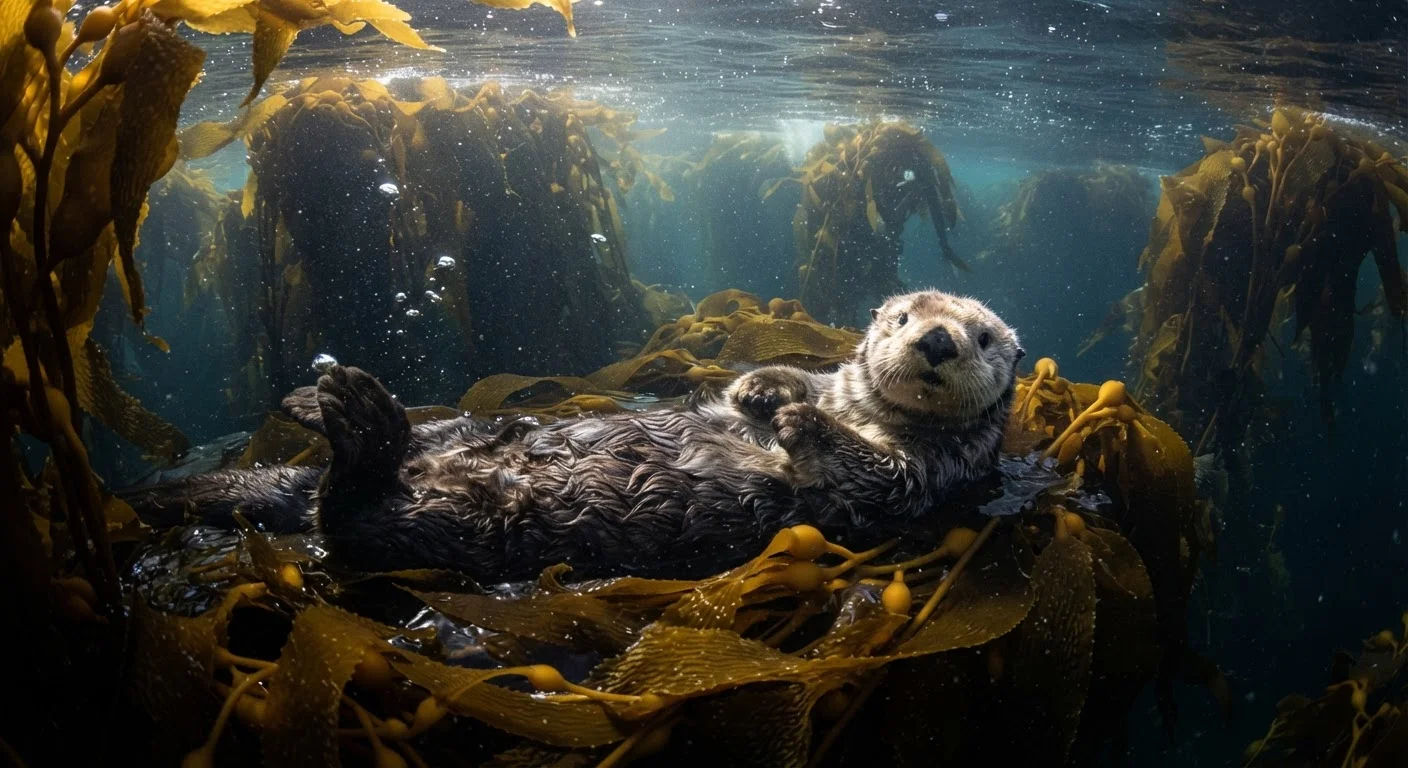
Photo: CoralScripts.com | Explore, Discover, Engage editorial
Key Takeaways
- A keystone species has an ecological impact disproportionately large relative to its population size.
- Removing a keystone species can trigger trophic cascades that restructure entire ecosystems.
- Keystone species include predators, herbivores, and ecosystem engineers across every biome.
- Conservation of keystone species is considered one of the most efficient strategies for protecting biodiversity.
- Real-world reintroductions, like wolves in Yellowstone, demonstrate measurable ecosystem recovery.
What Makes a Species a Keystone?
The term keystone species was coined by ecologist Robert T. Paine in 1969 following his landmark intertidal experiments on the Washington coast. Paine found that removing a single predator — the ochre sea star — caused the mussel population to explode, crowding out nearly every other species. The analogy to an architectural keystone is precise: pull it out, and the arch collapses.
What defines a keystone species is not abundance but disproportionate influence. A species may represent a tiny fraction of total biomass in an ecosystem yet regulate the structure, composition, and resilience of the entire community. Ecologists identify three primary types: predators that control prey populations, ecosystem engineers that physically reshape habitat, and mutualists whose interactions sustain networks of other species. These roles often overlap, and their effects ripple through food webs in a process called a trophic cascade — a chain reaction of ecological change set off by altering a single link.
Understanding keystones is inseparable from understanding symbiotic relationships in nature, since many keystone effects depend on tightly interlocked partnerships between species.
Sea Otters — Guardians of the Kelp Forest
Along the North American Pacific coast, sea otters (Enhydra lutris) prey heavily on sea urchins. Without otters, urchin populations explode and graze kelp down to bare rock — a state called an urchin barren. Kelp forests support hundreds of species of fish, invertebrates, and marine mammals, and they sequester significant amounts of carbon. When otters were hunted to near-extinction during the fur trade, coastal ecosystems collapsed over vast stretches of coastline. Their partial recovery in protected areas has allowed kelp forests to regenerate, demonstrating one of the most direct cause-and-effect relationships in keystone ecology.
Without sea otters, urchins strip kelp forests to bare rock, eliminating habitat for hundreds of species.
African Elephants — Architects of the Savanna
African elephants (Loxodonta africana) are among the clearest examples of an ecosystem engineer. Their feeding habits — uprooting trees, stripping bark, and bulldozing through dense brush — maintain the open mosaic of woodland and grassland that characterizes savanna ecosystems. This structural heterogeneity supports an enormous range of species that require different vegetation layers. Elephants also excavate waterholes during dry seasons, creating water sources used by dozens of other animals. Their dung disperses seeds across wide distances, contributing to forest regeneration far from parent trees.
Elephants physically reshape savanna structure, creating the habitat heterogeneity that sustains hundreds of co-dependent species.
Beavers — Hydrological Engineers of North America
North American beavers (Castor canadensis) transform streams into complex wetland systems through dam construction. Their ponds raise the water table, slow water flow, filter sediment and nutrients, and create standing water habitat where none previously existed. Wetlands built by beavers support amphibians, waterfowl, fish, riparian plants, and invertebrates at dramatically higher densities than unmodified streams. After widespread extirpation in the 19th century, beaver reintroduction programs have demonstrated measurable recovery of stream health and biodiversity — making them one of the most actively used tools in restoration ecology today.
Beaver dams transform simple streams into biodiverse wetlands, raising water tables and filtering nutrients across entire watersheds.
Gray Wolves — Architects of Fear
Gray wolves (Canis lupus) regulate ungulate populations not only by predation but by altering animal behavior — a concept ecologists term the landscape of fear. When wolves are present, elk and deer avoid lingering in open riverbanks and valley bottoms, allowing vegetation to recover in precisely the areas most critical for stream stability and erosion control. Yellowstone's wolf reintroduction produced documented changes in riparian vegetation, streambank stability, and even river geomorphology within years. Wolves also provide carrion that sustains scavengers from ravens to grizzly bears, amplifying their ecosystem role far beyond predator-prey dynamics.
Wolves reshape ecosystems not just by killing prey, but by changing where and how prey animals move and graze.
Fig Trees — Keystone Plants That Anchor Tropical Food Webs
While animals dominate the keystone conversation, plants can occupy the same role. Across tropical forests, fig trees (genus Ficus) produce fruit year-round — including during seasons when other fruiting plants fail. This makes them a critical food source for primates, birds, bats, and other frugivores that would otherwise face starvation during lean periods. These animals, in turn, disperse seeds for a wide range of other tree species throughout the forest. Remove fig trees and the frugivore community collapses; remove the frugivores and forest regeneration stalls. Figs illustrate that keystone status can reside in species providing irreplaceable temporal reliability, not just spatial dominance.
Fig trees are year-round fruiting anchors in tropical forests — their loss cascades through entire frugivore communities.
Prairie Dogs — Foundation Species of the American Grasslands
Black-tailed prairie dogs (Cynomys ludovicianus) are sometimes classified as a foundation species — a subcategory of keystone whose physical presence creates habitat structure. Their burrow systems aerate soil, improve water infiltration, and create shelter used by burrowing owls, ferret species, rattlesnakes, and invertebrates. Their grazing maintains short-grass patches preferred by bison and pronghorn. The black-footed ferret (Mustela nigripes), one of North America's most endangered mammals, depends almost entirely on prairie dogs for food and denning sites. Prairie dog colony collapse — driven by disease, poisoning campaigns, and habitat loss — has had measurable knock-on effects across the entire shortgrass prairie ecosystem. Their movements also connect to broader patterns described in animal migration science, as grassland corridors shaped by prairie dog activity influence seasonal movement of larger species.
Prairie dog colonies are underground infrastructure for grassland life — their burrows shelter dozens of species beyond their own.
Why Keystone Science Matters for Conservation
Identifying and protecting keystone species is among the most leveraged investments in conservation biology. Rather than requiring intervention across an entire ecosystem, targeting keystones can stabilize habitat structure for hundreds of dependent species simultaneously. The recovery of gray wolves in Yellowstone National Park — reintroduced in 1995 — is frequently cited as a real-world demonstration: wolf predation altered elk grazing behavior, which allowed riverbank vegetation to recover, which reduced erosion and changed the physical course of streams. This phenomenon, sometimes called a behaviorally mediated trophic cascade, shows that keystones affect ecosystems not just through direct predation but through the fear ecology they generate.
Keystone Species and Restoration Planning
Conservation managers increasingly use keystone species as focal points for ecosystem restoration — targeting their recovery first to generate the widest possible benefit for other species. This approach, sometimes called 'leverage-point conservation,' is more resource-efficient than attempting to restore every degraded element of an ecosystem simultaneously. Monitoring keystone populations provides a reliable early-warning indicator of overall ecosystem health.
The same logic applies to apex predators more broadly: the loss of a top predator doesn't simply remove one species from a list — it restructures the entire community beneath it. Ecosystems that appear stable after a keystone's removal often reveal hidden degradation over years or decades, a pattern ecologists call an extinction debt.
High-biodiversity environments are particularly vulnerable. The habitats explored in the world's most biodiverse ecosystems — coral reefs, tropical rainforests, kelp forests — frequently depend on a small number of keystone species to maintain the conditions that allow extraordinary species richness to persist.

Pets & Animal Life Editorial Team
Pets & Animal Life Editorial Team is the collective byline for our editorial team and contributor network. Articles published under this byline or an editorial pen name are researched, written, and reviewed according to our editorial standards for clarity, consistency, and independence before publication.
View author profile