
The World's Most Biodiverse Habitats and What Makes Them So Rich
From tropical rainforests to coral reefs, explore the conditions that allow extraordinary concentrations of species to thrive.
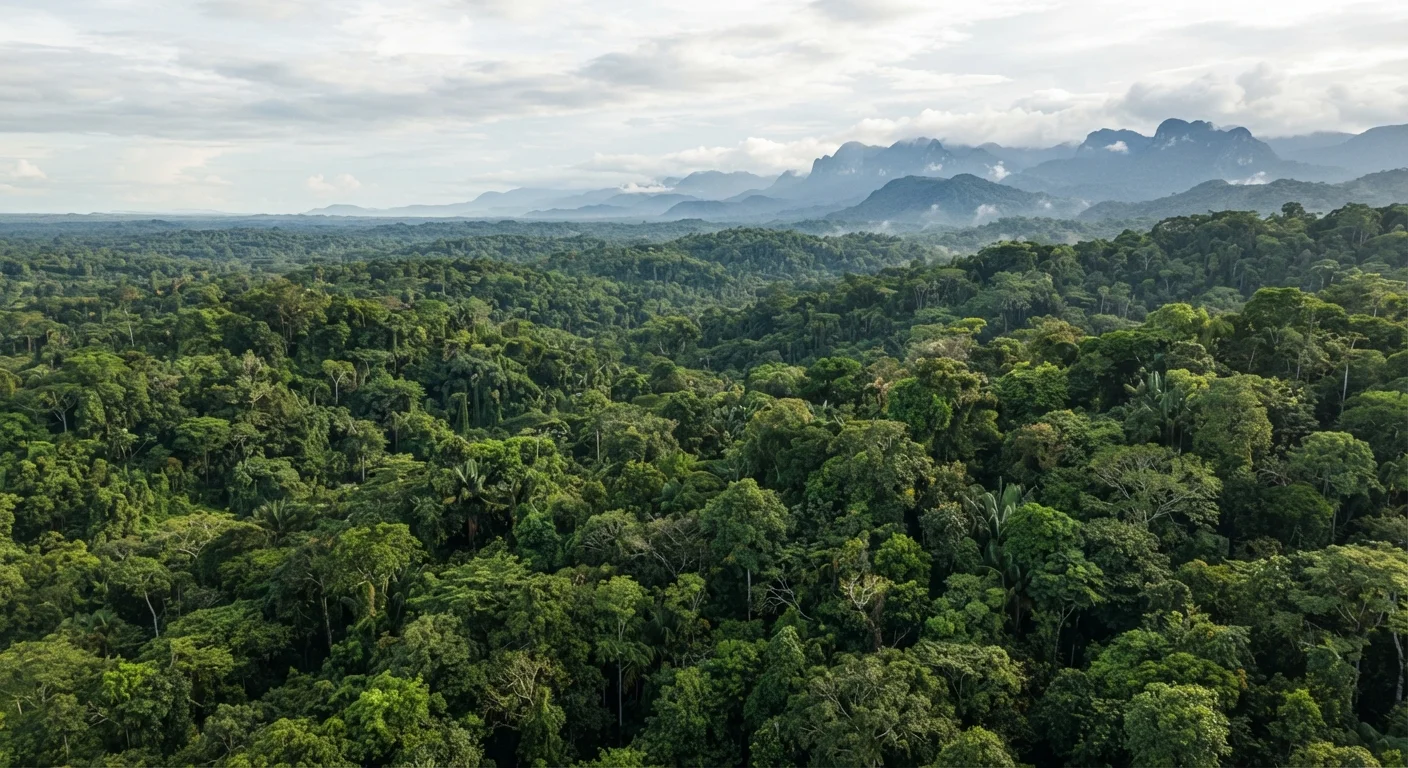
Photo: CoralScripts.com | Explore, Discover, Engage editorial
—— In This Article
Key Takeaways
- Tropical rainforests, coral reefs, and freshwater wetlands each generate biodiversity through distinct but interconnected ecological mechanisms.
- Structural complexity — layered canopies, reef formations, wetland vegetation — directly multiplies the number of viable ecological niches.
- Stable climates, abundant energy inputs, and long evolutionary histories are among the most consistent predictors of high species richness.
- Many of the world's richest habitats are under acute conservation pressure, making their study increasingly urgent.
- Symbiotic relationships between species amplify biodiversity far beyond what physical conditions alone can explain.
Why Biodiversity Concentrates in Some Places and Not Others
Across the roughly 510 million square kilometers of Earth's surface, life is not distributed evenly. A single hectare of Amazonian rainforest may contain more tree species than the entire northeastern United States. A patch of Indo-Pacific coral reef can shelter more fish families than any freshwater lake on the planet. Understanding why diversity clusters so dramatically in certain habitats requires looking at the intersection of energy, time, stability, and structural complexity.
Ecologists have proposed several complementary explanations for these patterns. The species-energy hypothesis holds that habitats receiving more solar energy and rainfall can support greater plant productivity, which in turn sustains more herbivores, more predators, and more decomposers — a cascade that inflates species counts at every trophic level. The evolutionary time hypothesis adds a historical dimension: habitats that have remained climatically stable over millions of years have had longer periods for speciation to accumulate without mass extinction resetting the clock. Both explanations have strong empirical support, and in practice they often operate together.
Physical structure matters too. A habitat with multiple spatial layers — forest floor, understory, mid-canopy, emergent canopy — provides radically more microhabitats than an open grassland of equal area. More microhabitats mean more opportunities for ecological specialization, and specialization is the engine of speciation. As you explore the habitats below, notice how each one combines energy, time, and structure in its own way. For a broader look at how predators help maintain these systems, see our article on apex predators and the ecosystems that depend on them.
Tropical Rainforests
Tropical rainforests occupy less than 6% of Earth's land surface yet harbor an estimated 50–80% of all terrestrial species — a statistic that ecologists continue to refine as new organisms are catalogued each year. The Amazon Basin, the Congo Basin, and the forests of Borneo and New Guinea represent the three great centers of this biome.
The conditions driving this richness are well understood. Year-round warmth eliminates the metabolic bottleneck of winter dormancy, allowing insects, reptiles, and amphibians to remain active and reproduce continuously. High and consistent rainfall sustains year-round plant productivity, providing food and habitat across every month. Critically, the forest's vertical layering — emergent giants rising above 50 meters, a closed mid-canopy, a shaded understory, and a decomposer-rich forest floor — creates effectively four distinct ecosystems stacked atop one another. Each layer has its own light regime, humidity gradient, and food resources, supporting highly specialized species that rarely or never interact with those in adjacent layers.
Long evolutionary stability amplifies these effects. Parts of the Amazon have remained forested for tens of millions of years, giving evolution ample time to fill every conceivable niche. The result is a habitat where competitive exclusion has driven extreme specialization: orchid bees that pollinate a single plant genus, fig wasps that develop inside one fig species, poison dart frogs whose toxins reflect the specific alkaloids in their local invertebrate diet. For a direct comparison with a less structurally complex but equally fascinating biome, see Rainforest vs. Savanna.
Less than 6% of Earth's land surface, yet home to an estimated 50–80% of all terrestrial species.
Coral Reefs
Often called the "rainforests of the sea," coral reefs cover less than 1% of the ocean floor but support roughly 25% of all marine species. The Indo-Pacific Coral Triangle — spanning parts of Indonesia, Malaysia, the Philippines, Papua New Guinea, the Solomon Islands, and Timor-Leste — is considered the global epicenter, with documented counts exceeding 600 coral species and 2,000 reef fish species within its boundaries.
The foundational mechanism is the coral polyp itself. Each polyp hosts photosynthetic algae called zooxanthellae within its tissues. This mutualism (the coral provides shelter; the algae provide sugars via photosynthesis) generates enough energy to build the complex calcium carbonate structures that form reef architecture. That architecture, in turn, provides shelter, spawning grounds, nurseries, and feeding stations for a staggering array of invertebrates and vertebrates.
Structural heterogeneity is again the key. Reef crevices, overhangs, sandy lagoon floors, and exposed reef crests each select for different morphologies and behaviors, driving specialization across short spatial distances. Cleaner stations — specific reef locations where small fish and shrimp remove parasites from larger clients — exemplify the dense web of species interdependencies that reef complexity enables. The thermal sensitivity of zooxanthellae also explains the vulnerability of reefs to ocean warming: when water temperatures exceed tolerance thresholds, polyps expel their algae in an event called coral bleaching, collapsing the energy base of the entire system.
Less than 1% of the ocean floor, yet reefs sustain roughly a quarter of all marine species on Earth.
Tropical Freshwater Rivers and Floodplains
The Amazon River system alone contains more freshwater fish species — estimated at over 3,000 — than any other river basin on Earth, representing roughly 10% of all known vertebrate species. The Congo River basin ranks second in freshwater fish diversity globally. These numbers consistently surprise even specialists, because freshwater covers less than 1% of Earth's surface area.
What drives such richness in rivers and floodplains? Seasonal flooding is central. When Amazonian rivers overflow their banks each wet season, fish access an enormous area of previously terrestrial forest floor. This flooded forest, called várzea, provides breeding habitat, food in the form of fallen fruits and invertebrates, and shelter from open-water predators. Different fish species have evolved to exploit different flood-pulse opportunities: some crack palm nuts with hypertrophied jaw muscles, others filter decomposing leaf litter. The seasonal rhythm acts as an ecological pump, cycling nutrients between aquatic and terrestrial systems.
High water-chemistry variability also matters. The Amazon's blackwater rivers (stained with dissolved tannins) and whitewater rivers (mineral-rich and turbid) are chemically so different that many fish species are confined to one type, effectively creating parallel universes of speciation running side by side. This chemical heterogeneity is a form of ecological isolation that drives divergence without requiring geographic separation.
The Amazon River system alone holds an estimated 3,000-plus freshwater fish species — roughly 10% of all known vertebrates.
Tropical Cloud Forests
Cloud forests — montane tropical forests persistently bathed in mist and low clouds — occupy a narrow altitudinal band on tropical mountains across the Andes, Central America, East Africa, and Southeast Asia. Despite covering a small total area, they are disproportionately rich in endemic species: organisms found nowhere else on Earth. The Monteverde Cloud Forest Reserve in Costa Rica and the montane forests of Ecuador's western Andes are canonical examples.
The persistent moisture creates conditions that support unusually dense communities of epiphytes — plants that grow on other plants without parasitizing them. Bromeliads, orchids, mosses, and ferns carpet every horizontal surface, each bromeliad's water-filled cup functioning as a miniature aquatic ecosystem harboring its own community of insects, amphibians, and microorganisms. A single large bromeliad may house dozens of species that spend their entire lives within it.
Altitudinal gradients generate additional diversity by compressing multiple climate zones into short vertical distances. A climb of 1,000 meters in altitude produces temperature and moisture shifts roughly equivalent to traveling several hundred kilometers toward the poles, passing through distinct biological communities with high turnover in species composition. This beta diversity — the rate at which species change across a landscape — is among the highest of any terrestrial habitat type. Many cloud forest species, particularly amphibians, have been acutely vulnerable to the chytrid fungal disease Batrachochytrium dendrobatidis, which has driven multiple extinctions.
A single large bromeliad in a cloud forest may host dozens of species that complete their entire life cycle within its water-filled cup.
Subtropical Shrublands (Fynbos and Mediterranean-Climate Zones)
The world's five Mediterranean-climate regions — California's chaparral, Chile's matorral, South Africa's fynbos, the Australian kwongan, and the Mediterranean Basin itself — share a climate regime of warm dry summers and cool wet winters. Together they cover less than 5% of Earth's land surface but account for roughly 20% of known plant species diversity. The Cape Floristic Region of South Africa, anchored by fynbos, is perhaps the most extraordinary: a region smaller than Portugal containing approximately 9,000 plant species, about 70% of them endemic.
The explanation lies partly in the poor, nutrient-depleted soils that characterize these regions. Counter-intuitively, nutrient scarcity drives plant diversity by preventing a few competitive dominants from monopolizing resources. Instead, hundreds of plant species coexist by exploiting slightly different soil pockets, mycorrhizal networks, and pollinator relationships. Fynbos plants show extreme specialization for their pollinators: long-tubed flowers for specific sunbird beaks, platforms adapted for oil-collecting bees, and buzz-pollinated anthers requiring the precise vibration frequency of particular bee species.
Periodic fire is another crucial driver. Many fynbos and chaparral plants require fire to germinate their seeds or to clear competing vegetation. Fire-adapted plants store seeds in serotinous cones or soil seed banks, releasing them only after heat exposure. This fire cycle resets competitive hierarchies at intervals, preventing long-term competitive exclusion and maintaining high plant species coexistence — which then supports a corresponding diversity of insects, birds, and reptiles.
Nutrient-poor soils, counterintuitively, prevent competitive dominants from monopolizing space — and that drives extraordinary plant coexistence.
Deep Ocean Hydrothermal Vent Communities
Hydrothermal vents — discovered only in 1977 along mid-ocean ridges — shattered the assumption that all life on Earth is ultimately solar-powered. These seafloor fissures discharge superheated, mineral-rich water into the cold deep ocean, and the chemosynthetic bacteria that colonize them form the base of entirely sunlight-independent food webs. In the four decades since their discovery, scientists have described more than 500 species found exclusively at vents.
The biodiversity mechanisms here differ fundamentally from shallow-water habitats. Productivity is driven not by photosynthesis but by chemosynthesis: bacteria and archaea oxidize hydrogen sulfide and methane emitted from the vents, converting chemical energy into organic compounds. Vent-specific invertebrates — tube worms (Riftia pachyptila) reaching two meters in length, Pompeii worms tolerating temperatures above 80°C at their tube tips, eyeless shrimp, and vent crabs — have evolved in isolation from surface biota, generating high endemism. Many species host chemosynthetic bacteria as internal symbionts, mirroring the coral-zooxanthellae partnership in structure if not in chemistry.
Each vent field is also an island: geographically isolated, episodic in lifespan (vents can go inactive within decades), and separated from other vents by kilometers of barren seafloor. This isolation drives local speciation and means that different vent fields — Atlantic vs. Pacific vs. Indian Ocean ridges — harbor largely distinct communities, multiplying global vent biodiversity far beyond what any single field suggests. The discovery of these communities transformed astrobiology by demonstrating that life does not require sunlight, expanding the range of environments considered potentially habitable beyond Earth.
Discovered in 1977, hydrothermal vent communities proved that sunlight is not a prerequisite for complex, biodiverse ecosystems.
Biodiversity Hotspots: A Formal Designation
The term 'biodiversity hotspot' has a formal scientific definition: a region must contain at least 1,500 endemic vascular plant species and have lost at least 70% of its original native habitat to qualify. Conservation International currently recognizes 36 such hotspots globally. While this article covers habitat types rather than hotspots specifically, there is substantial overlap — most hotspot regions are dominated by the habitat types described here.
Protecting What Remains — and Why It Matters
Each habitat on this list faces serious and well-documented threats: deforestation, coral bleaching from rising ocean temperatures, wetland drainage, and overextraction of freshwater resources. Biodiversity loss in these systems is not merely an aesthetic concern — it represents the erosion of ecological services that support food webs, regulate climate, filter water, and stabilize soils globally. The conservation status spectrum that governs how species are listed and protected is increasingly relevant to every habitat discussed here.
The richness of these places is also intimately tied to the symbiotic relationships woven through them — the mycorrhizal fungi networking tree roots, the cleaner fish maintaining reef fish health, the oxpeckers and large mammals of African savannas. Remove enough threads from these webs, and the whole fabric becomes fragile. For those who travel to witness these environments firsthand, resources on international travel can help plan responsible visits that minimize ecological impact.
Visiting Biodiverse Habitats Responsibly
Ecotourism, when genuinely well-managed, can fund conservation and provide local communities with economic incentives to protect wild habitats. Look for travel operators that employ local guides, maintain low visitor-to-guide ratios in sensitive areas, and contribute directly to habitat management. Staying on marked trails, avoiding flash photography in caves and reefs, and never collecting specimens — plant or animal — are baseline practices that every visitor should follow without exception.

Pets & Animal Life Editorial Team
Pets & Animal Life Editorial Team is the collective byline for our editorial team and contributor network. Articles published under this byline or an editorial pen name are researched, written, and reviewed according to our editorial standards for clarity, consistency, and independence before publication.
View author profile