
How Animal Populations Are Counted in the Wild
From camera traps to satellite tagging, learn the scientific methods researchers use to estimate wildlife numbers across vast habitats.
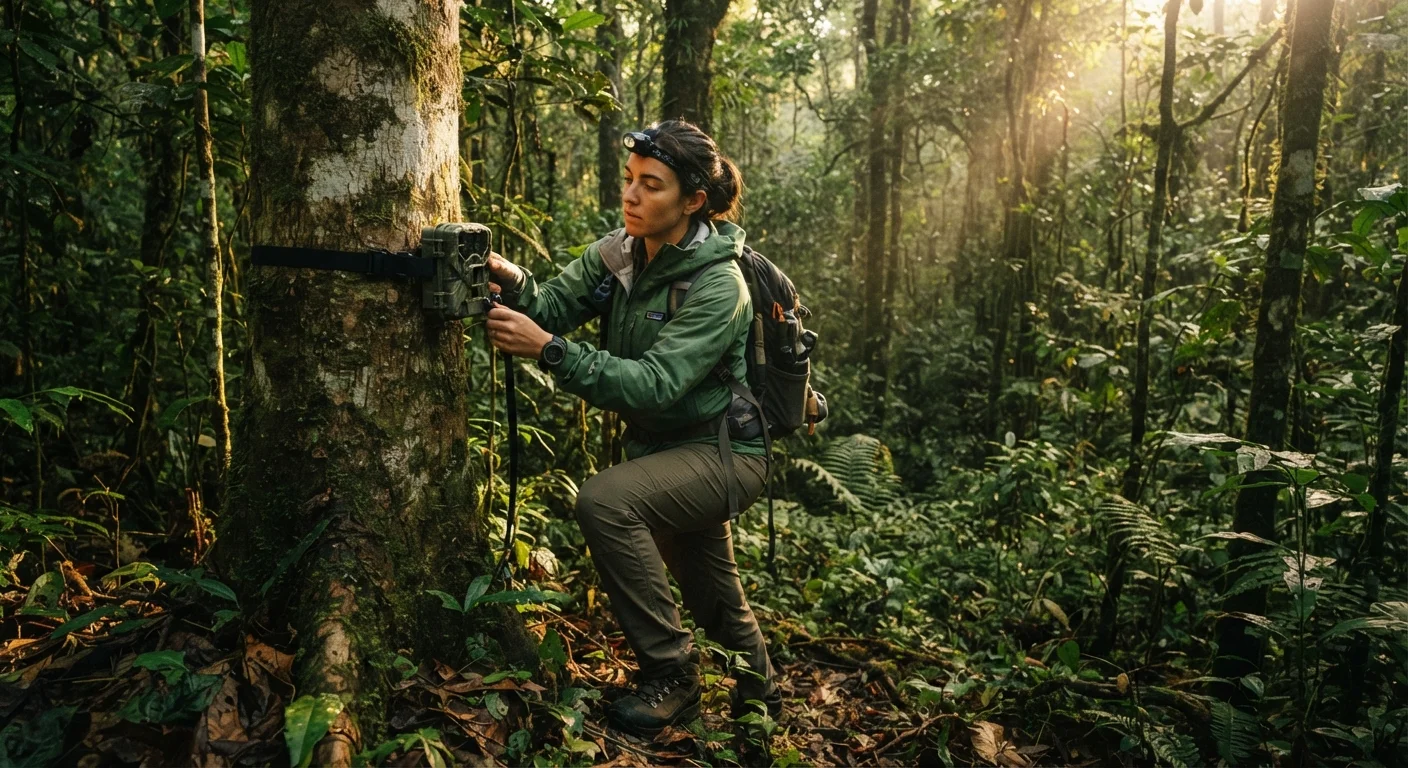
Photo: CoralScripts.com | Explore, Discover, Engage editorial
—— In This Article
Key Takeaways
- Wildlife population counts rely on multiple complementary methods, not a single technique.
- Mark-recapture, distance sampling, and aerial surveys each suit different species and habitats.
- Remote sensing and environmental DNA are expanding what researchers can measure non-invasively.
- Population estimates always carry uncertainty ranges — exact totals are rarely achievable in the wild.
- Accurate counts inform conservation policy, habitat protection, and species recovery planning.
Why Counting Wild Animals Is Harder Than It Sounds
Unlike livestock in a paddock, wild animals move constantly, hide from observers, and occupy terrain that can span thousands of square miles. A lion pride in the Serengeti, a pod of sperm whales in the Pacific, and a colony of bats roosting in a cave all require fundamentally different approaches to count. No single method works universally, and most population estimates are exactly that — estimates, carrying statistical confidence intervals rather than definitive totals.
This uncertainty is not a flaw in wildlife science; it is an honest acknowledgment of ecological complexity. Researchers select methods based on the target species' behavior, the habitat type, available funding, and the precision required. Understanding how these methods work helps readers interpret conservation headlines more critically — and appreciate the extraordinary effort behind figures like "fewer than 4,000 tigers remain in the wild."
Population data also feed directly into policy. Assessments by bodies such as the IUCN Red List rely on field counts and modeled estimates to assign threatened status. The ecological roles of apex predators depend on these numbers too — without reliable counts, managers cannot know whether a recovering wolf population is sustainable or fragile.
What you will need
Core Methods Researchers Use
Wildlife biologists draw from a toolkit of established techniques, often combining several in a single study to cross-validate results.
Camera Traps
Motion-triggered cameras that record wildlife presence and individual markings without researcher disturbance.
GPS/Satellite Tags
Attached to individual animals to track movement, range use, and habitat selection over time.
Passive Acoustic Recorders
Deployed in the field to capture species vocalizations for occupancy and abundance modeling.
Transect Markers and Rangefinders
Used during distance sampling surveys to define routes and measure detection distances accurately.
eDNA Sampling Kits
Water or soil collection equipment used to extract and analyze environmental genetic material for species detection.
Statistical Software (e.g., Distance, Program MARK)
Specialized programs that apply detection-probability models to field data and generate population estimates.
Mark-Recapture
One of the oldest and most statistically robust methods, mark-recapture involves capturing a sample of animals, marking them (with tags, dye, or radio collars), releasing them, and then sampling the population again later. The proportion of marked individuals in the second sample allows researchers to estimate total population size using the Lincoln-Petersen estimator or its more sophisticated extensions. It works well for fish, small mammals, and reptiles but is logistically demanding for large or dangerous animals.
Distance Sampling and Transect Surveys
Observers walk or drive predetermined routes (transects) and record all animals detected, along with the perpendicular distance from the transect line. Statistical models then account for the declining probability of detecting animals farther away, producing density estimates. This technique is widely used for birds, large ungulates, and cetaceans. Aerial transects extend the approach to remote or roadless landscapes — commonly used for elephant surveys across African savannas.
Camera Trapping
Motion-triggered cameras placed along wildlife corridors or water sources accumulate thousands of images without researcher presence. For species with individually distinct markings — tigers, leopards, jaguars — photographs serve as individual identification records, enabling a photographic mark-recapture analysis. Camera trap networks can now span entire national parks, and many programs train machine-learning classifiers to process images at scale.
Acoustic and eDNA Monitoring
Passive acoustic recorders detect vocalizations of birds, bats, frogs, and cetaceans, allowing occupancy models to estimate population distribution. Environmental DNA (eDNA) — genetic material shed into water or soil — can detect species presence from water samples alone. These non-invasive methods are growing rapidly, particularly for cryptic or aquatic species that are rarely seen directly. For context on how movement patterns affect where animals can be detected, see our article on animal migration.
Combining Methods Strengthens Estimates
No single survey method is perfect for all species or conditions. Researchers increasingly combine two or more approaches — for example, pairing camera trapping with eDNA sampling — to cross-validate results and reduce bias. Where budget permits, integrated methods produce the most defensible population estimates.
How a Population Survey Is Conducted: Step by Step
While specifics vary by species and method, the general workflow of a rigorous wildlife population survey follows a consistent scientific structure.
Define the Study Objectives and Target Species
Researchers begin by specifying exactly what they need to know: total abundance, population trend, density per unit area, or occupancy across a landscape. The objective determines which method is appropriate. Counting an elusive forest cat demands a different design than estimating a migratory bird's breeding population.
Design the Sampling Framework
Using maps, satellite imagery, and prior field knowledge, researchers divide the study area into sampling units — grid cells, transect lines, or camera trap stations. Units are typically selected using randomized or stratified-random designs to ensure the sample is representative of the full habitat. Sample size calculations determine how many units are needed to achieve the target statistical precision.
Deploy Equipment and Conduct Field Work
Teams deploy camera traps, acoustic recorders, or conduct walked/driven transects according to the sampling protocol. For mark-recapture studies, animals are captured humanely, marked with uniquely identifiable tags or natural markings are photographed, and individuals are released. Data on weather, observer identity, and exact timing are recorded alongside animal detections, as these covariates are used in later modeling.
Process and Validate Raw Data
Raw images, audio files, and field sheets are compiled and checked for errors. Camera trap photos are reviewed — increasingly with AI-assisted classifiers — to identify species and, where possible, individuals. Duplicate detections within a defined time window are removed. Quality-control checks flag implausible records before analysis begins.
Apply Statistical Models to Estimate Population Size
Processed data are entered into specialized software. Distance sampling data use half-normal or hazard-rate detection functions. Mark-recapture data are analyzed with open or closed population models depending on whether the survey spans breeding seasons. Outputs include a point estimate of population size or density, along with confidence intervals and goodness-of-fit diagnostics.
Report Findings and Integrate into Conservation Planning
Results are documented with full methodological transparency so they can be replicated and compared with future surveys. Estimates feed into population viability analyses, protected area management plans, and IUCN assessments. Researchers communicate uncertainty clearly, noting what further data collection would reduce it. Regular resurveys — typically every three to five years for monitored species — transform single counts into trend data.
Survey Access Requires Proper Authorization
Conducting wildlife population surveys on public lands, protected areas, or private property requires permits from the relevant wildlife management authority. Entering restricted habitat or disturbing wildlife without authorization can result in legal penalties and genuine harm to the animals and ecosystems being studied. Always confirm the regulatory requirements for a study area before fieldwork begins.
Population surveys are almost always conducted by trained researchers with appropriate permits. The steps below describe the scientific process for educational purposes; accessing wildlife habitat or handling animals without authorization is illegal in most jurisdictions and harmful to animals.
Interpreting Results and Conservation Applications
A completed survey produces a population estimate with confidence intervals — for example, "an estimated 2,800–3,200 individuals." That range reflects sampling error, detection probability assumptions, and habitat coverage. Researchers report these intervals transparently so that managers and policymakers understand the precision of the data they are working with.
Repeated surveys over time reveal trends: is the population increasing, stable, or declining? Trend data are often more informative than a single snapshot count. A species occupying high-biodiversity habitats may show different dynamics than one in a degraded or fragmented landscape — survey design must account for that variation.
Field researchers conducting surveys in remote areas must also contend with the animals themselves. Ethical observation practices — minimizing disturbance, avoiding nest sites during sensitive periods, maintaining safe distances — align closely with the principles outlined in our guide to wildlife photography ethics. Good science and animal welfare are not in conflict; robust data collection depends on minimal interference with natural behavior.
As technology advances, satellite tagging, drone surveys, and citizen-science platforms such as structured bird counts are broadening the geographic and temporal scale of population monitoring. The science of counting animals in the wild remains as much art as algorithm — a discipline built on careful design, statistical humility, and deep knowledge of the creatures being counted.

Pets & Animal Life Editorial Team
Pets & Animal Life Editorial Team is the collective byline for our editorial team and contributor network. Articles published under this byline or an editorial pen name are researched, written, and reviewed according to our editorial standards for clarity, consistency, and independence before publication.
View author profile