
Online vs. In-Person Senior Groups: Finding the Right Mix
Comparing the social dynamics, accessibility, and engagement styles of digital senior communities versus face-to-face groups.
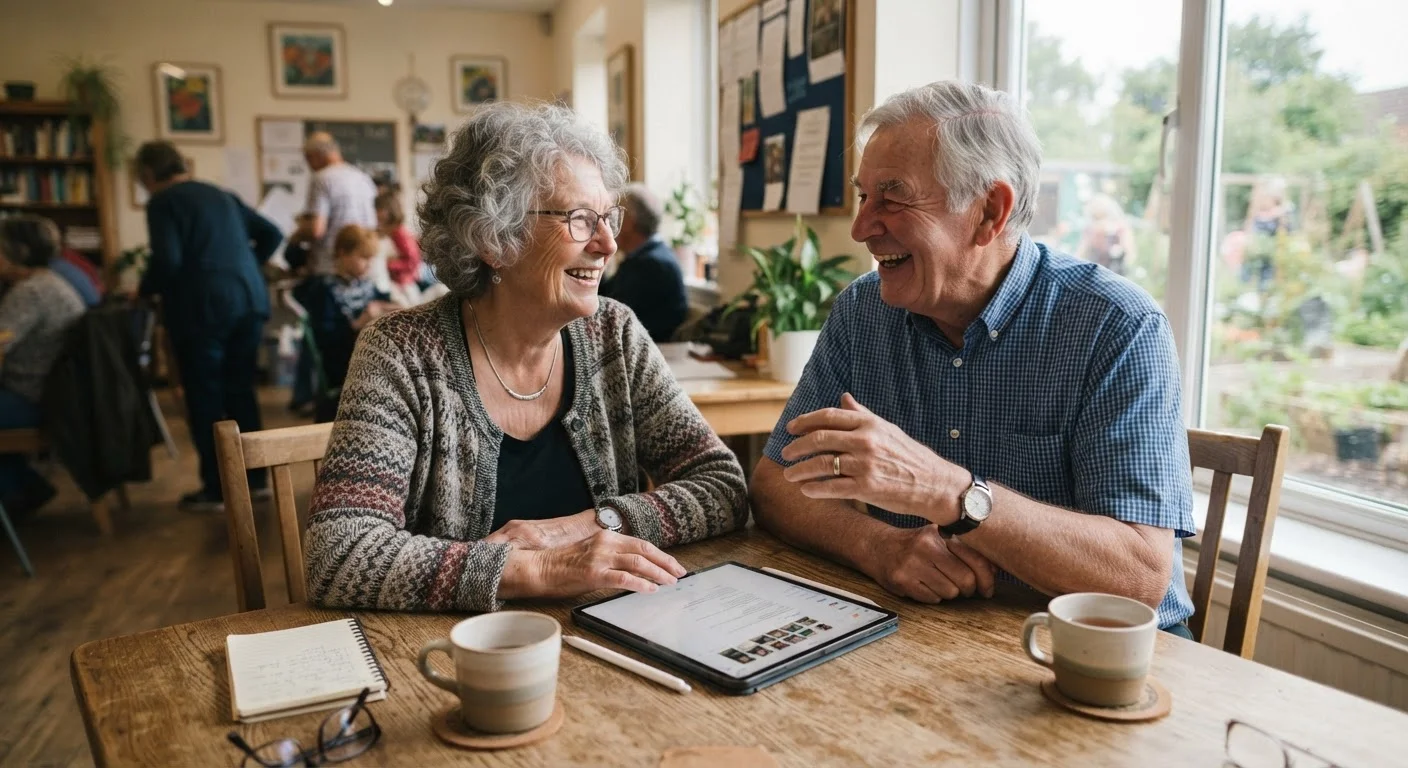
Photo: CoralScripts.com | Explore, Discover, Engage editorial
—— In This Article
Key Takeaways
- Online senior groups offer unmatched flexibility and reach, connecting people across geographic distances.
- In-person groups provide physical presence and spontaneous interaction that digital spaces cannot fully replicate.
- Mobility limitations, tech confidence, and social goals all shape which format feels most natural.
- A hybrid approach - combining both formats - often delivers the broadest sense of belonging.
- Neither format is universally superior; the right mix depends on individual circumstances and preferences.
What Each Format Actually Offers
When we talk about senior social groups, we're really talking about two distinct kinds of connection - and both matter. Online senior communities span everything from Facebook groups and interest-based forums to video call clubs and dedicated platforms. In-person groups include senior centers, faith communities, volunteer organizations, hobby clubs, and local classes.
Each format has a distinct texture. Online groups are persistent - conversations happen across time zones, and you can contribute at midnight just as easily as at noon. In-person groups are embodied - you share physical space, read body language, and experience the small, unrepeatable moments of being truly present with others. Understanding this difference helps you make deliberate choices rather than defaulting to whatever feels easiest.
| Online Senior Groups | In-Person Senior Groups | |
|---|---|---|
| Accessibility | High - available from home anytime | Varies - requires transportation and mobility |
| Depth of connection | Can be meaningful but lacks physical cues | Rich, embodied, spontaneous interaction |
| Geographic reach | Global - connects across distances | Local - limited to nearby participants |
| Interest specificity | Very high - niche communities exist for almost anything | Limited by local population size |
| Tech confidence required | Moderate to high | None |
| Safety considerations | Scams, privacy risks, moderation quality | Physical safety, weather, transport |
| Scheduling flexibility | High - often asynchronous | Lower - set meeting times |
The Case for In-Person Connection
Research on loneliness and aging consistently points to something that online interaction struggles to replicate: the physiological and emotional benefit of physical proximity. Shared laughter in a room, the comfort of a hand on a shoulder, the simple act of walking into a space where people know your name - these experiences have a depth that video calls don't fully reproduce.
In-person groups also tend to generate what sociologists call weak ties - the casual acquaintances and incidental conversations that make a neighborhood feel alive. A regular Wednesday ceramics class or a church coffee hour builds these ties organically over time. For older adults navigating transitions like retirement or the loss of a spouse, these weekly anchors can be quietly stabilizing. The practical process of finding local groups - trying a few, settling into some - is itself a meaningful act of self-investment.
Start Small and Build Gradually
If in-person groups feel daunting after a period of social withdrawal, consider starting with a low-commitment format - a one-time workshop, a drop-in class, or a community library event. Familiarity with a space and its people builds naturally over multiple visits. There's no need to commit to a group before you've had a chance to see how it actually feels to be there.
The Case for Online Communities
For many older adults, in-person participation isn't straightforward. Driving limitations, chronic pain, rural geography, or caregiving responsibilities can make weekly attendance genuinely difficult. Online communities lower that barrier considerably - participation requires only a device and a connection. This accessibility is not a consolation prize; it's a meaningful form of inclusion.
Online groups also allow connection around highly specific shared interests that a local community might not support. A retired marine biologist, a lifelong quilter of unusual historical patterns, or a grandparent raising grandchildren may find their most resonant peer community online rather than down the street. The sheer scale of the internet means niche belonging is possible in ways that geography alone rarely permits.
That said, digital spaces carry their own risks. Not every online community serves its members well, and issues like poor moderation, misinformation, or social comparison can erode the wellbeing benefits. Safety awareness matters too - protecting your privacy and recognising scams is a genuinely important skill for digital participants. And for those newer to technology, digital inclusion barriers are real and deserve acknowledgment.
34%
Older adults reporting significant loneliness
A University of Michigan National Poll on Healthy Aging found roughly one in three adults ages 50-80 reported feeling isolated from others.
75%
Seniors online in the US
Pew Research Center data indicates approximately three-quarters of adults 65 and older use the internet, a figure that has grown steadily over the past decade.
Building Your Own Hybrid Approach
The most resilient social lives tend to span both worlds. One practical framework: use online communities to maintain consistent low-effort connection - a daily check-in with a forum, a weekly video call with a group - while reserving in-person activities for the deeper anchoring that physical presence provides. Neither has to carry the full weight of your social needs.
If you're just starting out, the broader landscape of senior communities is worth exploring before committing to any single format. And if online participation feels unfamiliar, starting with a single forum can build confidence gradually. The goal isn't to maximize participation - it's to find connections that feel genuinely nourishing and sustainable for your life as it actually is, not as you imagine it should be.
This article is for informational and educational purposes only. Social and wellbeing needs vary widely; if you're experiencing significant loneliness or social withdrawal, consider speaking with a healthcare provider or licensed counselor.

People & Communities Editorial Team
People & Communities Editorial Team is the collective byline for our editorial team and contributor network. Articles published under this byline or an editorial pen name are researched, written, and reviewed according to our editorial standards for clarity, consistency, and independence before publication.
View author profile