
How Inflammation Connects Seemingly Unrelated Health Conditions
Inflammation underpins everything from heart disease to depression. This explainer traces how chronic inflammation connects across major health conditions.
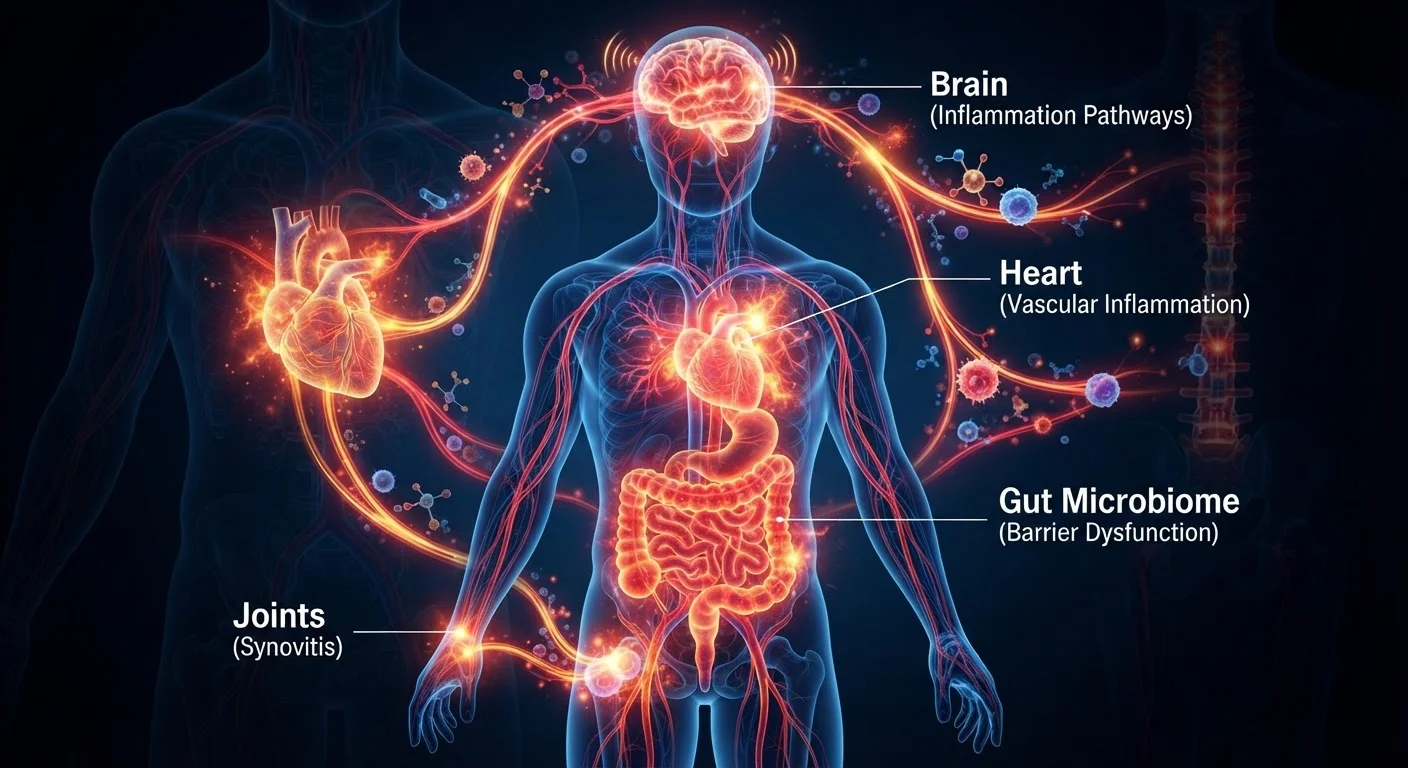
Photo: CoralScripts.com | Explore, Discover, Engage editorial
—— In This Article
Key Takeaways
- Chronic inflammation is a prolonged immune response that can damage healthy tissue over time.
- Research links chronic inflammation to cardiovascular disease, type 2 diabetes, depression, and autoimmune conditions.
- Lifestyle factors including diet, sleep, physical activity, and stress significantly influence inflammatory status.
- Elevated inflammatory markers in blood tests can signal systemic risk before overt symptoms appear.
- Managing inflammation typically requires a multi-faceted approach guided by a healthcare professional.
The Common Thread Across Diverse Diseases
Heart disease, type 2 diabetes, rheumatoid arthritis, Alzheimer's disease, and depression look like entirely different problems. They affect different organs, carry different symptoms, and are managed by different medical specialists. Yet a growing body of research points to a shared biological driver underlying all of them: chronic, systemic inflammation.
This doesn't mean inflammation causes every one of these conditions in a simple, direct way. The relationships are complex, often bidirectional, and still being studied. But understanding inflammation as a common pathway - rather than a feature of isolated diseases - reshapes how researchers and clinicians think about prevention and treatment.
For readers already familiar with the basics of these conditions, this framing offers a deeper layer of coherence. The body's immune system isn't just fighting germs; when dysregulated, it can quietly erode nearly every major organ system.
~50%
Global deaths linked to inflammation-related diseases
The WHO and multiple epidemiological analyses estimate that non-communicable diseases with inflammatory components - including cardiovascular disease, cancer, and diabetes - account for roughly half of all deaths worldwide.
3×
Higher cardiac event risk with elevated hs-CRP
Research published in peer-reviewed cardiovascular journals has found that individuals with high levels of high-sensitivity CRP face approximately three times the risk of a cardiovascular event compared to those with low levels, independent of cholesterol.
30-40%
Depression patients with elevated inflammatory markers
Meta-analyses of clinical studies estimate that 30 to 40 percent of people diagnosed with major depressive disorder show significantly elevated levels of pro-inflammatory cytokines compared to healthy controls.
Cardiovascular Disease and Metabolic Conditions
The link between inflammation and heart disease is among the most studied in medicine. Atherosclerosis - the buildup of plaques inside arterial walls - is now understood as an inflammatory process, not just a passive accumulation of cholesterol. Immune cells infiltrate arterial walls, pro-inflammatory cytokines accelerate plaque instability, and elevated high-sensitivity CRP (hs-CRP) independently predicts cardiovascular events.
Type 2 diabetes and obesity are similarly intertwined with inflammation. Excess adipose (fat) tissue, particularly visceral fat around the abdomen, functions as an active endocrine organ - secreting inflammatory proteins that contribute to insulin resistance. Insulin resistance, in turn, promotes further inflammation, creating a feedback loop that researchers continue to characterize.
These connections help explain why metabolic and cardiovascular conditions so frequently co-occur, and why lifestyle interventions addressing shared inflammatory pathways can have broad effects across both.
Inflammation, the Brain, and Mental Health
Perhaps the most surprising domain where inflammation plays a recognized role is mental health. Research has found that people with major depression often have elevated levels of inflammatory cytokines, and that experimental induction of inflammation in healthy individuals can produce depression-like symptoms including fatigue, anhedonia, and cognitive slowing.
The proposed mechanism involves cytokines crossing or signaling across the blood-brain barrier, influencing the metabolism of serotonin and dopamine - neurotransmitters central to mood regulation. This doesn't mean depression is simply an inflammatory disease, but it suggests inflammation is one biologically meaningful pathway in at least a subset of patients.
This intersection is explored in depth in our explainer on the mind-body connection and what the science actually says. Research into the gut-brain axis also reveals how gut-derived inflammatory signals may affect brain function - adding another layer to this picture.
“Inflammation appears to be a common soil from which many chronic diseases grow. Understanding it as a shared mechanism - rather than a feature unique to each disease - opens new avenues for both prevention and treatment.”
— Charles Serhan, Director of the Center for Experimental Therapeutics and Reperfusion Injury, Brigham and Women's Hospital, Harvard Medical School
Autoimmune Conditions and Inflammatory Misfires
Autoimmune diseases represent a more direct and overt form of pathological inflammation: the immune system mounts an inflammatory attack against the body's own tissues. Conditions such as rheumatoid arthritis, lupus, multiple sclerosis, and inflammatory bowel disease all involve identifiable autoimmune mechanisms.
What distinguishes them from the low-grade chronic inflammation seen in metabolic disease is the specificity of the immune target - and often the severity of the inflammatory response. That said, both forms share underlying cytokine pathways, which is why some anti-inflammatory medications developed for autoimmune diseases have also shown promise in other inflammatory contexts.
For a detailed look at how immune misfiring produces autoimmune disease, see our explainer on why the body turns on itself in autoimmune conditions.
Talk to Your Doctor About Inflammatory Markers
If you have risk factors for chronic disease - such as a family history of heart disease, metabolic conditions, or an autoimmune diagnosis - ask your healthcare provider whether testing inflammatory markers like hs-CRP makes sense for you. Results are most meaningful when interpreted alongside your full clinical picture, not in isolation.
What This Means for Managing Your Health
Recognizing inflammation as a shared mechanism doesn't offer a single cure, but it does highlight a set of modifiable lifestyle factors that research consistently associates with lower systemic inflammation: dietary patterns emphasizing whole foods and minimizing ultra-processed foods; regular moderate-intensity physical activity; adequate and consistent sleep; and effective management of chronic psychological stress.
Social factors matter too - research summarized in our article on social connection as a health factor indicates that chronic social isolation is associated with elevated inflammatory markers, adding a behavioral dimension to the picture.
If you have a condition associated with chronic inflammation or are concerned about your inflammatory status, a healthcare provider can assess relevant biomarkers in the context of your full clinical history and guide appropriate next steps. No supplement, diet, or lifestyle strategy should substitute for that individualized evaluation.
This article is intended for general health education purposes only and does not constitute medical advice. Always consult a qualified healthcare professional for guidance specific to your health situation.
Frequently Asked Questions

Health & Wellness Editorial Team
Health & Wellness Editorial Team is the collective byline for our editorial team and contributor network. Articles published under this byline or an editorial pen name are researched, written, and reviewed according to our editorial standards for clarity, consistency, and independence before publication.
View author profile