
Why the American Southwest Feels Like Nowhere Else on Earth
Slot canyons, ancient pueblos, and vast open skies—explore what makes the Southwest a singular travel destination for curious domestic explorers.
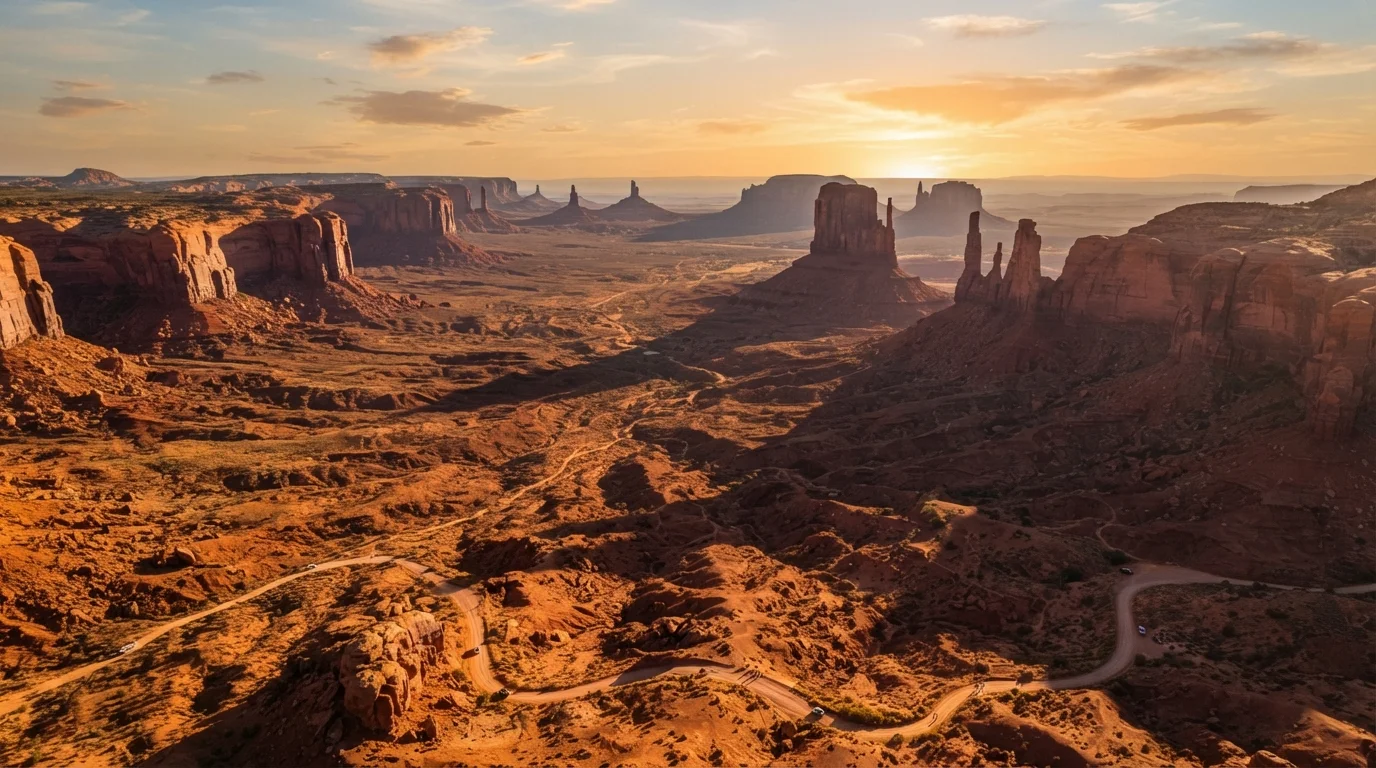
Photo: CoralScripts.com | Explore, Discover, Engage editorial
—— In This Article
Key Takeaways
- The Southwest spans multiple states but shares a cohesive geological and cultural identity unlike any other US region.
- Ancient Indigenous civilizations — including the Ancestral Puebloans — left enduring marks on the landscape still visible today.
- The region's desert climate varies dramatically by elevation, affecting the best times and conditions for travel.
- Slot canyons, arches, mesa formations, and vast dark skies make the Southwest a visual experience with few global equivalents.
- Permits, seasonal heat, and water scarcity require careful logistical planning before visiting many Southwest destinations.
A Landscape That Rewrites Your Sense of Scale
Standing at the rim of the Grand Canyon for the first time, most visitors go quiet. Not from reverence alone — from the simple inability of the human eye to process what it's seeing. The canyon stretches 277 river miles, drops more than a mile in depth, and exposes nearly two billion years of Earth's geological record in its layered walls. It is one of many places in the Southwest where landscape simply overwhelms ordinary perception.
What distinguishes the Southwest from other dramatic American landscapes — the Rockies, the Pacific coast, the Great Plains — is the combination of scale, color, and geological storytelling compressed into a single viewshed. Utah's Canyonlands National Park presents a labyrinth of mesas and river gorges with almost no human infrastructure visible from its overlooks. Monument Valley's sandstone mittens rise from a flat desert floor in formations that have shaped the visual language of the American West for over a century. The region rewards slowness — the more time you spend, the more layers reveal themselves.
277 miles
Length of the Grand Canyon along the Colorado River
According to the National Park Service, the Grand Canyon stretches 277 river miles and exposes nearly two billion years of Earth's geological history.
130,000 sq mi
Area of the Colorado Plateau
The Colorado Plateau — the geological foundation of much of the Southwest — spans approximately 130,000 square miles across four states.
5
National parks in Utah alone
Utah's five national parks — Arches, Bryce Canyon, Canyonlands, Capitol Reef, and Zion — are collectively known as the Mighty 5 and draw millions of visitors annually.
For travelers comparing domestic options, the Southwest occupies a category of its own. As the national parks of each US region demonstrate, no other part of the country concentrates this density of geological wonder within driving distance of one another.
Ancient Civilizations Built Into the Rock
The Southwest's human story runs as deep as its canyon walls. The Ancestral Puebloans — a term now preferred over the earlier and more limited "Anasazi" — constructed sophisticated cliff dwellings, irrigation systems, and astronomical observatories across the Four Corners region beginning more than 2,000 years ago. Mesa Verde National Park in Colorado preserves some of the most complete examples, including Cliff Palace, a 150-room multi-story structure built into a natural alcove in the 1200s CE.
These weren't isolated outposts. Chaco Canyon in New Mexico functioned as a regional hub — an architectural and ceremonial center connected to outlying communities by a network of engineered roads. The scale and planning involved continues to inform archaeological research. The descendants of these civilizations — Pueblo peoples, Hopi, Zuni, and others — maintain living cultures in the region today, a continuity that gives the Southwest a cultural depth rare in the American domestic travel landscape.
Travelers interested in Indigenous heritage should approach these sites with intentionality. Many cultural sites on tribal lands require permits, guided access, or respectful behavior protocols distinct from national park norms. Verify entry requirements directly with tribal offices or official park sources before visiting.
Planning for Desert Realities
The Southwest's beauty comes paired with genuine environmental demands. Summer temperatures at lower-elevation sites — Death Valley, the lower Grand Canyon, much of the Sonoran Desert — can exceed 110°F. Dehydration and heat-related illness are documented risks each season. Water sources in backcountry areas are scarce and often require treatment. Cell service disappears quickly outside of gateway towns.
Prepare Before You Enter the Desert
Carry more water than you think you'll need — a general guideline for desert hiking is at least one liter per hour in hot conditions, but individual needs vary. Start hikes early in the morning to avoid peak heat, and always inform someone of your planned route and expected return time. Many Southwest emergencies involve visitors who underestimated distance, heat, or the speed at which conditions can change.
Timing is central to a successful Southwest trip. Spring and fall provide the widest range of comfortable conditions. The summer monsoon season (roughly July–September in Arizona and New Mexico) brings dramatic afternoon lightning storms that can flash-flood slot canyons with little warning — a critical factor for anyone planning narrow canyon hikes. For travelers wondering how to align their visit with the region's most striking natural events, planning around US seasonal landscapes offers a practical framework.
Permit demand has risen sharply at flagship destinations. Reservations for sites like The Wave, popular Zion National Park trails, and Antelope Canyon often fill months in advance. Early planning — and flexibility toward lesser-visited alternatives — makes the difference between a trip anchored by iconic landmarks and one spent in permit-lottery disappointment. The Southwest rewards the prepared traveler with an experience that genuinely has no domestic equivalent.
Frequently Asked Questions

Travel & Places Editorial Team
Travel & Places Editorial Team is the collective byline for our editorial team and contributor network. Articles published under this byline or an editorial pen name are researched, written, and reviewed according to our editorial standards for clarity, consistency, and independence before publication.
View author profile