
Small Cities Worth Slowing Down For in the American South
Beyond Nashville and New Orleans, the South holds a string of underappreciated cities rich in history, food culture, and natural beauty.
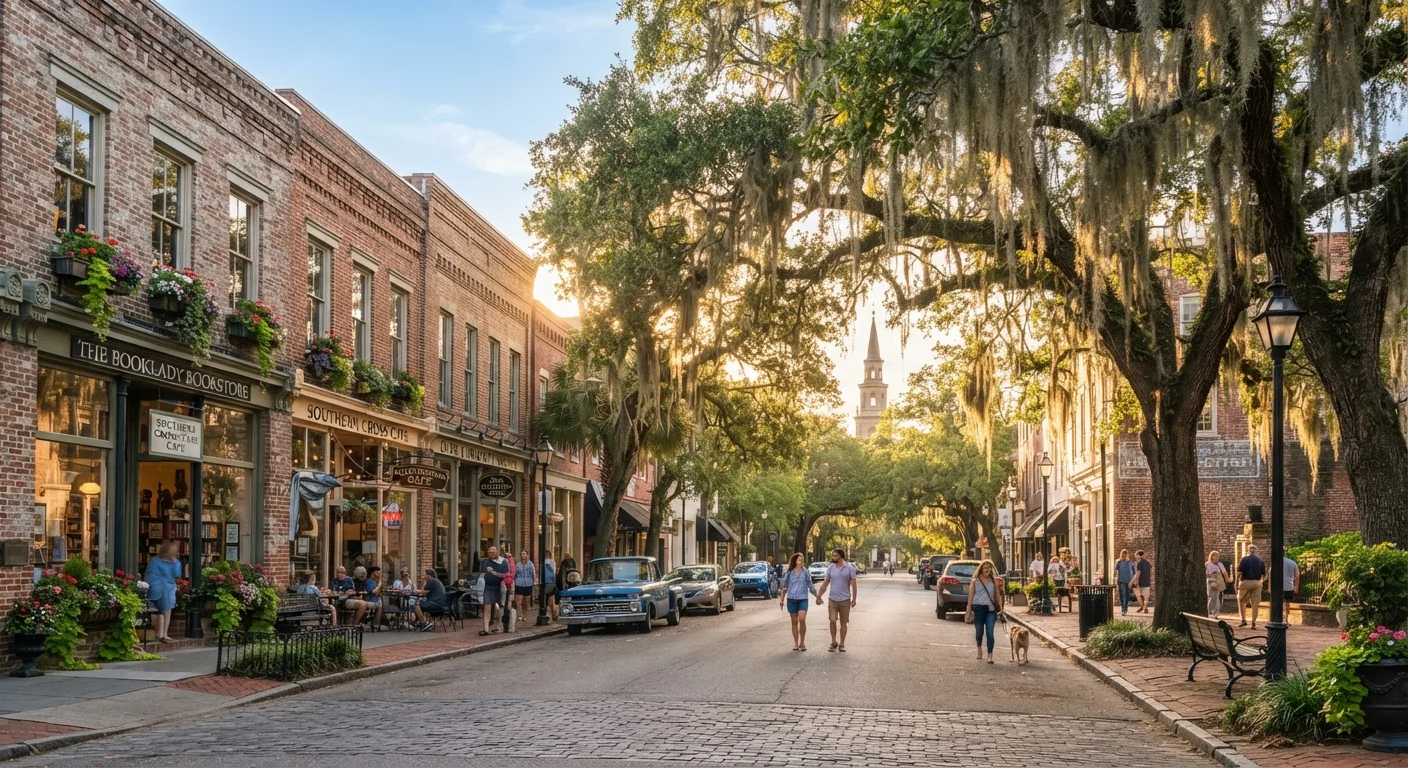
Photo: CoralScripts.com | Explore, Discover, Engage editorial
—— In This Article
Key Takeaways
- Several Southern cities offer deep historical, culinary, and cultural depth that rivals better-known destinations.
- Cities like Natchez, Huntsville, and Beaufort each anchor distinct regional identities beyond the tourist mainstream.
- Slow travel — lingering longer in fewer places — tends to reveal the South's most authentic character.
- Accessibility, walkability, and proximity to natural landscapes vary meaningfully between these destinations.
- Verifying current hours, conditions, and entry requirements directly with local sources is always recommended before travel.
Looking Past the Obvious Stops
Nashville, New Orleans, and Charleston consistently dominate Southern travel conversations — and for good reason. But a traveler who books the well-worn circuit misses a quieter, equally compelling South: a constellation of smaller cities where history runs deep, food traditions remain intact, and the pressure to optimize every hour simply evaporates.
The appeal of these places is precisely their scale. You can walk most of what matters. Locals are rarely outnumbered by visitors. The stories embedded in the architecture, the landscape, and the menus haven't been smoothed into easy consumption. If the philosophy of slow travel resonates with you — fewer places, greater depth — the South's overlooked cities reward that approach more than almost anywhere in the country.
Build in Unscheduled Time
Smaller Southern cities rarely offer the density of activity that justifies a packed itinerary. The most rewarding visits tend to include deliberate gaps — an afternoon with no plan, a meal chosen by walking rather than research. Resistance to over-scheduling is itself a travel skill, and these cities will reward it consistently.
Seven Small Southern Cities That Deserve More of Your Time
Natchez, Mississippi
Natchez holds the largest concentration of antebellum plantation homes in the United States — a fact inseparable from its history as a center of the domestic slave trade. Serious travelers engage with both dimensions: the architectural grandeur and the brutal human cost behind it. The Natchez Museum of African American History and Culture provides essential grounding. The city sits on bluffs above the Mississippi River, and the Natchez Trace Parkway begins here, offering some of the most scenic and historically layered driving in the country.
Natchez demands honest engagement with both its architectural grandeur and its painful antebellum history.
Huntsville, Alabama
Huntsville consistently surprises visitors expecting a sleepy mid-sized city. The U.S. Space & Rocket Center — one of the largest space museums in the world — anchors a genuine aerospace heritage that shaped this city's identity for decades. Beyond the rockets, Huntsville has invested heavily in its arts district, a revitalized downtown, and outdoor access: Monte Sano State Park sits within city limits and offers serious trail systems for hikers. For those curious about urban hiking, Huntsville punches well above its weight.
Huntsville pairs world-class aerospace heritage with mountain trails that begin inside city limits.
Beaufort, South Carolina
Smaller and quieter than neighboring Charleston, Beaufort sits on a tidal estuary surrounded by the Sea Islands and holds some of the most intact antebellum streetscapes in the state. The Gullah Geechee culture — a living heritage of the descendants of enslaved Africans who developed a distinct language, cuisine, and tradition on these coastal islands — remains genuinely present here in ways that larger tourist cities have often diluted. Water-based exploration, whether kayaking the tidal creeks or visiting nearby St. Helena Island, is a natural complement to the town's walkable historic core.
Beaufort's Gullah Geechee culture offers a living, community-grounded heritage rarely encountered elsewhere in the South.
Oxford, Mississippi
Oxford is a college town — home to the University of Mississippi — but its literary culture elevates it beyond the typical campus-city dynamic. William Faulkner lived and wrote here; his home, Rowan Oak, is now a museum maintained by the university. Square Books, an independent bookstore on the town square, has hosted a roster of American writers for decades and remains a functioning hub of literary life. The food scene, anchored by the culinary traditions of the Mississippi Delta just an hour away, is quietly excellent.
Oxford's literary identity runs deeper than Faulkner tourism — it is a city that takes books seriously as civic culture.
Abingdon, Virginia
Tucked into the far southwest corner of Virginia near the Tennessee border, Abingdon is small enough to walk across in an afternoon and substantial enough to anchor a multi-day visit. The Barter Theatre — one of the oldest and most respected professional repertory theaters in the country — operates here year-round. The Virginia Creeper Trail, a 34-mile rail-trail running through mountain terrain and river gorges, begins in town and draws cyclists and hikers from across the region. The combination of cultural institution and outdoor infrastructure in a town this size is genuinely unusual.
Abingdon holds a nationally respected repertory theater and a 34-mile mountain trail within the same small downtown footprint.
Lexington, Kentucky
Kentucky's horse country anchors Lexington in a regional identity unlike anything else in the South. The Bluegrass region's rolling limestone pastures, white plank fences, and thoroughbred farms are accessible on self-guided drives from the city. Downtown Lexington has a growing food and bourbon scene rooted in genuine Kentucky tradition rather than manufactured tourism. The city's history is also tightly woven into both the Civil War and the complex history of enslavement in the Upper South — the Kentucky History Center and a number of site-specific tours address this seriously.
Lexington's bourbon, horse culture, and complicated Civil War history create a destination that rewards intellectual curiosity.
Hot Springs, Arkansas
Hot Springs is one of the more architecturally distinctive small cities in the South. Bathhouse Row — a stretch of ornate early-20th-century bathhouses along Central Avenue, now preserved within Hot Springs National Park — gives the city a built environment unlike any other in the region. The national park itself sits entirely within city limits, one of only a handful of such configurations in the country. The surrounding Ouachita Mountains offer lake access, hiking, and a landscape that contrasts sharply with the flat Delta terrain many visitors associate with Arkansas.
Hot Springs National Park sits entirely within city limits, creating a rare overlap of urban life and federal parkland.
Accessibility Varies Significantly
Several cities on this list — particularly Natchez, Beaufort, and Abingdon — have limited public transportation and are most practical for visitors with access to a car. Sidewalk and trail accessibility for mobility-impaired travelers also varies; contacting local visitor bureaus directly before your trip will give you the most accurate and current information for planning purposes.
Planning Your Visit Thoughtfully
Each of these cities has its own rhythm, and none of them perform well when rushed. Consider building an itinerary that pairs two or three of these destinations rather than assembling a rapid-fire tour of six. The South's smaller cities are also more seasonally sensitive than major metros — heat and humidity peak from June through August, while spring and fall typically offer the most comfortable conditions for walking and outdoor exploration.
For context on how Southern urban character compares across better-known destinations, our look at New Orleans vs. Savannah illustrates just how differently two celebrated cities can express a shared regional identity. The same principle applies here: proximity on a map doesn't mean similarity in experience. Verify all admission prices, tour availability, and any site-specific access requirements directly with local venues before you travel.

Travel & Places Editorial Team
Travel & Places Editorial Team is the collective byline for our editorial team and contributor network. Articles published under this byline or an editorial pen name are researched, written, and reviewed according to our editorial standards for clarity, consistency, and independence before publication.
View author profile