
Road-Tripping the Northeast: Balancing Cities, Coastlines, and Historic Sites
The Northeast packs remarkable variety into a compact region. Here's how to balance urban stops, rural escapes, and heritage landmarks effectively.
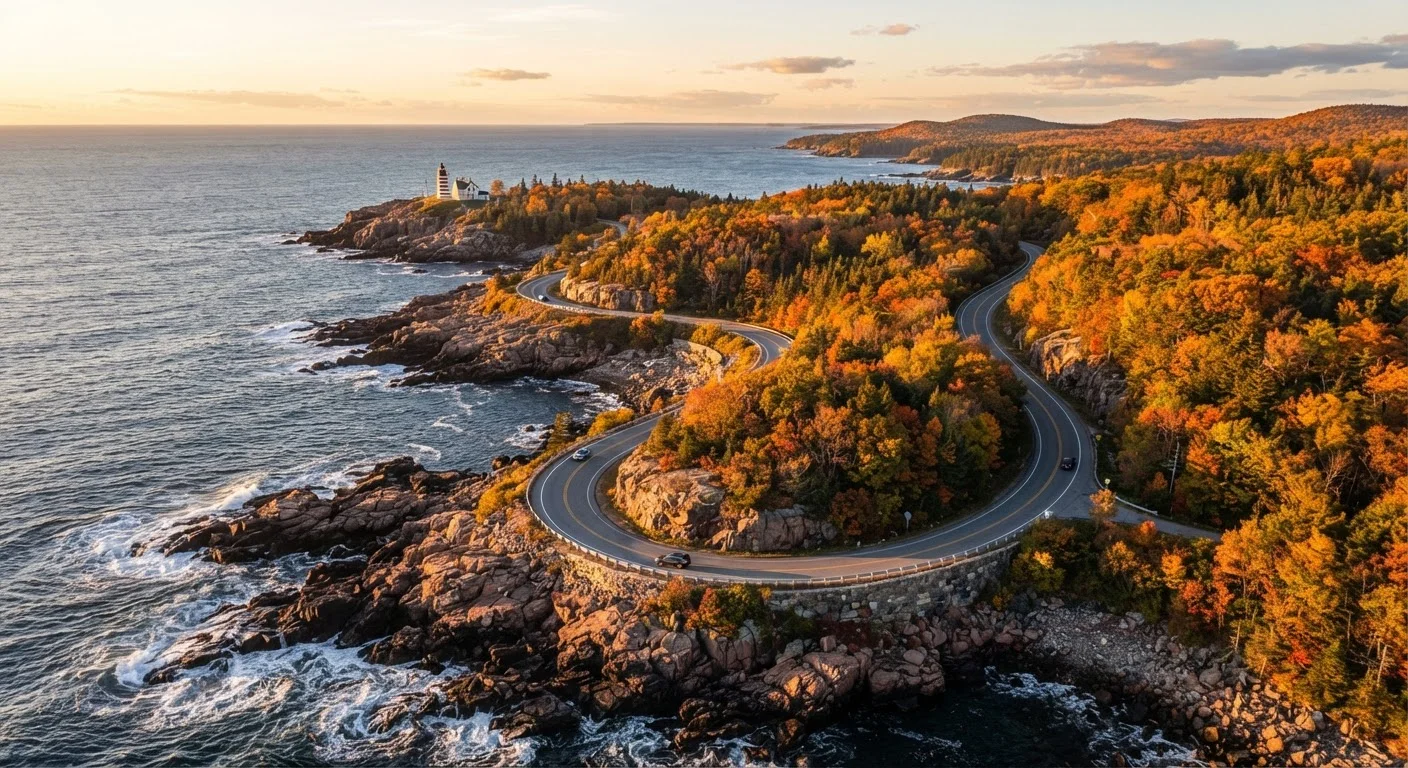
Photo: CoralScripts.com | Explore, Discover, Engage editorial
—— In This Article
Key Takeaways
- Anchor your route around 2–3 primary regions rather than trying to cover all six New England states plus the Mid-Atlantic in one trip.
- Coastal detours and historic sites sit close together — strategic sequencing prevents backtracking and adds natural variety.
- Shoulder seasons (May–June and September–October) offer thinner crowds, lower lodging pressure, and striking landscapes.
- City days and quieter rural stops should alternate deliberately to prevent itinerary fatigue.
- Flexible buffer days are essential — Northeast urban traffic and summer beach congestion can derail rigid schedules.
Why the Northeast Rewards a Road-Trip Approach
Few regions in the United States pack as much geographic and cultural variety into as short a drive as the Northeast. Within roughly 500 miles, a traveler can move from the dense urban energy of Philadelphia through the Revolutionary War landscapes of New Jersey, along Long Island Sound, through Providence and Boston, and on into coastal Maine — each transition bringing a genuinely different character. That compactness is an asset, but it also creates a planning challenge: the temptation to overload the itinerary is real.
The key insight for Northeast road-trippers is that variety is already built into the geography. You don't need to rush between states to find contrast — it arrives naturally. What separates a satisfying trip from an exhausting one is how deliberately you sequence your stops. For a broader look at pacing strategy, structuring a flexible travel schedule is worth reviewing before you commit to your route.
Anchor your trip around two or three regional clusters rather than a continuous linear crawl.
Trying to tick off every major Northeast city and coastal area in sequence results in long driving days that leave little time for depth. Clustering stops — say, the Mid-Atlantic (Philadelphia, Hudson Valley), southern New England (Providence, Newport), and coastal Maine — lets you explore each zone properly before moving on.
Alternate city-heavy days with quieter coastal or rural stops.
Back-to-back urban days in dense Northeast cities — navigating traffic, museum queues, and packed restaurant waits — compound fatigue quickly. Inserting a coastal walk, a state forest, or a small harbor town resets the traveler's energy and often surfaces the trip's most memorable moments.
Build at least one unscheduled half-day per three days of driving.
Northeast itineraries are uniquely vulnerable to cascade delays: traffic on I-95, unexpected parking situations, or a site that simply demands more time than the map suggested. Buffer time converts potential frustration into spontaneous discovery — a roadside clam shack, an unmarked historic cemetery, a harbor at low tide.
Use secondary roads deliberately, not just as detours.
Routes like US-1 through coastal Maine, Route 6A on Cape Cod, or the Connecticut River Valley byways carry the region's most distinctive scenery and small-town character — none of which appears on an interstate. Allocating time for these routes is not scenic indulgence; it's accessing the texture that distinguishes the Northeast from other regions.
Sequence historic sites thematically when possible rather than geographically.
The Northeast's Revolutionary War, maritime, and industrial heritage sites are distributed unevenly across the region. Grouping them by theme rather than strictly by geography allows a traveler to build a coherent narrative — which makes individual sites more meaningful and reduces the 'checklist' feeling that exhausts many cultural itineraries.
Core Practices for Balancing the Northeast's Diverse Draws
The recommendations below reflect patterns that consistently produce more satisfying Northeast road trips — regardless of whether your focus leans toward history, scenery, or urban culture.
Timing, Seasons, and the Roads Between
Seasonality shapes the Northeast road trip more than in most US regions. Fall foliage typically peaks from mid-October in northern New England down through southern Connecticut by early November — a moving window rather than a single date. Summer brings crowded Route 1 in Maine and backed-up beach towns on Cape Cod, while spring shoulder season from late May onward offers blooming landscapes and lighter traffic. Timing domestic travel around America's seasonal landscapes can help you decide which window fits your priorities.
~500 mi
Drivable span from Philadelphia to Portland, Maine
The Northeast corridor from Philadelphia to Portland, Maine covers roughly 500 miles, making the region one of the most content-dense road-trip corridors in the US relative to distance.
3–4 weeks
Peak fall foliage window across New England
New England's fall foliage season typically spans a three-to-four week window from mid-September in northern Vermont and New Hampshire through late October in southern Connecticut.
Traffic is a genuine logistical factor — Interstate 95 between New York and Boston carries some of the heaviest corridor traffic in the country. Scheduling city arrivals and departures on weekday midmornings rather than rush hours or Friday afternoons can reclaim hours that would otherwise evaporate in stop-and-go driving. Parking strategy matters too: in cities like Boston and Providence, parking near a rail or subway hub and using transit for inner-city movement is almost always faster than driving block to block.
Entry and Parking Fees Vary Widely
Several Northeast heritage sites — including portions of the Freedom Trail, National Park sites in Philadelphia, and Acadia National Park in Maine — have distinct entry or parking fee structures that change periodically. Always verify current fees and reservation requirements directly with the managing agency before your visit, as timed-entry systems have become more common at high-traffic sites in recent years.
For travelers drawn to the contrast between the Northeast's dense itinerary style and other American road-trip options, the differences between Pacific Coast Highway and the Blue Ridge Parkway illustrate how route character varies dramatically across the country.
“The danger in a place like New England is that the beauty is so concentrated — every village, every harbor — that you try to see it all and end up truly seeing none of it.”
— Paul Theroux, American travel writer and author of multiple books on US and international travel

Travel & Places Editorial Team
Travel & Places Editorial Team is the collective byline for our editorial team and contributor network. Articles published under this byline or an editorial pen name are researched, written, and reviewed according to our editorial standards for clarity, consistency, and independence before publication.
View author profile