
Carry-On vs Checked Luggage: Choosing the Right Strategy for Your Trip
Weigh the trade-offs of packing light versus bringing more, from airline fees to convenience, so you can decide what suits your journey.
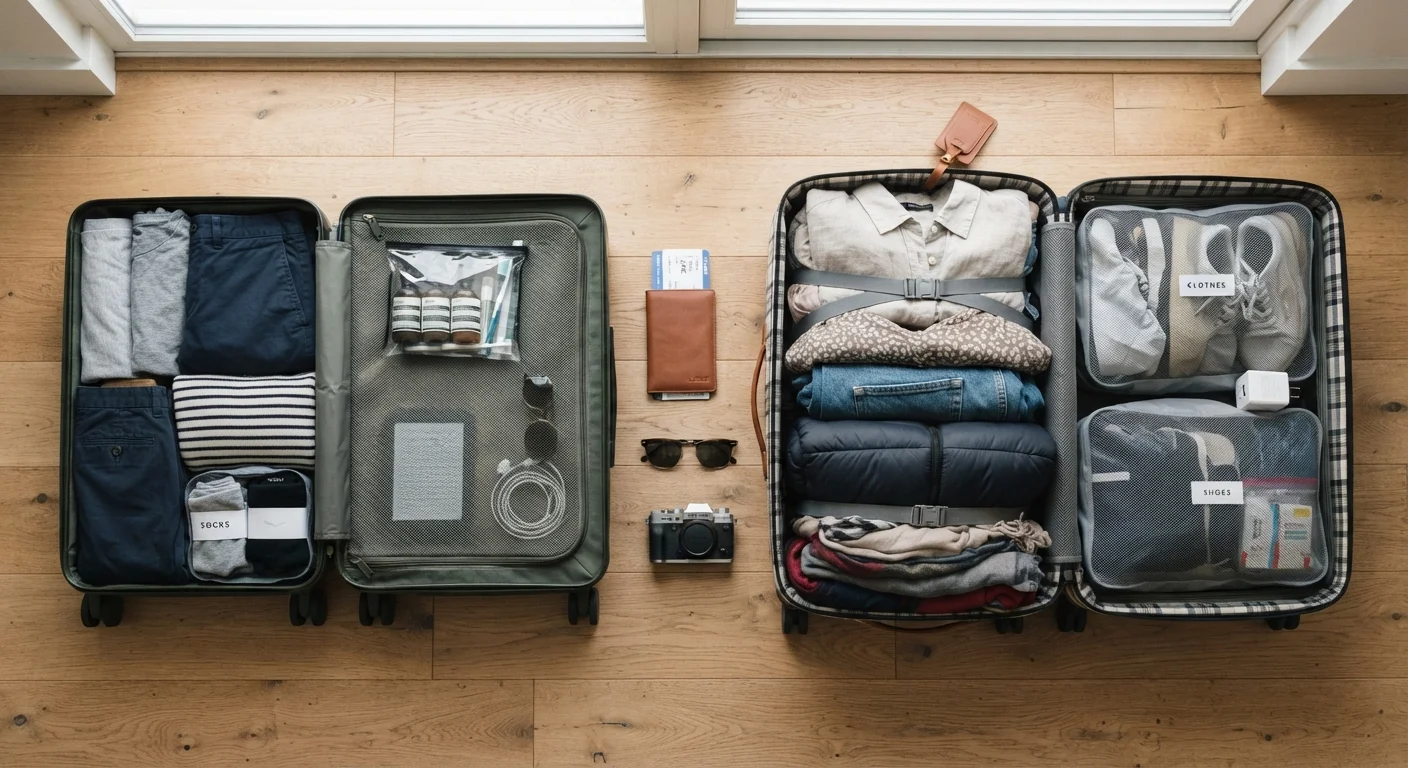
Photo: CoralScripts.com | Explore, Discover, Engage editorial
—— In This Article
Key Takeaways
- Carry-on luggage eliminates checked bag fees and reduces time spent at baggage claim, but imposes strict size and liquid restrictions.
- Checked bags accommodate more volume and prohibited carry-on items, at the cost of additional fees and the risk of delays or loss.
- Trip length, airline policies, destination type, and your personal packing habits are the four variables that most influence the right choice.
- Many travelers find a hybrid approach — one personal item plus a checked bag — works better than either extreme alone.
- Airline size limits for carry-ons vary by carrier and aircraft, so verifying before you fly is essential.
What Each Strategy Actually Involves
Choosing between carry-on and checked luggage isn't simply about bag size — it's a decision that affects your entire travel rhythm, from check-in to arrival. A carry-on fits in the aircraft's overhead bin or under the seat in front of you, keeping your belongings within reach throughout the flight. A checked bag is surrendered at the counter before departure and retrieved at baggage claim after landing.
The trade-offs are immediate. Carry-on travel demands disciplined packing within strict airline size and weight limits, typically around 22 x 14 x 9 inches for most US carriers, though limits vary. Checked bags offer far more capacity — standard allowances are usually 50 lbs and 62 linear inches — but introduce variables outside your control: handling time, potential delays, and, rarely, loss or damage.
For anyone planning a more structured journey, our guide to building a flexible trip itinerary is worth reading alongside this one, since your packing strategy and your daily schedule are more closely linked than most travelers anticipate.
| Criterion | Carry-On Luggage | Checked Luggage |
|---|---|---|
| Typical cost | Usually free (verify with airline) | $35–$75+ per bag per direction |
| Capacity | ~40L; strict size limits apply | ~60–100L; 50 lb weight limit typical |
| Liquid restrictions | TSA 3-1-1 rule applies | Full-size liquids permitted |
| Airport time | Faster — no check-in or baggage claim | Adds time at both ends of journey |
| Risk of loss or delay | None — stays with you | Small but real risk of mishandling |
| Mobility during trip | High — easier on transit and stairs | Lower — bulkier and heavier to move |
| Best trip length | 1–5 days | 6+ days or specialized gear |
Fees, Restrictions, and Practical Logistics
Baggage fees have become one of the more significant friction points in modern air travel. Most major US carriers charge for the first checked bag on domestic routes — often between $35 and $40 each way — with fees escalating for additional bags or overweight luggage. Carry-on bags remain free on nearly all full-service airlines, though some budget carriers now charge for overhead bin access as well, so confirming your airline's specific policy before packing is essential.
Carry-on travel also triggers TSA liquid restrictions: containers must hold 3.4 oz (100ml) or less, all fitting in a single quart-sized bag. Full-size toiletries, wine purchased abroad, or large sunscreens must go in a checked bag. On the flip side, checked bags are subject to stricter rules around lithium batteries, which must travel in the cabin.
1 in 170
Checked bags mishandled per passenger
US DOT data from recent reporting periods shows mishandled bag rates have declined significantly but remain an occasional reality for checked travelers.
$35–$75+
Typical first checked bag fee (one way)
Most major US carriers charge within this range for the first checked bag on domestic routes, with fees varying by airline and fare class.
3.4 oz
Maximum liquid container size for carry-on
TSA's 3-1-1 rule limits each liquid container to 3.4 oz (100ml), all fitting in one quart-sized clear bag per passenger.
The risk of a mishandled bag is real but statistically modest. The US Department of Transportation tracks mishandled bag rates among major carriers, and while rates have improved over the years, delays or misdirection still affect a small percentage of checked bags annually. Travelers with tight connections or time-sensitive plans reasonably factor this in. For a full pre-travel logistics checklist, the pre-departure checklist for international travelers covers documentation, fees, and packing prep in structured detail.
Trip Type, Duration, and the Hybrid Approach
Trip length remains the most reliable guide to luggage strategy. For trips of four days or fewer, most experienced travelers can manage with a carry-on and a personal item — especially when using packing cubes, versatile clothing choices, and planning laundry mid-trip. For longer journeys, particularly those spanning two weeks or involving multiple climate zones or dress codes, a checked bag becomes a genuine quality-of-life upgrade rather than an indulgence.
Destination type matters too. Slow travel — spending extended time in one or two locations — often favors a checked bag since you're not moving it daily. Multi-city itineraries or backpacker-style trips where you're catching trains and navigating cobblestone streets tip decisively toward carry-on.
A hybrid approach — one carry-on plus one personal item — suits many travelers well. Packing a structured personal item (a daypack or tote that fits under the seat) as a second bag adds meaningful capacity without checked bag fees, provided it stays within airline personal item size limits. If overpacking is a recurring issue for you, understanding the habits that drive it can be a more useful starting point than any packing list.
Airline Size Rules Vary More Than You'd Expect
Carry-on size limits are not standardized across airlines. While most US full-service carriers use similar dimensions, regional jets and budget carriers may impose tighter restrictions. Always check the specific airline's baggage policy page before your departure date, not just at the time of booking — policies do change. Arriving at the gate with an oversized carry-on can result in mandatory gate-checking and a fee.

Travel & Places Editorial Team
Travel & Places Editorial Team is the collective byline for our editorial team and contributor network. Articles published under this byline or an editorial pen name are researched, written, and reviewed according to our editorial standards for clarity, consistency, and independence before publication.
View author profile