
Why Overpacking Is Harder to Fix Than It Seems
Explore the habits and mental traps that lead to an overloaded bag, and the practical mindset shifts that make packing lighter possible.
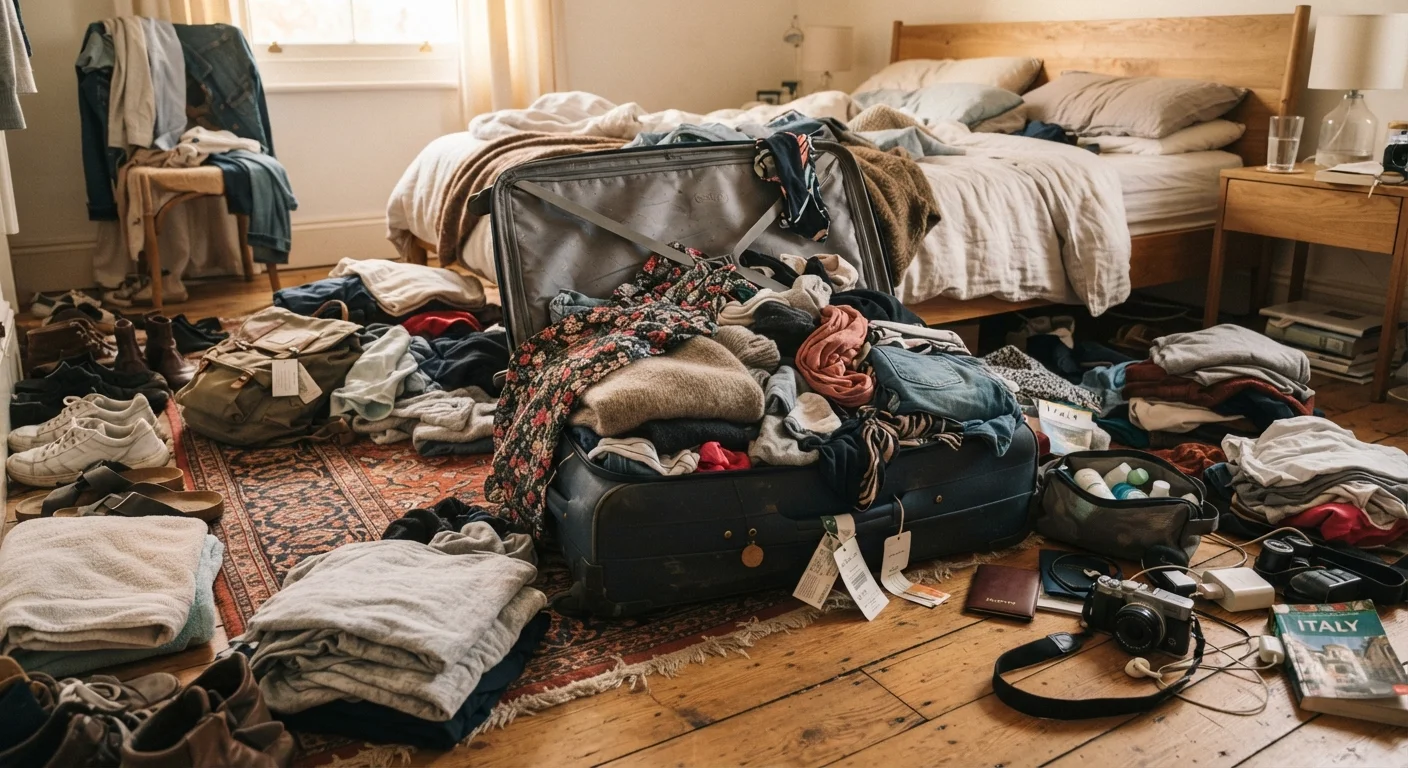
Photo: CoralScripts.com | Explore, Discover, Engage editorial
—— In This Article
Key Takeaways
- Overpacking is driven by psychological patterns, not just poor planning — recognizing them is the first fix.
- Packing "just in case" items is one of the most reliable paths to an overloaded bag.
- Repeating outfits and building around a color palette dramatically reduces clothing volume.
- Checking airline and destination laundry options makes packing a smaller wardrobe genuinely viable.
- Reviewing what you actually used after each trip is the most effective long-term correction strategy.
The Real Reason Overpacking Persists
Overpacking is rarely about ignorance. Most travelers have read the advice — roll your clothes, limit shoes, skip the "what if" items. Yet bags still come back heavier than they left. The reason isn't a lack of information; it's that overpacking is rooted in cognitive habits that checklists alone can't resolve.
Anxiety about the unknown is the central driver. When a destination feels unfamiliar, the brain interprets preparation as control. Bringing more feels like insuring against discomfort. This is especially pronounced on trips that mix climates, formal and casual occasions, or long stretches away from home comforts. The logic is internally consistent — it's just almost always wrong in practice.
Understanding this is the starting point. See our guide to carry-on vs. checked luggage trade-offs for a fuller look at how bag choice interacts with these decisions.
Packing for every possible scenario rather than the most likely ones.
Why it happens: Travelers imagine unlikely events — sudden formal dinners, unexpected cold snaps, medical needs — and pack defensively for all of them, inflating the bag substantially.
Treating the full bag capacity as a target rather than a ceiling.
Why it happens: When a large bag or checked luggage is available, travelers unconsciously fill it — a form of capacity bias where available space drives decisions rather than actual need.
Building a wardrobe with no shared color palette or interchangeable pieces.
Why it happens: Packing individual outfits for each day rather than a modular wardrobe of mix-and-match pieces doubles or triples the number of garments required.
Duplicating toiletries and travel-size items "to be safe."
Why it happens: Fear of running out or forgetting something leads travelers to pack extras, often in quantities far exceeding trip length — particularly for skincare, medications, and personal care products.
Waiting until the night before departure to finalize the bag.
Why it happens: Last-minute packing triggers anxiety, which produces defensive over-inclusion. With little time to reason through each decision, "just in case" wins by default.
Shifting Your Approach Before You Open the Bag
The most durable fix for overpacking happens before a single item is placed in a bag. It requires reframing what packing is actually for: not managing every hypothetical, but enabling movement.
50%+
Packed items typically left unused
Travel behavior surveys consistently find that most travelers report using fewer than half of what they pack on typical leisure trips.
30–50%
Airline checked bag fee increase over the past decade
U.S. airlines have raised checked baggage fees substantially in recent years, making heavy packing increasingly costly for budget-conscious travelers.
Start by mapping your days concretely. Travelers who know how to structure a trip itinerary with realistic activity blocks find it far easier to pack because they're selecting for a real schedule, not a theoretical one. Vague itineraries produce vague packing — and vague packing is always heavy.
Second, verify laundry access before you finalize your wardrobe. Hotels with guest laundry, local laundromats, or sink-washable fabrics change the calculation entirely. A seven-night trip does not require seven sets of clothes if you can wash mid-trip. Similarly, researching your destination thoroughly clarifies climate ranges, dress codes, and cultural expectations — reducing the perceived need to prepare for every possibility.
Don't Confuse Research With Over-Preparation
Learning about a destination's climate or culture is valuable; using that research to justify packing for 12 different scenarios is not. The goal of destination research is to pack more precisely, not more extensively. If your research is expanding your bag rather than clarifying it, revisit your activity plan first.
Finally, build a post-trip ritual: when you return, note what you never used. A written or photographed record across two or three trips produces a sharply accurate personal packing list that no generic guide can replicate.

Travel & Places Editorial Team
Travel & Places Editorial Team is the collective byline for our editorial team and contributor network. Articles published under this byline or an editorial pen name are researched, written, and reviewed according to our editorial standards for clarity, consistency, and independence before publication.
View author profile