
Long-Haul Flights: How Experienced Travelers Approach Comfort and Wellbeing in the Air
Seat selection, hydration, movement, and sleep strategy all influence how you feel on arrival. Here's what seasoned long-haul fliers tend to prioritize.
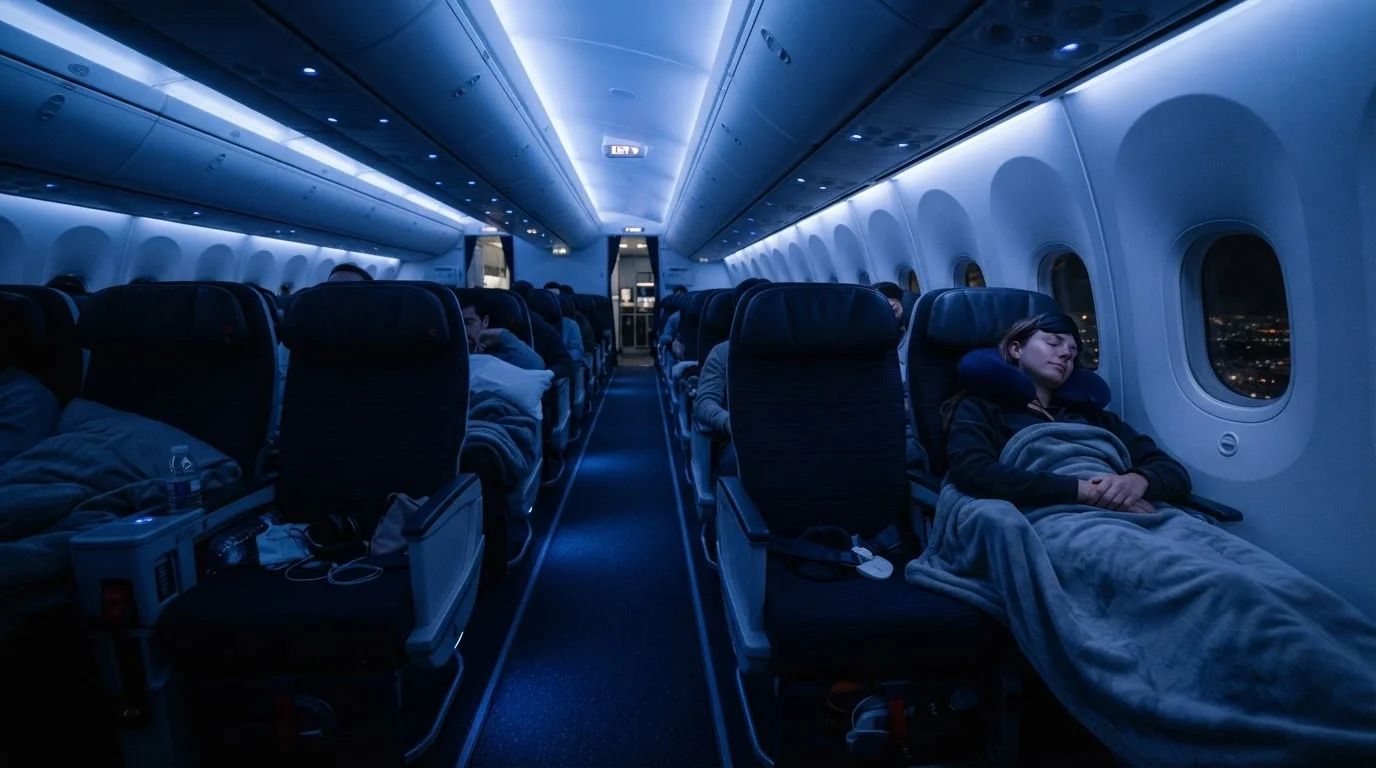
Photo: CoralScripts.com | Explore, Discover, Engage editorial
—— In This Article
Key Takeaways
- Seat selection before departure is one of the highest-impact decisions for long-haul comfort.
- Dehydration is a persistent risk in pressurized cabins; proactive fluid intake makes a measurable difference.
- Strategic light exposure and sleep timing help reduce jet lag severity after crossing multiple time zones.
- Regular movement throughout the flight reduces physical stiffness and supports circulation.
- Layering personal comfort items — neck pillow, eye mask, earplugs — compensates for inconsistent cabin conditions.
Start Before You Board: Seat Selection and Pre-Flight Prep
Experienced long-haul travelers treat the flight as part of the trip itself — not just transit. That mindset starts during booking. Seat selection on a 10-to-15-hour flight matters far more than on a domestic hop. Window seats offer a surface to lean against and give you control over the window shade; aisle seats provide easier access to the lavatory and more freedom to stretch without disturbing seatmates. Middle seats in wide-body planes, particularly in twin-aisle layouts, tend to be the least favored.
Bulkhead and exit-row seats offer extra legroom but often come with fixed armrests and no under-seat storage — trade-offs worth knowing before you commit. Seat-map resources and airline seating charts can clarify which rows are near lavatories or galley noise. Confirming your seat well before departure, rather than at check-in, is one of the simplest high-return moves available.
Pre-flight prep also includes what you pack in your carry-on. See our carry-on strategy guide for a fuller breakdown of packing decisions — but for long-haul specifically, keeping comfort essentials (layers, medications, toiletries) in-cabin rather than checked luggage is standard practice.
Hydration, Nutrition, and Managing Cabin Pressure Effects
Pressurized aircraft cabins typically maintain humidity levels well below what most people experience on the ground — often under 20%. At those levels, dehydration accumulates gradually and contributes to the fatigue, headaches, and foggy thinking many travelers associate with long flights. Drinking water consistently throughout the flight — rather than waiting until thirsty — is the straightforward countermeasure.
Alcohol and caffeine both have diuretic effects and can worsen dehydration; experienced fliers don't eliminate them entirely but tend to moderate consumption on long-hauls. Bringing an empty reusable bottle through security and filling it post-screening is a practical habit that avoids dependence on infrequent drink service.
< 20%
Typical cabin relative humidity
Aircraft cabins are generally pressurized to humidity levels well below 20%, compared to typical indoor environments of 30–60%, according to aviation medicine literature.
10–15 hrs
Duration of common US–Asia transpacific flights
Nonstop routes from major US West Coast hubs to cities such as Tokyo, Seoul, and Hong Kong commonly exceed 10 hours of flight time.
Food choices also play a role. Heavy, rich meals shortly before or during a flight can amplify discomfort. Many frequent international travelers eat lighter in the hours before departure and treat the in-flight meal as secondary to their sleep schedule rather than a fixed anchor to the cabin's rhythm.
Movement, Sleep, and Arriving in Better Shape
Prolonged sitting at altitude affects circulation. Economy-class passengers are at higher sedentary exposure than business travelers, making intentional movement more important. Standing and walking the aisle every couple of hours, along with simple seated exercises — ankle rotations, calf raises, shoulder rolls — addresses stiffness and supports blood flow. Compression socks are widely used by experienced long-haul travelers for this reason; they apply graduated pressure that aids venous return in the legs during extended periods of inactivity.
Sleep strategy is where many travelers leave the most recovery potential unrealized. Adjusting your sleep timing to the destination's local schedule — rather than your home time zone — is the foundational principle behind minimizing jet lag. This means deciding in advance whether you'll try to sleep on the plane and during which portion of the flight. Eye masks, earplugs or noise-canceling headphones, and a travel pillow that supports the neck in a seated position all reduce friction for in-flight sleep.
Light exposure is the most powerful external cue for resetting circadian rhythm. On arrival, seeking morning light in the destination time zone accelerates adaptation. Your pre-departure and post-arrival planning benefits from the same structured thinking described in our international pre-departure checklist.
The Mental Side of Long-Haul Flying
Experienced fliers also approach long-haul travel with calibrated expectations. A 14-hour flight will involve discomfort; the goal is managing it, not eliminating it. Having a mix of entertainment, reading, and offline work loaded on a device — rather than depending entirely on the seat-back screen — keeps the experience from feeling passive and draining.
Noise-canceling headphones reduce cognitive fatigue significantly on long routes, particularly over oceans where engine drone is constant. Some travelers use the enforced downtime as an opportunity to plan the first days of their trip — something that pairs well with the itinerary planning approach of building in flexibility rather than over-scheduling arrival days.
Finally, managing expectations about arrival condition matters. Even well-prepared travelers arrive with some fatigue after a long transoceanic flight. Scheduling a low-intensity first day — rather than an immediate packed agenda — is one of the most durable habits among seasoned international travelers.

Travel & Places Editorial Team
Travel & Places Editorial Team is the collective byline for our editorial team and contributor network. Articles published under this byline or an editorial pen name are researched, written, and reviewed according to our editorial standards for clarity, consistency, and independence before publication.
View author profile