
Endangered vs. Extinct: What the Conservation Status Spectrum Actually Means
IUCN categories explained — what separates 'vulnerable' from 'critically endangered', and how these designations guide conservation.
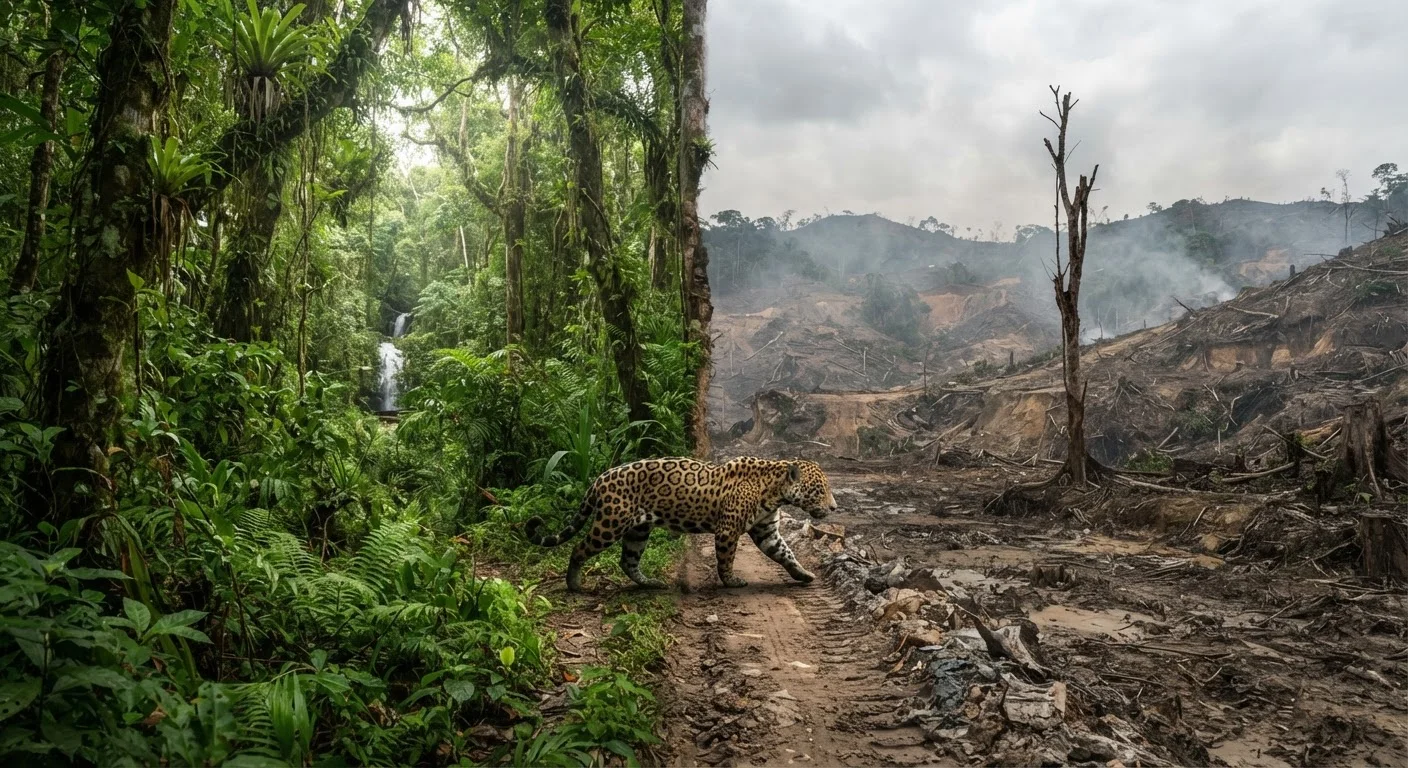
Photo: CoralScripts.com | Explore, Discover, Engage editorial
—— In This Article
The IUCN Red List: A Global Ledger of Life
When scientists and policymakers talk about a species being "endangered," they are almost always referencing a formal designation from the IUCN Red List of Threatened Species — the world's most comprehensive inventory of the conservation status of plants, animals, and fungi. Maintained by the International Union for Conservation of Nature, the Red List evaluates species against standardized, quantitative criteria, producing a status category that communicates extinction risk in a globally consistent way.
The system exists because urgency in conservation must be calibrated. Not every threatened species faces the same pressure, and deploying limited resources effectively requires ranked, evidence-based distinctions. Understanding what each category actually means — and what moves a species between them — is foundational for anyone seeking to engage seriously with wildlife conservation.
The Full Spectrum: From Least Concern to Extinct
The IUCN recognizes nine categories, arranged from lowest to highest extinction risk. Each step up the ladder reflects measurable changes in population size, rate of decline, geographic range, or population viability analysis.
IUCN Red List
The International Union for Conservation of Nature's Red List of Threatened Species is the world's most authoritative database of extinction risk, applying standardized criteria to assess thousands of species globally.
Critically Endangered (CR)
The highest IUCN threat category for species still surviving in the wild. It signals an extremely high risk of extinction — typically an 80–90% population decline over ten years or three generations.
Extinct in the Wild (EW)
A category for species that no longer exist in natural habitats but are maintained in captivity, cultivation, or managed populations outside their native range.
Population Viability Analysis
A quantitative modeling technique used in conservation biology to estimate a population's probability of persisting for a defined period, factoring in demographic and environmental variability.
Functional Extinction
A condition where a species' population is so small or fragmented that it no longer plays a meaningful ecological role, even if a few individuals technically survive.
Data Deficient (DD)
An IUCN category indicating that insufficient information exists to assess a species' extinction risk — not a signal of safety, but of knowledge gaps requiring further research.
Least Concern (LC) and Near Threatened (NT) sit at the lower end. LC species are widespread and abundant; NT species don't yet meet threatened thresholds but are being watched closely. The three threatened categories — Vulnerable (VU), Endangered (EN), and Critically Endangered (CR) — form the core of conservation concern.
- Vulnerable: Population has declined by 30–50% over ten years or three generations, or faces a ≥10% probability of extinction within 100 years.
- Endangered: Decline of 50–70% or a ≥20% probability of extinction within 20 years or five generations.
- Critically Endangered: Decline of 80–90% or a ≥50% probability of extinction within ten years or three generations — the last formal category before a species is considered lost.
Beyond CR sit Extinct in the Wild (EW) — where a species survives only in captivity or cultivation — and Extinct (EX), confirmed when exhaustive surveys find no surviving individuals. Two additional categories, Data Deficient (DD) and Not Evaluated (NE), cover species where information or assessment is lacking.
These designations shape real-world outcomes. Species listed as CR qualify for emergency intervention programs, habitat protections, and international legal safeguards under frameworks like CITES. Understanding how ecosystems lose keystone species informs this work — see our article on apex predators and food web dynamics.
What Drives a Species Up — or Down — the List
A listing is not permanent. Species can be downlisted as populations recover, or uplisted as conditions deteriorate. The southern white rhinoceros, once reduced to roughly 50 individuals in the late 19th century, rebounded to over 20,000 through concentrated conservation effort. Conversely, the Yangtze River dolphin (Baiji) was declared functionally extinct in 2006 after sliding from Endangered to undetectable within a generation.
44,000+
Species currently threatened with extinction
According to the IUCN Red List database as of 2023, representing over 28% of all assessed species.
85%
Threatened species affected by habitat loss
IUCN analyses consistently identify habitat destruction as the dominant driver across terrestrial, freshwater, and marine species.
~900
Species confirmed extinct since 1500
The IUCN Red List documents at least 900 extinctions since 1500, with researchers estimating the true figure is considerably higher due to undescribed species.
Habitat loss remains the primary driver of status escalation, affecting roughly 85% of threatened species on the Red List. Overexploitation, invasive species, pollution, and climate-linked habitat shifts compound the pressure. Species with narrow geographic ranges — often found in the world's most concentrated biodiversity zones — are especially vulnerable. The world's most biodiverse habitats tend to host disproportionate numbers of endemic, range-restricted species that face the steepest extinction risk.
Conservation status also interacts with evolutionary uniqueness. A species that represents an entire family or genus carries irreplaceable genetic and ecological information — its loss is categorically different from the loss of one subspecies within a large, adaptable group. This is why organizations like the EDGE of Existence program weight "evolutionary distinctness" alongside extinction risk when prioritizing resources.
Note: This article is for educational purposes only. Conservation assessments are conducted by qualified ecologists and updated periodically; always consult the official IUCN Red List database for current species status information.

Pets & Animal Life Editorial Team
Pets & Animal Life Editorial Team is the collective byline for our editorial team and contributor network. Articles published under this byline or an editorial pen name are researched, written, and reviewed according to our editorial standards for clarity, consistency, and independence before publication.
View author profile