
Why Carrying a Small Balance Does Not Improve Your Credit Score
A persistent myth claims leaving a small credit card balance helps your score. Here's what the evidence actually shows.
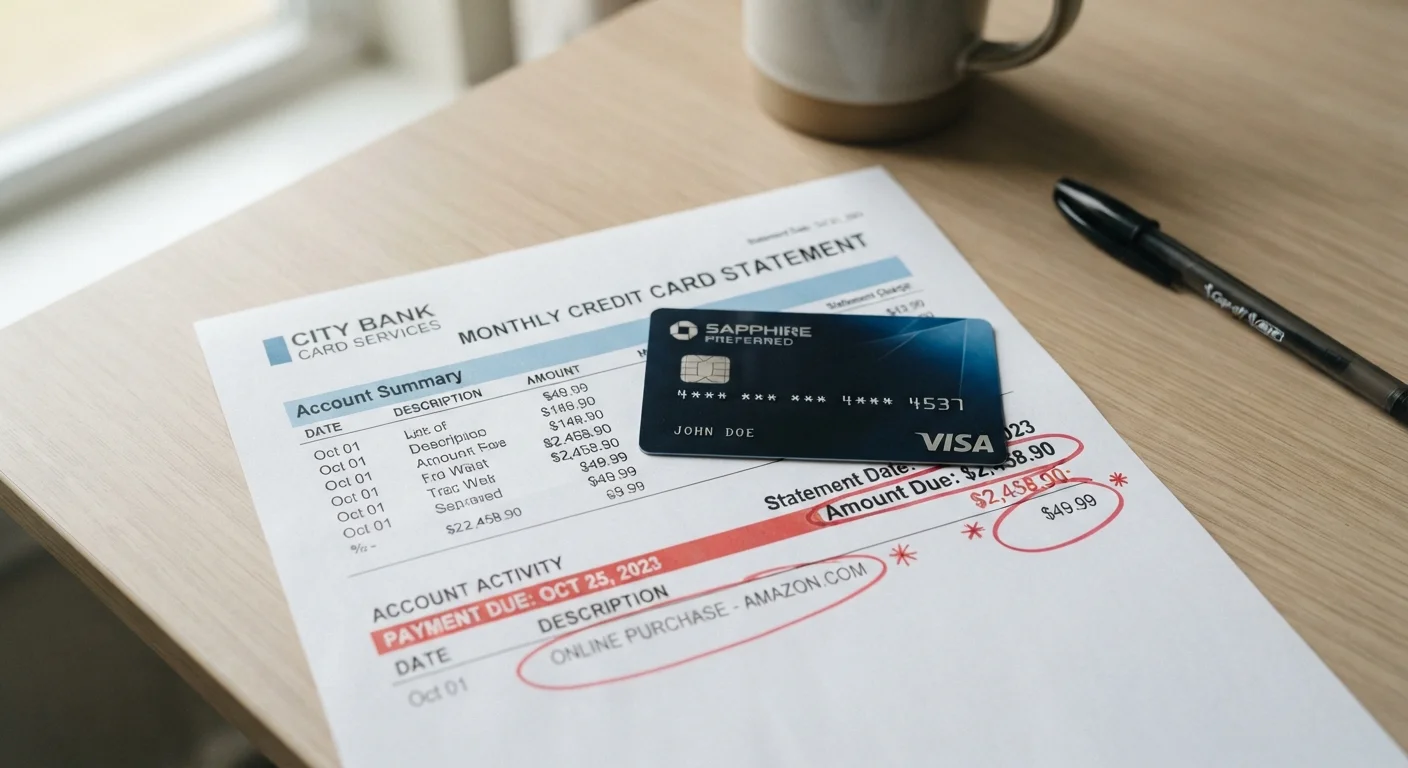
Photo: CoralScripts.com | Explore, Discover, Engage editorial
—— In This Article
Key Takeaways
- Carrying a balance from month to month does not improve your credit score under any major scoring model.
- Credit utilization is scored based on the balance reported to bureaus, not whether you pay in full.
- Paying your statement balance in full avoids interest charges without harming your credit profile.
- The 'small balance' myth likely originated from a misunderstanding of how credit activity is reported.
- Lower utilization ratios - ideally under 30% - are consistently associated with stronger scores.
Where the Myth Comes From
The idea that carrying a small credit card balance helps your credit score is one of the most persistent misconceptions in personal finance. The thinking goes something like this: lenders want to see that you actively use credit and manage debt responsibly, so leaving a balance demonstrates that behavior. It sounds intuitive - but it doesn't reflect how credit scoring actually works.
The myth likely spread through a partial misunderstanding of credit utilization. Utilization - the ratio of your reported balance to your credit limit - does factor meaningfully into your score. If you never use a card at all, a zero balance is reported, and some people interpret that as a sign of inactivity. The logical leap from there to "carry a small balance" is understandable, but the logic breaks down when you examine the actual mechanics of scoring models.
For a deeper look at how utilization is calculated and weighted, see how credit utilization quietly shapes your score.
Myth
Carrying a small balance on your credit card each month signals responsible credit use and boosts your score.
Fact
Scoring models assess your reported balance at a single point in time - whether you pay in full afterward has no effect on your score.
The credit bureaus receive a snapshot of your balance, typically at the statement close date. The scoring model evaluates that number as a ratio to your limit. It has no mechanism to distinguish a balance you plan to pay in full from one you'll roll forward. Paying in full is always the financially optimal choice - it costs you nothing in interest and yields no scoring penalty.
Myth
A zero balance on all your cards will hurt your credit score because it looks like you're not using credit.
Fact
Using your card and paying the full statement balance each month results in a positive reported balance - not a zero - at statement close.
A zero balance only appears if you make no purchases at all during the billing cycle, or if you pay the balance before the statement closes. Regular use followed by a full statement payment reports normal, low utilization. You don't need to carry debt to demonstrate credit activity.
Myth
Lenders prefer to see that you carry debt, because it shows you know how to manage it.
Fact
Lenders and scoring models reward low utilization and consistent on-time payments - neither requires an unpaid balance.
What lenders want to see is reliability: that you borrow within your means and pay on time. A pattern of full, on-time payments demonstrates exactly that. Carrying a balance introduces risk - of missed payments, rising utilization, and compounding interest - without offering any scoring advantage.
Myth
Paying your credit card bill in full every month means you're not building credit history.
Fact
Payment history - one of the most heavily weighted factors in major scoring models - is built through on-time payments, regardless of the amount paid.
Every on-time payment, whether it covers the minimum or the full statement balance, is recorded as a positive entry in your payment history. Paying in full consistently demonstrates the highest level of reliability. It does not reduce the value of that payment history in any scoring model.
What Scoring Models Actually Measure
Major credit scoring models - including FICO and VantageScore - evaluate your reported balance at the time your lender sends data to the credit bureaus. That snapshot is typically taken once per billing cycle, usually around your statement closing date. Whether you then pay that balance in full or carry it forward has no effect on what the scoring model sees.
In other words, the score doesn't know - and doesn't care - whether you paid your bill in full after the snapshot was taken. A $200 balance on a $2,000 limit is a 10% utilization rate regardless of your payment intentions. What matters is that the reported number is low, not that a balance persists into the next billing period.
~30%
Utilization threshold often cited by credit professionals
Credit scoring experts generally recommend keeping your credit utilization ratio below 30% to avoid a negative impact on your score, though lower is better.
35%
Weight of payment history in the base FICO Score
According to FICO, payment history is the single largest factor in its base scoring model, underscoring the value of consistent on-time payments over carrying balances.
The practical implication: you can use your credit card regularly, report low utilization, and pay the full statement balance every month - all at the same time. There is no trade-off between scoring well and avoiding interest charges.
Understanding how different scoring factors are weighted across models can help you prioritize the habits that actually move the needle.
The Real Cost of Acting on This Myth
Believing this myth doesn't just leave your score unchanged - it actively costs you money. Credit card interest rates are typically high, and carrying even a modest balance generates finance charges that compound quickly. A reader who deliberately carries $300 month after month to "help" their score is paying interest for no credit benefit whatsoever.
Carrying a Balance Costs Money - Not Just Points
Credit card APRs in the US have historically averaged well above 20%, meaning even a modest carried balance accumulates meaningful interest charges over time. There is no corresponding credit score benefit to offset this cost. If you have been deliberately maintaining a balance under the belief it helps your score, paying it off in full will not hurt your credit - and will immediately stop the interest from accruing.
There's also a behavioral risk: intentionally maintaining a balance can normalize carrying debt, which may gradually increase over time. Financial habits that quietly erode a good credit standing often start with small, seemingly harmless decisions that compound into larger problems.
If you're managing multiple balances and looking for structural simplicity, it's worth understanding what debt consolidation changes - and what it doesn't before assuming it's the right path.
This article is for general informational and educational purposes only and does not constitute personalized financial or credit advice. For guidance specific to your financial situation, consult a qualified financial professional.

Money Matters Editorial Team
Money Matters Editorial Team is the collective byline for our editorial team and contributor network. Articles published under this byline or an editorial pen name are researched, written, and reviewed according to our editorial standards for clarity, consistency, and independence before publication.
View author profile