
Credit Utilisation: The Ratio That Quietly Shapes Your Score
Learn how credit utilisation is calculated, why it carries significant weight in scoring models, and how balances affect it.
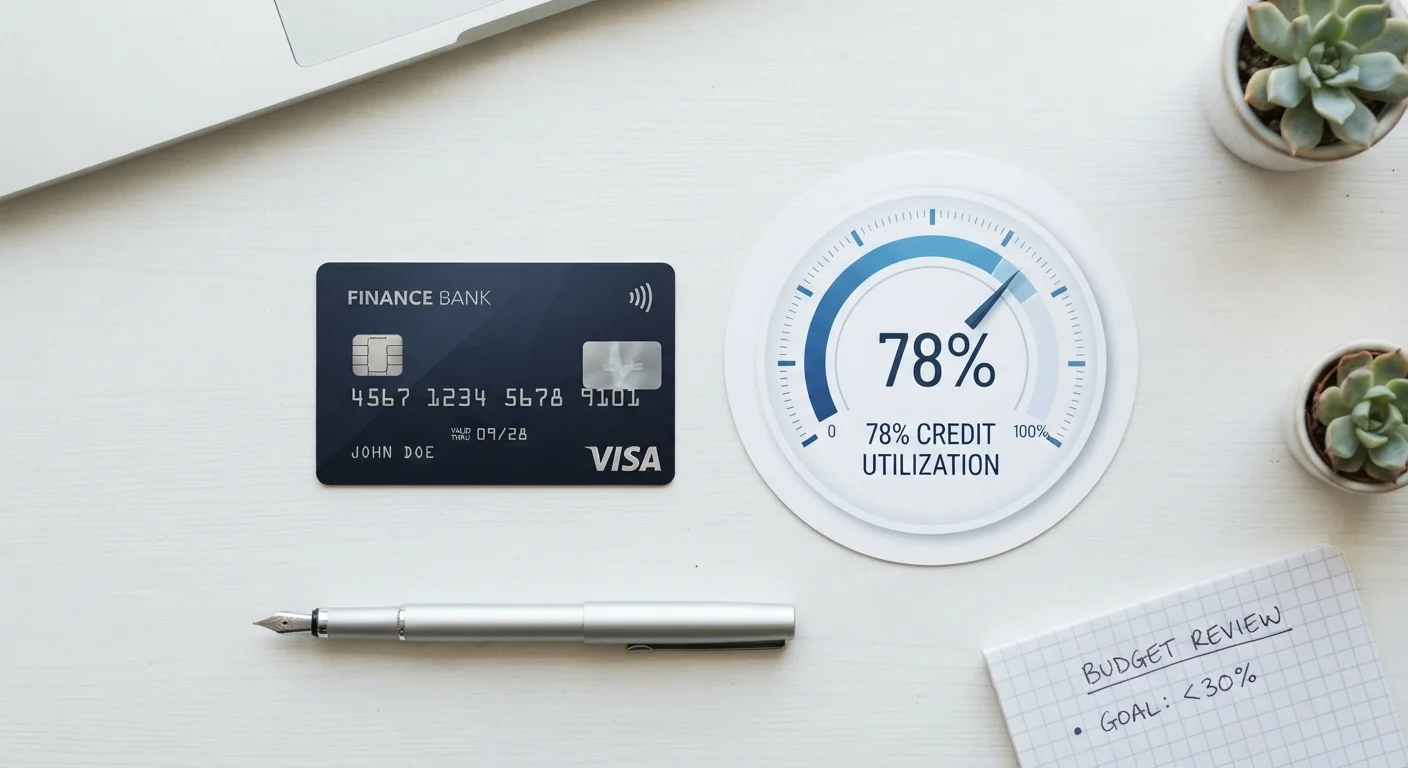
Photo: CoralScripts.com | Explore, Discover, Engage editorial
—— In This Article
Key Takeaways
- Credit utilisation typically accounts for roughly 30% of a FICO score - second only to payment history.
- Both per-card and overall utilisation ratios influence scoring models independently.
- Keeping utilisation below 30% is a widely cited guideline, but lower is generally better.
- Paying balances before the statement closing date can reduce the balance reported to bureaus.
- Requesting a credit limit increase (without spending more) lowers your utilisation rate mechanically.
- Utilisation is calculated fresh each scoring cycle - improvements show up relatively quickly.
How the Ratio Is Calculated
Credit utilisation has two dimensions that scoring models examine simultaneously: your aggregate utilisation and your per-card utilisation.
Aggregate utilisation adds up all your revolving balances and divides them by the sum of all your revolving credit limits. If you have three cards with a combined limit of $15,000 and total balances of $3,000, your aggregate rate is 20%.
Per-card utilisation performs the same calculation for each individual account. A card with a $500 limit carrying a $450 balance is at 90% utilisation - and that single card can drag down your score even if the rest of your cards sit at zero. This is a detail many people miss, and it explains why spreading a balance across multiple cards can sometimes be more score-friendly than concentrating it on one.
The figures used in these calculations come from what your lenders report to the credit bureaus - usually the balance appearing on your monthly statement. For a deeper look at how this metric fits into the full scoring picture, see how major scoring categories are weighted.
~30%
Weight of amounts owed in FICO scoring
According to FICO's publicly disclosed score factor breakdown, the amounts-owed category - heavily driven by utilisation - makes up roughly 30% of a standard FICO score.
<10%
Utilisation rate common among top scorers
Analyses of FICO high-achiever data consistently show that consumers with scores above 800 tend to maintain single-digit credit utilisation rates.
1-2 cycles
Typical score response time to utilisation change
Because lenders report balances monthly, reductions in credit utilisation can be reflected in updated scores within one to two billing cycles.
Why Scoring Models Weight It So Heavily
Credit utilisation is not arbitrary - it captures something lenders genuinely care about: how dependent you are on credit at any given moment. A borrower using a large share of available credit may be under financial stress, increasing the statistical risk of missed payments. Scoring models are built on this kind of predictive logic.
Under the FICO scoring framework, the amounts-owed category - which utilisation dominates - accounts for approximately 30% of the score. Only payment history carries more weight. VantageScore, an alternative model, also treats utilisation as a highly influential factor.
Importantly, utilisation has no memory. A high utilisation rate last quarter does not leave a permanent mark the way a missed payment does. Once balances fall, the ratio improves and the score adjusts in the next reporting cycle. That responsiveness makes it one of the most actionable levers in credit management.
“Amounts owed is the second most important factor in credit scores. High utilisation rates suggest a borrower may be overextended and more likely to make late or missed payments.”
— FICO, Developer of the widely used FICO credit scoring model
Practical Ways to Manage Your Utilisation Rate
Managing utilisation does not require eliminating credit card use - it requires being strategic about balances and limits. A few approaches are worth understanding:
- Pay before the statement closes. Lenders typically report the balance shown on your statement. Paying down balances before the closing date - not just by the due date - means a lower number gets reported to the bureaus.
- Request a credit limit increase. If your spending stays flat but your limit rises, your utilisation rate falls automatically. Be aware that some limit increase requests trigger a hard inquiry, which has a small, temporary score impact.
- Distribute spending across cards. Keeping individual card balances well below their limits avoids the per-card utilisation problem described above.
- Avoid closing unused revolving accounts impulsively. Removing a card's limit from your available credit raises your aggregate utilisation rate overnight.
One myth worth dispelling: leaving a small balance on purpose does not improve your score. The evidence shows otherwise - paying in full is always preferable to carrying a balance for supposed score benefits.
Time Your Payments Strategically
Your credit card's statement closing date - not the payment due date - is when your lender typically reports your balance to the bureaus. Paying down your balance a few days before that closing date means a lower utilisation figure gets recorded. Check your card's closing date in your online account or monthly statement.
Beyond utilisation, other financial habits can silently erode a solid credit standing - it is worth reviewing the full picture periodically.
This article is for general informational and educational purposes only. It does not constitute personalised financial or credit advice. Consult a qualified financial professional for guidance specific to your situation.
Frequently Asked Questions

Money Matters Editorial Team
Money Matters Editorial Team is the collective byline for our editorial team and contributor network. Articles published under this byline or an editorial pen name are researched, written, and reviewed according to our editorial standards for clarity, consistency, and independence before publication.
View author profile