
Credit Scores Decoded: What the Numbers Actually Mean
Understand what your credit score represents, how it's calculated, and why different lenders may see different numbers.
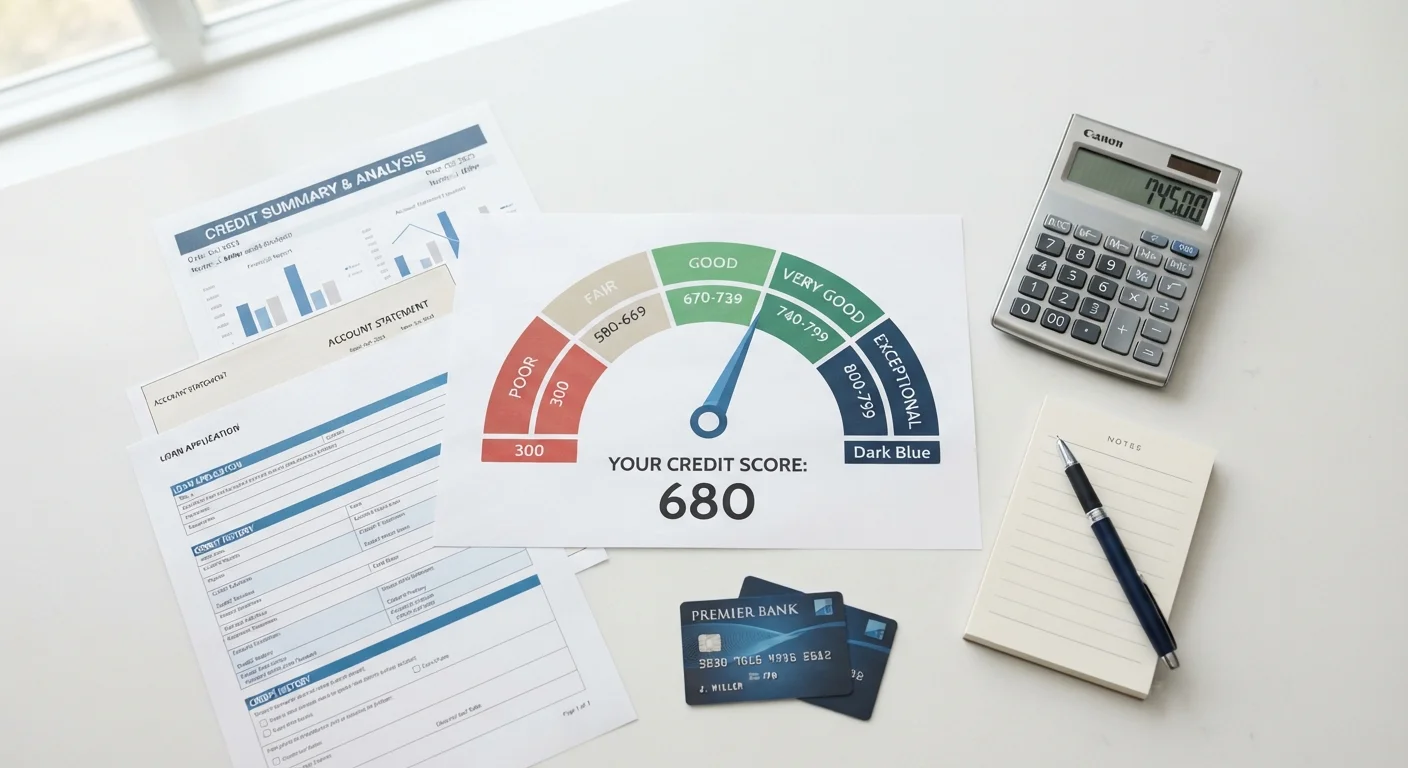
Photo: CoralScripts.com | Explore, Discover, Engage editorial
—— In This Article
Key Takeaways
- Credit scores range from 300 to 850; higher scores signal lower lending risk.
- Payment history carries the most weight in most scoring models.
- Different lenders may pull different score versions, so slight variation is normal.
- You can have multiple credit scores simultaneously - all can be valid.
- Regularly reviewing your credit report helps you understand what drives your score.
The Range and What It Signals
Credit scores in the U.S. most commonly span 300 to 850, with higher numbers representing lower risk in a lender's assessment. The specific bands vary slightly between scoring companies, but a widely used FICO® framework looks roughly like this:
- 300-579: Poor - significant lending risk; approval unlikely without collateral or co-signer
- 580-669: Fair - subprime territory; higher interest rates are common
- 670-739: Good - near or above average; most lenders will consider applications
- 740-799: Very Good - well above average; favorable terms more accessible
- 800-850: Exceptional - top tier; strongest negotiating position with lenders
These bands are not universal rules - every lender sets its own criteria. A score that clears one institution's threshold may fall short at another. The number itself is a starting point, not a guarantee of approval or specific terms.
716
Average U.S. FICO® Score
According to FICO®'s consumer data, the average American FICO® Score has hovered around 716 in recent years, reflecting broadly stable credit behavior nationally.
35%
Weight of payment history in FICO® model
Payment history is the largest single factor in the standard FICO® scoring formula, making consistent on-time payments the most impactful credit habit.
3
Major U.S. credit bureaus
Equifax, Experian, and TransUnion each maintain independent consumer credit files, which is why scores can differ depending on which bureau a lender queries.
How Your Score Is Calculated
Scoring models analyze the information in your credit report and assign weight to different behavioral categories. Under the FICO® model - the most widely used in lending decisions - the breakdown is approximately:
- Payment history (35%): Whether you pay on time is the single largest factor. Late payments, collections, and defaults all weigh heavily.
- Amounts owed (30%): This includes your credit utilization ratio - how much of your available revolving credit you're using. Lower utilization generally benefits your score.
- Length of credit history (15%): Older accounts and a longer average account age tend to strengthen scores.
- Credit mix (10%): Having a variety of account types - credit cards, installment loans - can help, though it's a minor factor. See how revolving credit and installment loans differ in lenders' eyes.
- New credit (10%): Opening multiple accounts in a short period triggers hard inquiries and can modestly lower your score temporarily.
VantageScore uses the same data points but weights them differently. For a deeper look at how these categories interact across models, see factors that affect credit scores across different scoring models.
Focus on Payment History First
Because payment history accounts for the largest share of most scoring models, even one missed payment can meaningfully drag your score. Setting up automatic payments for at least the minimum due on each account is one of the most reliable ways to protect your score over time. Consistency matters more than perfection - getting back on track after a late payment is possible, but prevention is far easier.
Why Your Score Varies by Lender
It's entirely normal - and not a sign of error - to see different scores from different sources. Three primary reasons explain this:
- Different bureaus, different data: Not every creditor reports to all three major bureaus (Equifax, Experian, TransUnion). A score built on Equifax data may differ from one built on TransUnion data if your accounts aren't uniformly reported.
- Different model versions: FICO® alone has dozens of versions, including industry-specific models for auto lending and mortgage underwriting. A lender using FICO® Auto Score 9 may see a different number than one using FICO® Score 8.
- Timing: Scores are snapshots calculated at a specific moment. A payment posted yesterday may not yet appear on all bureau files simultaneously.
Understanding these layers removes the frustration of score discrepancies. If you want to understand the underlying data driving any version of your score, reading your credit report is the most direct way to spot what's influencing your numbers. For a broader grounding in how credit and debt interact, the complete reference on debt and credit covers the full picture.
Score Versions Are Lender-Specific
When a mortgage lender runs your credit, they may be required to use older FICO® model versions under certain regulatory guidelines - even if newer versions exist. This means the score a mortgage lender sees could differ from the one a credit card issuer pulls, even on the same day. Knowing this context helps you interpret score differences without alarm.
This article is for general informational and educational purposes only and does not constitute personalized financial or credit advice. Consult a qualified financial professional for guidance specific to your situation.
Frequently Asked Questions

Money Matters Editorial Team
Money Matters Editorial Team is the collective byline for our editorial team and contributor network. Articles published under this byline or an editorial pen name are researched, written, and reviewed according to our editorial standards for clarity, consistency, and independence before publication.
View author profile