
What a Personal Budget Actually Is (and What It Isn't)
Cut through the confusion around personal budgets. Learn what a budget truly means, how it works, and why it's not about deprivation.
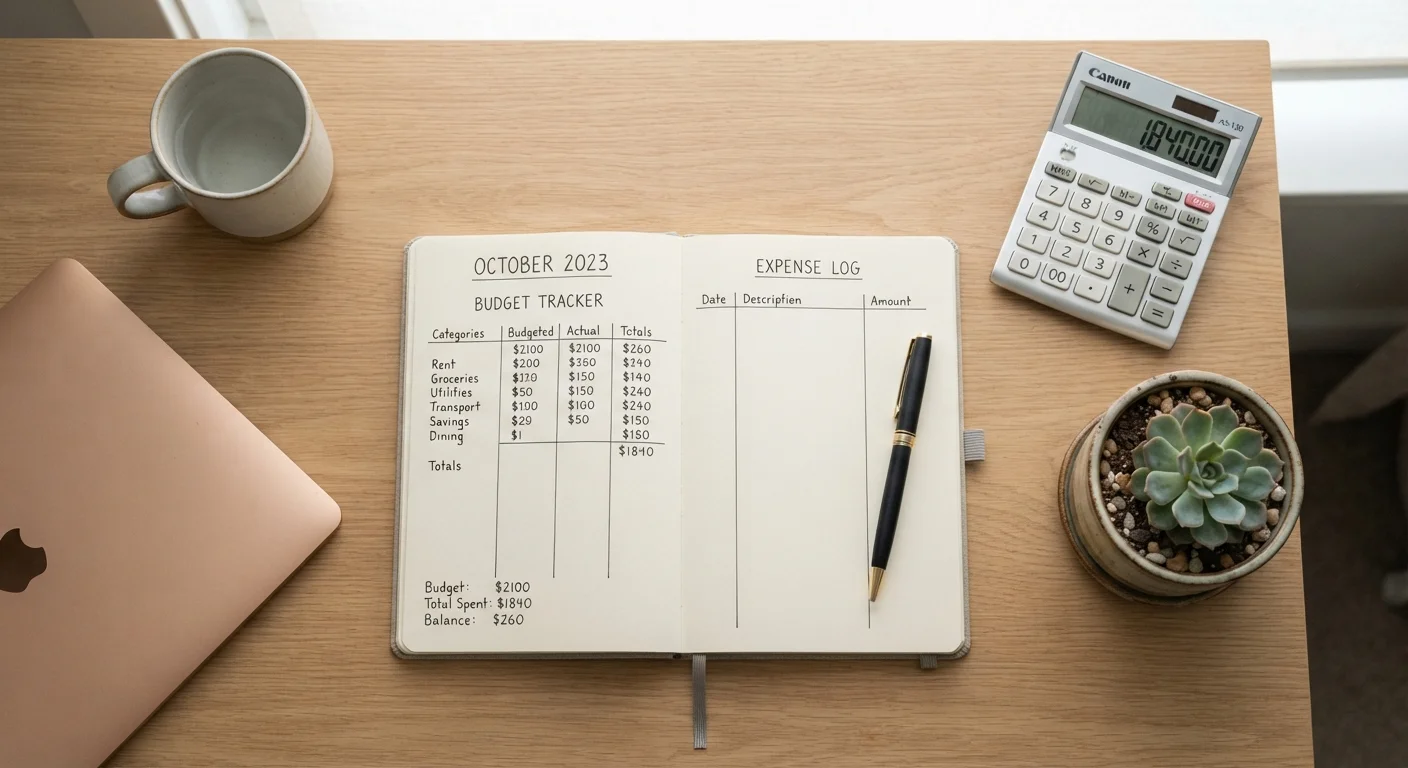
Photo: CoralScripts.com | Explore, Discover, Engage editorial
—— In This Article
Key Takeaways
- A budget is a forward-looking spending plan, not a record of past purchases.
- Budgets are not synonymous with deprivation - they reflect your actual priorities.
- Any income level can benefit from a budget, not just people in financial distress.
- A budget must be revisited regularly to stay accurate and useful.
- The goal of a budget is alignment between your money and your values, not perfection.
The Core Idea: A Plan, Not a Punishment
The word "budget" carries a lot of baggage. For many people it conjures images of cutting pleasures, obsessively tracking every dollar, or signaling financial trouble. None of those associations are accurate - and they stop a lot of people from ever starting.
At its core, a personal budget is simply a spending plan created before the month begins. You look at what money is coming in, decide how you want it distributed across your needs and goals, and write that down. That's the entire concept. The format - app, spreadsheet, or notebook - is secondary to the habit of planning intentionally.
The distinction between a plan and a record matters enormously. Reviewing last month's credit card statement tells you what happened. A budget tells you what you've decided should happen. One is reactive; the other is proactive.
Start with one month of real numbers
Before building a future-facing budget, look at one full month of actual bank and card statements. This gives you a factual baseline - not an estimate - of what you currently spend. Most people discover at least one category where reality differs significantly from their assumptions.
What a Budget Is Not
Clearing up misconceptions is just as important as defining the concept. Several persistent myths shape how people think about budgeting - and examining them carefully is worthwhile. Common budgeting myths often prevent people from getting started in the first place.
- Not a record of past spending. Expense tracking is a companion tool, not the budget itself.
- Not a restriction on enjoying life. A budget that includes dining out, travel, and entertainment is a perfectly valid budget.
- Not only for people in financial distress. Budgeting is a planning discipline, relevant across all income levels.
- Not a one-time document. A budget written in January and never revisited is already outdated by February.
- Not required to be perfect. Variance between planned and actual spending is expected - the response to that variance is what matters.
Tracking and budgeting work best together
A budget sets your intentions; expense tracking checks whether reality matched them. Using both together closes the feedback loop. You don't need complex software - even a simple end-of-month comparison of planned versus actual spending is enough to keep a budget meaningful and accurate.
The Structure of a Basic Budget
Every functional budget contains three elements: income, expenses, and the difference between them.
Income includes all reliable money coming in during the period - wages after tax, freelance payments, side income, or any other regular inflow. Use take-home pay (net income), not gross salary, since you can only spend what actually reaches your account.
Expenses fall into two broad groups. Fixed expenses stay consistent month to month - rent, loan payments, insurance premiums. Variable expenses fluctuate - groceries, utilities, clothing, entertainment. A thorough budget accounts for both, and also captures irregular costs that don't appear every month, such as annual subscriptions or vehicle maintenance. Those often-overlooked spending categories are a common reason first budgets underperform.
The difference - income minus expenses - reveals your financial position. A positive number means you have money available to save, invest, or allocate elsewhere. A negative number signals that planned spending exceeds income, which requires adjustment before the month starts.
~33%
Americans who maintain a household budget
Gallup polling has consistently found that fewer than one in three American adults report following a detailed household budget.
20%
Recommended savings allocation in the 50/30/20 rule
The widely referenced 50/30/20 budgeting framework allocates 50% of after-tax income to needs, 30% to wants, and 20% to savings and debt repayment.
Why Budgeting Works as a Financial Habit
A budget's power isn't mathematical - it's behavioral. When you decide in advance how to spend your money, you're less likely to make impulsive decisions that conflict with your actual priorities. The plan acts as a reference point.
Budgets also surface information that's easy to miss. Many people significantly underestimate what they spend in certain categories - dining, subscriptions, or convenience purchases - until they write it down. Awareness alone tends to shift behavior without requiring willpower.
For couples and households, a shared budget creates a common language for financial decisions. Rather than negotiating each purchase, partners can refer to what was agreed in the plan. Budgeting jointly introduces its own dynamics, but the framework provides a neutral foundation for those conversations.
If you're ready to move from understanding the concept to building your own plan, personal budgeting from the ground up walks through the full process step by step.
This article is for informational and educational purposes only and does not constitute personalized financial advice. Consult a qualified financial professional for guidance tailored to your specific circumstances.
Frequently Asked Questions

Money Matters Editorial Team
Money Matters Editorial Team is the collective byline for our editorial team and contributor network. Articles published under this byline or an editorial pen name are researched, written, and reviewed according to our editorial standards for clarity, consistency, and independence before publication.
View author profile